
 Français
 Deutsch
 Español
 Italiano
 Parts & Accessories by Drone
 Drones
 Action camera
 Microphones
 Camera Stabilizers
 VR Headsets
DJI Lito X1, full review: the best choice for beginners?
May
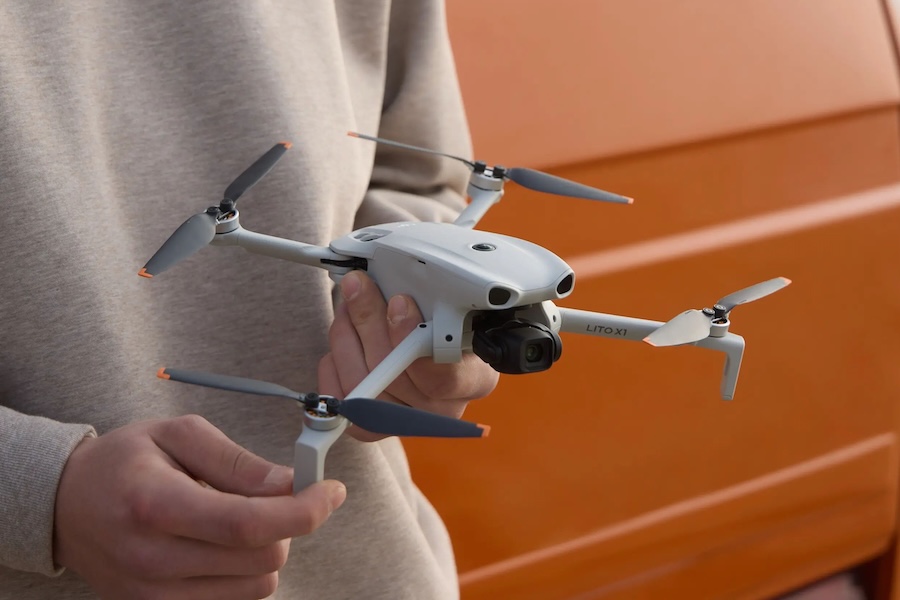
With the DJI Lito 1 and DJI Lito X1, both launched on April 23, 2026, DJI is refreshing its entry-level lineup by gradually replacing the Mini SE, Mini 2 SE and Mini 4K with more modern and better-equipped drones. The Lito X1 positions itself as the most capable model in this new affordable range. But how good is the DJI Lito X1 drone really? What does it offer compared to the Lito 1? Who is it designed for? And above all, is it the right drone for you today? Find all the answers in this complete review.
DJI Lito X1: What you need to know
No time (or laziness 😅 ) to read it all? Here are the key points to remember about the DJI Lito X1 👇
- 🧳 Compact folding design weighing less than 250 g, with C0 and C1 classes in Europe depending on the configuration used
- 📡 Reliable, stable DJI O4 transmission, with announced range of up to 8 km in CE
- 🕹️ Compatible with DJI RC-N3 and DJI RC 2 with integrated display
- 🔋 Up to 36 min theoretical autonomy with standard battery, and up to 52 min with Plus battery
- 🧠 O mnidirectional obstacle detection with front LiDAR sensors , even in low-light conditions
- 🎯 ActiveTrack subject tracking with Point of Interest and Spotlight modes
- 🎬 Video modes much more comprehensive than before: slow motion, Hyperlapse, QuickShots, MasterShots, Waypoint…
- 📷 1 /1.3-inch CMOS sensor with 4K video at up to 100 fps, Full HD slow motion at up to 200 fps and 48 MP RAW photos
- 🎨 1 0-bit D-Log M profile for greater control in post-production
- 💾 42 GB internal memory plus microSD port compatible up to 1 TB
- 💸 F our packs available from €419, up to the Fly More Plus bundle with long-range batteries
📌 A feature-rich entry-level drone, designed for those who want to go a little further on the image than the Lito 1.
DJI Lito X1 : Design
| Weight | 249 g (standard battery) 340 g (Plus battery) |
| Dimensions (folded, without helices) (L x W x H) | 144 × 94 × 62 mm |
| Dimensions (unfolded, without propellers) (L x W x H) | 183 × 251 × 79 mm |
| Storage | 42 GB internal memory microSD card (up to 1 TB) |
| Class (Europe) | C0 / C1 |
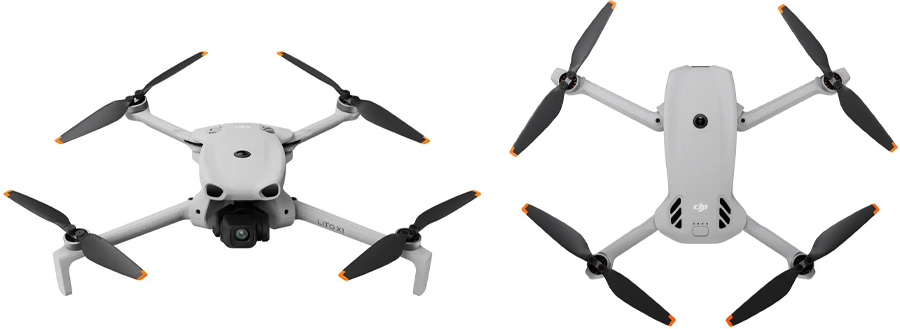
The DJI Lito X1 is clearly in the spirit of the Mini series, with a foldable, compact drone that weighs in at under 250g with the standard battery. Like the Lito 1, it’s easy to transport and still complies with European C0 class requirements. On the dimensions side, it’s as compact as ever: 144 × 94 × 62 mm when folded, and 183 × 251 × 79 mm when unfolded. A drone that’s easy to slip into a bag and take anywhere.
Depending on the bundle selected, the DJI Lito X1 is available with either a C0 or C1 class certification. The Standard and Fly More bundles retain the C0 certification, while the Fly More Plus bundle is offered with a C1 certification. This configuration is notably no longer subject to the 120-metre altitude limit that applies to C0 drones, but it also comes with a different regulatory framework.
Visually, the DJI Lito X1 adopts DJI’s new approach to obstacle detection, with modules positioned above and below the drone. Their operation is reminiscent of two opposing 360° camera lenses, enabling the drone to monitor its environment all around it. The X1 also adds LiDAR sensors to the front of the drone, integrated directly into the nose of the aircraft.
Finally, on the storage side, the DJI Lito X1 boasts 42GB of internal memory, plus a microSD port compatible with up to 1TB. A real plus for quickly recording sequences even without a memory card.
DJI Lito X1 : Transmission and radio controls
| Compatible radio controls | DJI RC-N2, DJI RC-N3, DJI RC 2 |
| Video transmission system | DJI O4 |
| Max. transmission distance | 15 km (IC), 8 km (CE / SRRC / MIC) |
| Live preview quality | up to 1080p at 60 fps |
On the transmission side, the DJI Lito X1 embeds the DJI O4 system, a technology now well known at DJI for its stability and reliability. Although the O4+ is reserved for the brand’s most advanced models, the O4 already offers excellent connection quality in the vast majority of situations.
DJI announces a maximum transmission range of up to 15 km (IC standard) and 8 km (CE standard). However, these are theoretical values measured in an open environment without interference. In practice, transmission range depends heavily on terrain, obstacles, and radio interference. Furthermore, in Europe, regulations require pilots to keep the drone within visual line of sight (VLOS), which generally limits the usable distance well before reaching the system’s maximum transmission capabilities.
For video feedback, the Lito X1 offers live previews up to 1080p at 60 frames per second, with a smooth, comfortable image for piloting.
As for the remote controllers, the drone is compatible with both the DJI RC-N2 and DJI RC-N3, which use a smartphone as the display, as well as the DJI RC 2 with its built-in screen. These are two well-established DJI options, depending on whether you prefer a simpler setup or a more comfortable flying experience in the field.
DJI Lito X1: Autonomy and recharging
| Battery | Standard battery: 2788 mAh Plus battery: 4680 mAh |
| Maximum autonomy | 36 minutes (standard battery) 52 minutes (Plus battery) |
| Typical autonomy | 23 minutes (standard battery) 37 minutes (Plus battery) |
| Charging time (standard battery) | Direct 73 min / Station 45 min (1 battery), 87 min (3 batteries) |
| Charging time (Plus battery) | Direct 102 min / Station 56 min (1 battery), 130 min (3 batteries) |
As for battery life, the DJI Lito X1 comes standard with a 2,788 mAh battery, but it is also compatible with the 4,680 mAh Plus Battery. DJI also offers a Fly More Plus bundle that includes these higher-capacity batteries. Please note, however, that in Europe, the Plus Battery is reserved for the C1 version of the DJI Lito X1, which is supplied with this bundle. Using it increases the drone’s weight to approximately 340 g and therefore places it under a different regulatory framework than the C0 version.
With the standard battery, DJI claims up to 36 minutes of maximum autonomy, compared with 52 minutes with the Plus battery. As always, these values correspond to ideal conditions and are far removed from actual use in the field.
DJI also communicates so-called “typical” autonomy values, intended to represent more realistic use with movement, video recording and obstacle avoidance activated. In this scenario, the Lito X1 achieves around 23 minutes with the standard battery, and up to 37 minutes with the Plus battery. These figures are broadly consistent with the initial feedback and tests available.
In practice, it is nevertheless advisable to keep a sufficient safety margin for the return-to-home flight. Wind, Sport mode, repeated accelerations, ActiveTrack usage, and low temperatures can also significantly reduce the drone’s actual usable flight time.
On the recharging side, it takes around 73 minutes to recharge the standard battery directly via the drone, compared with 102 minutes for the Plus battery. With the charging station, DJI claims around 45 minutes for a standard battery (or 87 minutes for three batteries), and 56 minutes for a Plus battery alone, compared with around 130 minutes for three Plus batteries.
Overall, the DJI Lito X1 remains in the middle of the class, with a real gain in endurance possible thanks to the Plus battery for those who want to give priority to long flights.
Discover our accessories for
DJI Lito X1
DJI Lito X1: In-flight performance
| Maximum speed | 18 m/s (Sport mode) 12 m/s (Normal / Tracking mode) |
| Max. ascent speed | 7 m/s (Sport mode) 5 m/s (Normal mode) 3 m/s (Cine mode) |
| Max. descent speed | 7 m/s (Sport mode) 5 m/s (Normal mode) 3 m/s (Cine mode) |
| Max. wind resistance | 10.7 m/s (level 5) |
Once ready for takeoff, the DJI Lito X1 is quick and intuitive to use: simply unfold the right-hand rear arm and the drone switches on automatically. A simple operation, but very practical for everyday use when you need to launch a flight quickly.
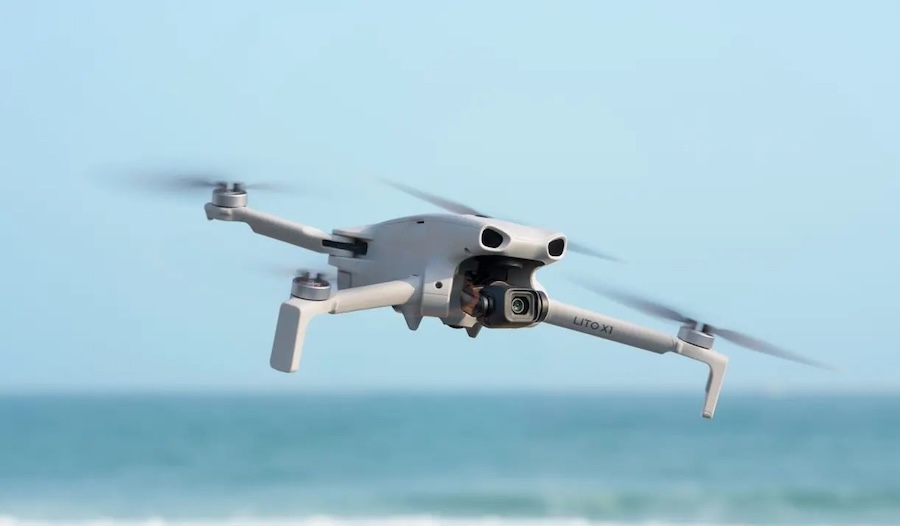
In flight, the DJI Lito X1 behaves very much like other recent DJI drones. Its maximum speed reaches 18 m/s (around 65 km/h) in Sport mode, compared with 12 m/s (around 43 km/h) in Normal or Follow mode, while maintaining the smooth and stable handling DJI is known for. The Lito X1 remains easy to control, whether for relaxed flights or faster movements. However, if you use Sport mode to take advantage of the DJI Lito X1’s maximum speed, keep in mind that obstacle sensing is disabled.
Wind resistance of 10.7 m/s (approx. 38 km/h, level 5) places it in the middle of its class. Although not a drone designed to fly in extreme conditions, it remains stable enough for conventional use in most situations.
Noise levels are another pleasant surprise. The DJI Lito X1 remains rather discreet in flight, with a noise level close to that of the quietest models in the Mini range. At several dozen meters, the noise becomes quite discreet, a far cry from the higher-pitched, more pronounced sound of drones like the Neo.
DJI Lito X1 : Features
| Photo modes | Single shot, Burst, Auto exposure bracketing (AEB), Interval, Panorama |
| Video modes | Slow motion, QuickShots, MasterShots, Hyperlapse, ActiveTrack subject tracking, Waypoint |
| Obstacle detection | Omnidirectional monocular optical system + LiDAR forward + infrared downward sensor |
The DJI Lito X1 marks a real step upmarket for DJI’s compact, affordable drones. Not only do we find more photo and video modes than on previous entry-level Minis, but also much more advanced functions such as subject tracking, omnidirectional obstacle detection and Waypoint route planning. Features previously found mainly on higher-end models.
Photo and video modes
The DJI Lito X1 offers a particularly comprehensive range of shooting modes for this category of drone. On the photo side, there are classics like burst, interval mode, panorama and automatic exposure bracketing (AEB).
For video, the drone also includes several well-known creative features from DJI. QuickShots automatically perform various pre-programmed camera movements, such as Dronie, Rocket, Circle, Helix, and Boomerang, making it easy to capture dynamic cinematic shots. MasterShots go a step further by automatically combining several of these flight paths into a single sequence, creating a much more elaborate result. The drone also features a slow-motion mode for even more impressive videos.
The Lito X1 also adds a Waypoint function, which lets you create routes with different waypoints and associate certain actions to them, such as triggering a photo or video. A practical way to easily reproduce the same camera movements from one flight to the next.
The drone also features ActiveTrack subject tracking, which is described in greater detail below.
Subject follow-up
The DJI Lito X1 is equipped with a true subject tracking system, with several modes depending on the type of shot required. The drone can reach speeds of up to 12 m/s in tracking mode, i.e. around 43 km/h, which is more than enough for most conventional applications.
These include :
- ActiveTrack: automatically tracks a person, bike or vehicle, with the option of choosing the drone’s position around the subject during tracking.
- Point of interest: locks a subject or building to automatically rotate around it.
- Spotlight: keeps the subject in focus while the pilot maintains manual control of the drone.
According to the various tests and feedback available, tracking is generally smooth and reliable, with consistent behavior in most situations.
Obstacle detection
For obstacle detection, the DJI Lito X1 inaugurates the new approach adopted by DJI for this range. The drone uses two modules placed above and below the chassis, whose operation is reminiscent of that of two opposing lenses on a 360° camera, enabling coverage of the environment all around the drone.
The X1 also adds LiDAR sensors on the front to improve obstacle detection, particularly in dark or low-light environments. These sensors also enable the drone to improve certain automatic functions such as Return to Departure (RTH), even in situations where the GPS signal becomes limited.
As a result, the DJI Lito X1 benefits from omnidirectional obstacle detection that is particularly advanced for this category of drone. And clearly, to see this kind of technology land on such a compact and affordable drone is quite impressive.
As with DJI’s most recent models, you can choose the drone’s behavior when an obstacle is detected: automatic shutdown or bypassing the obstacle to continue on the planned trajectory.
It is important to keep in mind that, as with most DJI drones, obstacle sensing is not available in Sport mode. In addition, this system is only a piloting aid and cannot guarantee the detection of every obstacle: very thin branches, power lines, transparent or low-contrast surfaces, as well as certain low-light or poorly lit situations, may not be detected by the sensors. It is therefore always recommended to maintain a safe margin while flying.
OUR BEST SELLERS - DJI Lito X1

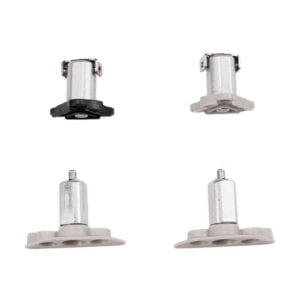
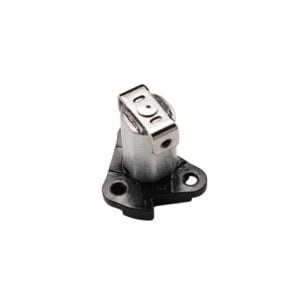
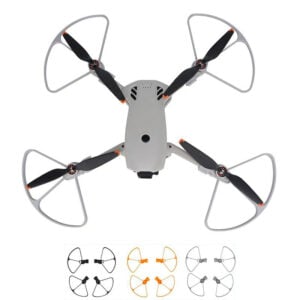
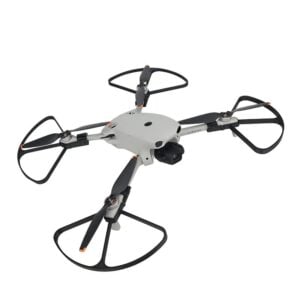
Propeller Protection Guards
Accessories
DJI Lito X1 : Image
| Aerial work platform | 3-axis mechanical gondola |
| Sensor | 1/1.3-inch CMOS |
| Objective | 24 mm equivalent format Aperture f/1.7 FOV 82.1 |
| Photo resolution | 12 MP / 48 MP |
| Max. video resolution (horizontal) | 4K up to 100 fps FHD up to 200 fps |
| Max. video resolution (vertical) | 2.7K up to 60 fps |
| ISO range | 100 à 12800 |
| Max. bit rate | 130 Mb/s |
| Digital zoom | Video: 1 to 3x (4K, 2.7K vertical), 1 to 4x (FHD) Photo: 1 to 3x (12/48 MP) |
| Photo format | JPEG / DNG (RAW) |
| Video format | MP4 (MPEG-4 AVC/H.264, HEVC/H.265) |
| Color profile | Normal (8 / 10 bits), D-Log M (10 bits) |
Nacelle, sensor and resolution
The DJI Lito X1 retains a 3-axis mechanical gondola, but this time uses a 1/1.3-inch CMOS sensor, far more ambitious than that of the Lito 1. It also has an f/1.7 aperture and a focal length equivalent to 24 mm, allowing more light to enter and improving overall image quality.
For photography, the drone can capture 12 or 48 megapixel images, with support for RAW (DNG) format for those wishing to further enhance their shots.
On the video side, the Lito X1 can film in 4K at up to 100 frames per second, with the option of going up to 200 fps in Full HD for the most advanced slow-motion shots. A far more advanced configuration than DJI’s previous entry-level compact drones.
The drone also offers a 2.7K vertical mode at up to 60 fps. As with the Lito 1, however, the camera does not physically swivel vertically: the portrait format here is based on cropping within the image, and not on a dedicated rotating gondola as on some higher-end Mini models.
The Lito X1 also features a digital zoom that can go up to 3x in 4K and 2.7K vertical, and up to 4x in Full HD. As always with this type of zoom, quality gradually declines as you increase the magnification, but it’s still handy for quickly adjusting your framing without moving the drone.
Image quality
Overall, the DJI Lito X1 offers very convincing image quality for a drone in this category. The benefits of the 1/1.3-inch sensor are quickly felt, with a cleaner, better-defined image overall than on the brand’s more conventional entry-level models.
Color rendition is also fairly faithful to reality in automatic profile, with a pleasant image without over-aggressive processing. Even if the Lito X1 doesn’t fully rival DJI’s best Mini models in terms of image quality, it clearly comes closer than the Lito 1.
In low-light conditions, the drone also performs well. Noise levels remain contained, while sharpness is generally convincing for such a compact drone.
The Lito X1 also benefits from the 10-bit D-Log M color profile, a real plus for users wishing to further enhance their videos in post-production. DJI boasts a dynamic range of up to 14 f-stops after calibration, allowing more information to be recovered in both dark and bright areas of the image.
DJI Lito X1 : Packs and prices
ℹ️ Note: some links in this section are Amazon affiliate links. As Amazon Associates, we earn from qualifying purchases, at no extra cost to you.
| Standard package | 419 € |
|
| Fly More Pack (DJI RC-N3) | 579 € |
|
| Fly More Pack (DJI RC 2) | 679 € |
|
| Fly More Plus Pack (DJI RC 2) | 759 € |
|
The DJI Lito X1 starts at €419, with several packages available depending on the level of equipment required.
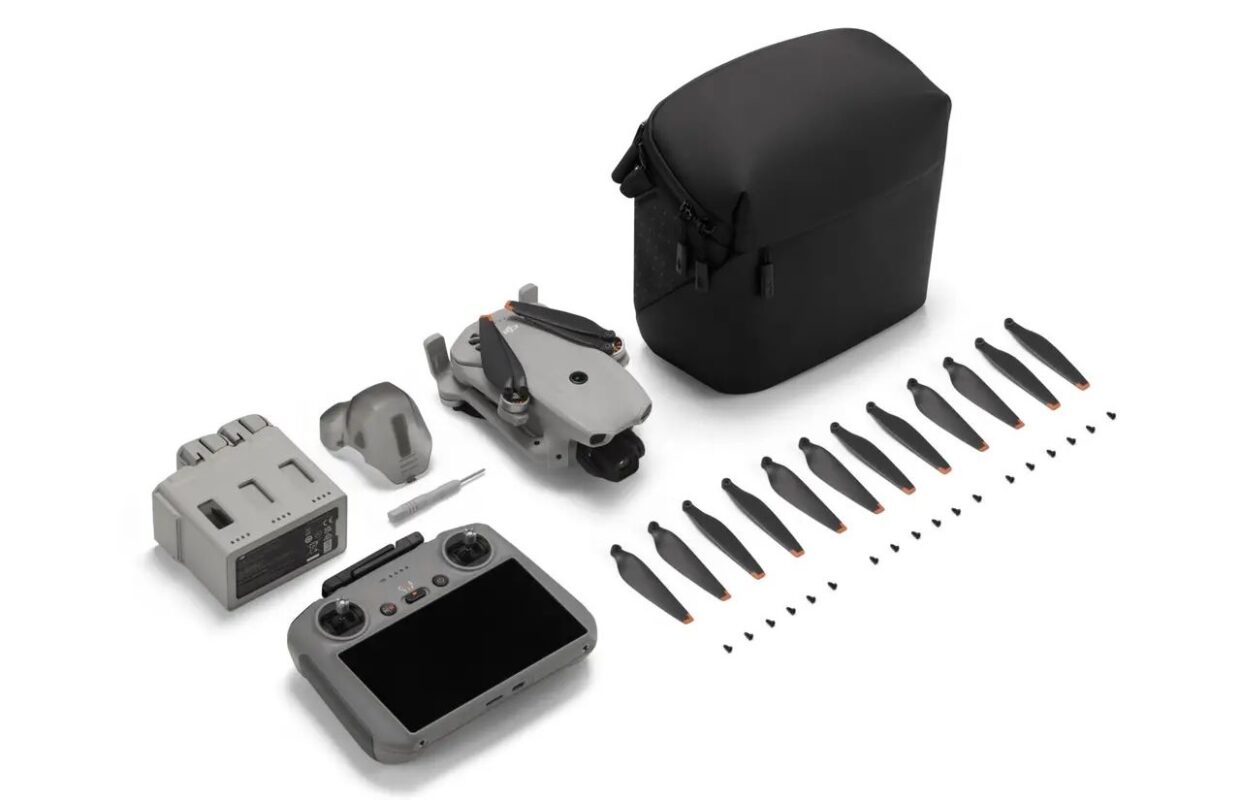
The standard package includes the DJI Lito X1 drone, the DJI RC-N3 radio control system, a standard battery, a nacelle protector, a pair of spare propellers and the usual cables.
The Fly More bundle with DJI RC-N3 adds several useful accessories for long flight sessions:
- two additional standard batteries (three in all),
- two additional pairs of propellers,
- a charging station,
- and a carry bag.
DJI is also offering a Fly More bundle with DJI RC 2, featuring exactly the same content, but with the DJI RC 2 remote control with integrated display, which is more comfortable and quicker to use in the field.
Finally, the Fly More Plus pack with DJI RC 2 retains the same equipment as the previous bundle, but replaces the standard batteries with three Plus batteries, offering significantly greater autonomy.
Conclusion DJI Lito X1: the best compromise in the range?
With the DJI Lito X1 drone, DJI shows just how far compact, affordable drones have come in recent years. Where earlier entry-level models focused on simplicity and price, the X1 now includes features that until recently were found only on more advanced drones: high-performance subject tracking, omnidirectional obstacle detection, LiDAR sensors, D-Log M, Waypoint planning and DJI O4 transmission.
All this, in a drone that’s still compact, foldable and easy to transport, with less than 250 g on the scales. Clearly, the level of equipment on offer here becomes quite impressive for this product category.
The DJI Lito X1 also benefits from a real step-up in image quality, thanks to its 1/1.3-inch sensor, D-Log M profile and video capabilities that are far more advanced than on the brand’s previous compact drones.
Of course, higher-end models such as the Mini 4 Pro or Mini 5 Pro retain certain advantages, notably with their native rotating gondola for vertical video or even more advanced imaging capabilities. But it’s also logical: these models are simply not in the same price category.
Nevertheless, the DJI Lito X1 clearly manages to strike an excellent balance between compactness, ease of use, autonomy, safety and image quality. This makes it the most interesting drone in the new DJI range. Given the relatively limited price differential with the DJI Lito 1, this Lito X1 even appears to be the most relevant model for the majority of users.
Who is the DJI Lito X1 designed for?
The DJI Lito X1 is aimed above all at those who want a compact drone that’s easy to use and carry, but with a more ambitious imaging section than on the DJI Lito 1 or the brand’s earlier entry-level models.
It is an excellent choice for beginners thanks to its intuitive controls, numerous flight assistance features, and omnidirectional obstacle sensing, all of which make the first flights more reassuring. At the same time, it offers better video quality, a more advanced camera sensor, and, above all, the D-Log M color profile, which provides greater control over the image during post-production for those who enjoy editing their videos.
The drone is also well-suited to users who want a lightweight, versatile model capable of going further in the image department, without going straight to a much more expensive drone like the more advanced Mini Pros.
Should I replace a Mini 2 SE or Mini 4K with the DJI Lito X1?
For anyone still using a Mini 2 SE or Mini 4K, the evolution offered by the Lito X1 is particularly significant.
The benefits are not limited to image quality. The drone also brings more modern transmission with the DJI O4 system, omnidirectional obstacle detection, true subject tracking, more automatic modes, LiDAR sensors and advanced functions such as D-Log M and Waypoint planning.
The Lito X1 clearly gives the impression of a much more modern, safer and more versatile drone for everyday use.
On the other hand, if your use remains very occasional – a few flights from time to time and very simple shots – a Mini 4K is still capable of doing the job. So it all depends on how much you value the new functions and imaging features offered by the DJI Lito X1.
FAQ – Frequently Asked Questions about the DJI Lito X1
Is the DJI Lito X1 a good drone for beginners?
Yes. The DJI Lito X1 is one of the best drones for beginners who want something more advanced than a basic entry-level model. It offers intuitive controls, omnidirectional obstacle sensing, ActiveTrack subject tracking, and numerous intelligent flight modes that make the first flights much easier and safer.
Compared with drones such as the DJI Lito 1 or the Mini 4K, it also delivers noticeably better photo and video quality thanks to its 1/1.3-inch sensor, D-Log M color profile and advanced creative features. It is therefore an excellent choice for beginners who want a drone they can continue using for years.
What is the maximum speed of the DJI Lito X1?
The DJI Lito X1 reaches a maximum speed of 18 m/s (approximately 65 km/h or 40 mph) in Sport mode. In Normal mode and during forward ActiveTrack, its speed is limited to 12 m/s (around 43 km/h or 27 mph).
Keep in mind that obstacle sensing is disabled in Sport mode. This mode is mainly intended for experienced pilots flying in wide open areas where maximum performance is preferred.
What is the real-world battery life of the DJI Lito X1?
DJI advertises up to 36 minutes of flight time with the standard battery and up to 52 minutes with the Plus Battery. These figures are measured under ideal testing conditions.
In real-world use, you should generally expect around 23 to 25 minutes with the standard battery and up to 37 minutes with the Plus Battery, depending on flight conditions. Wind, repeated acceleration, Sport mode, ActiveTrack and low temperatures can all significantly reduce actual flight time.
What does the DJI Lito X1 Plus Battery change?
The Plus Battery significantly increases the DJI Lito X1’s endurance, raising DJI’s advertised maximum flight time from 36 to 52 minutes. In practice, the additional flight time is also noticeable.
However, it also increases the drone’s takeoff weight to approximately 340 g. In Europe, the Plus Battery is only available with the C1-certified version included in the Fly More Plus package, meaning it is subject to different regulations than the C0 version.
What is the transmission range of the DJI Lito X1?
The DJI O4 transmission system provides a theoretical maximum range of 15 km (IC standard) and 8 km (CE standard). These values are measured in open environments without interference.
Actual transmission range depends heavily on terrain, buildings, trees and radio interference. In addition, European regulations generally require pilots to keep the drone within visual line of sight (VLOS), meaning legal flying distance is usually much shorter than the transmission system’s maximum capability.
Is the DJI Lito X1 compatible with DJI Goggles?
No. At the time of writing, the DJI Lito X1 is not compatible with the DJI Goggles N3, DJI Goggles 3 or DJI Goggles Integra. It cannot currently be flown as an FPV drone using DJI goggles.
It is also not compatible with the DJI RC Motion 3. The DJI Lito X1 only supports the DJI RC-N2, DJI RC-N3 and DJI RC 2 remote controllers.
Which QuickShots are available on the DJI Lito X1?
The DJI Lito X1 includes several QuickShots that automatically create cinematic camera movements, including Dronie, Rocket, Circle, Helix and Boomerang.
It also features MasterShots, which automatically combine multiple flight paths into a more elaborate cinematic sequence. QuickShots are ideal for creating a single automated movement, while MasterShots produce a more complete cinematic result.
Does the DJI Lito X1 record true vertical video?
The DJI Lito X1 can record 2.7K vertical video at up to 60 fps, but its camera does not physically rotate into portrait orientation.
Instead, vertical footage is created by cropping the sensor, unlike some higher-end DJI Mini models equipped with a rotating gimbal. Even so, this format remains very practical for publishing videos directly to TikTok, Instagram Reels or YouTube Shorts.
Which remote controllers are compatible with the DJI Lito X1?
The DJI Lito X1 is compatible with the DJI RC-N2, DJI RC-N3 and DJI RC 2.
The RC-N2 and RC-N3 require a smartphone for the live view, whereas the DJI RC 2 features its own built-in high-brightness display, making it more convenient to use without connecting a phone.
Is the DJI Lito X1 better than the DJI Mini 4K?
Yes. The DJI Lito X1 represents a significant upgrade over the DJI Mini 4K. It offers a larger image sensor, DJI O4 transmission, ActiveTrack, omnidirectional obstacle sensing with LiDAR, D-Log M recording and many additional intelligent flight features.
The Mini 4K remains an excellent choice if you simply need an affordable and reliable drone for occasional flights. However, if you want more modern features and significantly improved image quality, the DJI Lito X1 is clearly the more capable option.
💡 Also read
➡️ Looking for a simpler, more affordable model to get started with? See also our review of the DJI Lito 1.
➡️ Wondering about the real differences between the two drones? Discover the differences between the DJI Lito 1 and Lito X1.
➡️ Hesitating between the Lito X1 and DJI’s premium Mini model? Check out our comparison between the DJI Lito X1 and Mini 5 Pro.
➡️ Looking for the best value-for-money alternative to the DJI Mini 4 Pro? Check out our DJI Lito X1 vs Mini 4 Pro comparison.
➡️ Wondering whether the DJI Mini 3 is still a good choice today? Check out our DJI Lito X1 vs Mini 3 comparison.
📚 Other useful guides
➡️ Discover why the DJI Lito X1 is part of our selection of the best drones in 2026.
➡️ New to drones and mainly want to shoot videos? Check out our guide to choose the best beginner video drone.
🛠️ For maintenance and repairs, you can find all compatible parts here:
DJI Lito X1 Parts

 Blog
Blog