
 Français
 Deutsch
 Español
 Italiano
 Parts & Accessories by Drone
 Drones
 Action camera
 Microphones
 Camera stabilizers
 VR Headsets
DJI Lito X1 vs. Mini 3: Which Drone Should You Choose?
Jul
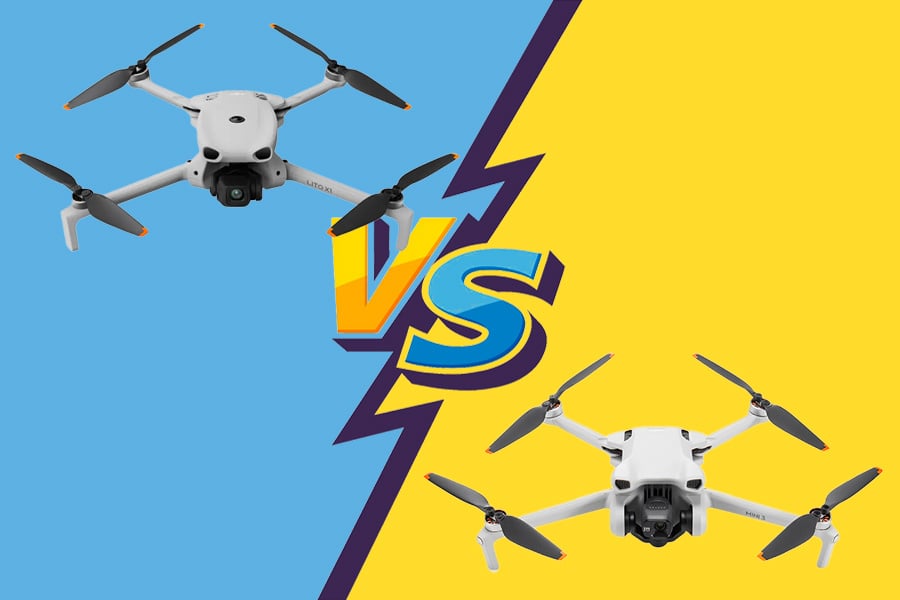
With the DJI Lito X1, DJI is updating its lineup of entry-level camera drones by offering a more modern and better-equipped model. However, the DJI Mini 3 remains a must-have thanks to its excellent value for money and its 4K camera on a rotating gimbal. So, what are the main differences between these two drones? Which one offers the best features, image quality, and performance? And most importantly, which one best suits your needs? Find all the answers in this comprehensive DJI Lito X1 vs. Mini 3 comparison.
DJI Lito X1 vs. Mini 3: Key Takeaways
Don’t have time (or just can’t be bothered 😅) to read it all? Here are the key differences to keep in mind between the DJI Lito X1 and the Mini 3 👇
- 🛩️ Both drones weigh less than 250 g in their standard versions and fall into the C0 category, but the DJI Lito X1 is also available in a C1 version with its Plus battery.
- 💾 The DJI Lito X1 comes with 42 GB of internal storage and supports microSD cards up to 1 TB, compared to a maximum of 512 GB for the Mini 3, which has no built-in storage.
- 📡 Thanks to the DJI O4 transmission system, the Lito X1 offers a greater theoretical range as well as 1080p video feed at 60 fps, compared to 720p at 30 fps with the Mini 3’s DJI O2 system.
- 🔋 The Mini 3 offers slightly longer flight time, while the Lito X1 is the only model officially available in Europe that comes with a Fly More Plus pack featuring high-capacity batteries.
- 🚀 The DJI Lito X1 is slightly faster in flight and has higher climb and descent speeds, even though both drones offer the same wind resistance.
- 🎮 The Lito X1 offers a much more comprehensive set of features, including subject tracking, omnidirectional obstacle detection, MasterShots, Hyperlapse, and Waypoint missions, whereas the Mini 3 focuses on the essentials.
- 🎥 Both drones share the same 1/1.3-inch CMOS sensor, but the Lito X1 goes a step further with 4K at up to 100 fps and 10-bit D-Log M, while the Mini 3 retains the advantage of true 4K vertical video thanks to its rotating gimbal.
- 💸 With a starting price of €339, the DJI Mini 3 is significantly more affordable than the DJI Lito X1, which starts at €419.
📌 If you’re looking for the most modern and feature-packed drone, the DJI Lito X1 is currently the best choice. If you’re primarily looking for excellent value for the money and can do without the most advanced features, the DJI Mini 3 remains a safe bet.
DJI Lito X1 vs. Mini 3: Design
| DJI Lito X1 | DJI Mini 3 | |
| Weight | 249 g (standard battery) 340 g (Plus battery) | < 249 g |
| Dimensions (folded, without helices) (L x W x H) | 149 × 94 × 62 mm | 148 x 90 x 62 mm |
| Dimensions (unfolded) (L x W x H) | 183 × 251 × 79 mm (without propellers) | 251 x 362 x 72 mm (with propellers) |
| Storage | 42 GB internal memory microSD card (up to 1 TB) | microSD card (up to 512 GB) |
| Class (Europe) | C0 (standard battery) / C1 (Plus battery) | C0 |
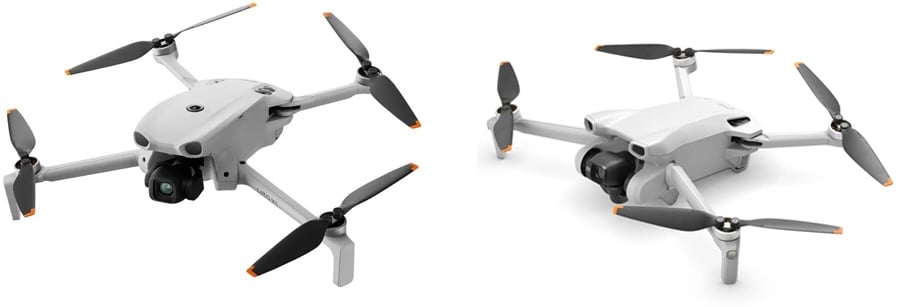
At first glance, the DJI Lito X1 and the DJI Mini 3 share the same concept: that of a foldable, compact, and lightweight drone designed for the general public. Both weigh less than 250 g and are therefore classified as C0 drones in Europe. When folded, their dimensions are virtually identical, making them both particularly easy to carry around on a daily basis.
The Lito X1 does, however, have one interesting feature. It is also available in a C1 version, equipped with a higher-capacity battery, designed for users who prioritize battery life above all else. The Mini 3, on the other hand, is only sold in the C0 version on the European market.
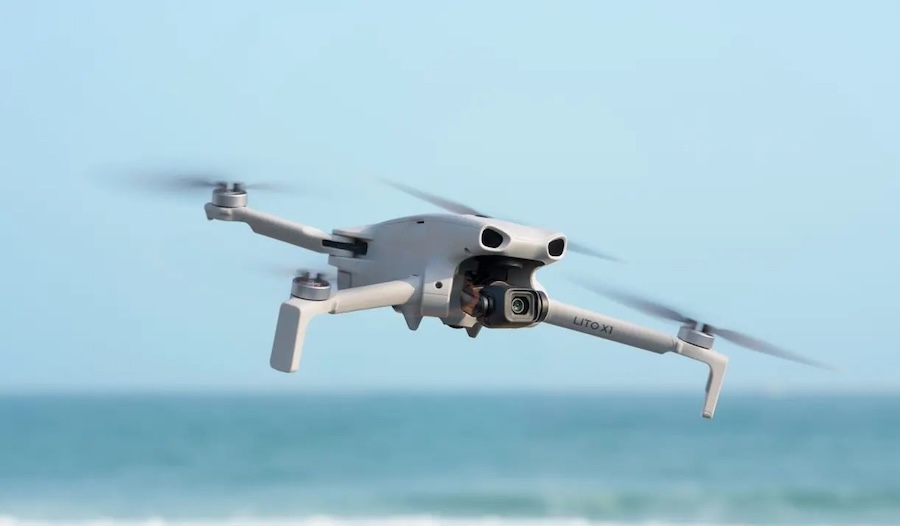
The DJI Lito X1 also stands out for its significantly more modern design. It features an omnidirectional monocular optical system, complemented by a LiDAR sensor at the front, allowing it to monitor its surroundings in all directions. In contrast, the Mini 3 lacks obstacle detection and relies solely on an inferior optical system, primarily intended for position holding and landing.
Finally, the Lito X1 also has the edge on the storage side. In addition to its microSD card slot, which supports cards up to 1 TB, it features 42 GB of internal memory—handy for quickly recording a few clips even without a memory card. The Mini 3, on the other side, has no built-in storage and is limited to a microSD card with an officially supported maximum capacity of 512 GB.
🏆 DJI Lito X1: omnidirectional obstacle detection, 42 GB of internal storage, and available in C0 or C1 versions.
Discover our accessories for
DJI Lito X1
DJI Lito X1 vs. Mini 3: Transmission and Remote Controls
| DJI Lito X1 | DJI Mini 3 | |
| Compatible radio controls | DJI RC-N2/RC-N3, DJI RC 2 | DJI RC-N1, DJI RC |
| Video transmission system | DJI O4 | DJI O2 |
| Max. transmission distance | 15 km (IC), 8 km (CE / SRRC / MIC) | 10 km (FCC), 6 km (CE / SRRC / MIC) |
| Live preview quality | up to 1080p at 60 fps | up to 720p at 30 fps |
When it comes to transmission, the DJI Lito X1 is, unsurprisingly, a generation ahead. It features the DJI O4 system, while the Mini 3 relies on DJI O2—a two-generation gap between the two technologies. While the latter remains a tried-and-true system that offers a reliable and stable connection in the vast majority of situations, the DJI O4 goes a step further, with a greater theoretical range, higher-quality video feed, and a transmission system that is theoretically more robust.
DJI announces a maximum range of up to 15 km (IC) and 8 km (CE) for the Lito X1, compared to 10 km (FCC) and 6 km (CE) for the Mini 3. Of course, these distances are essentially theoretical, since a drone is supposed to be flown within visual line of sight. Above all, they provide a good indication of the quality and robustness of the transmission system—two areas where the Lito X1 has the edge.
Live video feed is , in fact, one of the most notable improvements. The Lito X1 can display a live preview at up to 1080p at 60 frames per second, compared to 720p at 30 frames per second for the Mini 3. This is a real improvement in terms of smoothness and ease of control.
On the side of remote controls, both drones can be used with either a model that requires a smartphone or a remote control with a built-in screen. The DJI Lito X1 is compatible with the DJI RC-N2, DJI RC-N3, and DJI RC 2, while the Mini 3 works with the DJI RC-N1 and DJI RC. The capabilities are therefore very similar, even though the compatible models differ depending on the drone’s generation.
🏆 DJI Lito X1: DJI O4 transmission system, greater theoretical range, and higher-quality video feed.
DJI Lito X1 vs. Mini 3: Battery Life and Charging
| DJI Lito X1 | DJI Mini 3 | |
| Battery | Standard battery: 2788 mAh Plus battery: 4680 mAh | Standard battery: 2453 mAh Plus battery: 3850 mAh |
| Maximum autonomy | 36 minutes (standard battery) 52 minutes (Plus battery) | 38 minutes (standard battery) 51 minutes (Plus battery) |
| Typical autonomy | 23 minutes (standard battery) 37 minutes (Plus battery) | Not communicated |
| Charging time (standard battery) | Direct 73 min / Station 45 min (1 battery), 87 min (3 batteries) (65W charger) | Direct: 64 min / Station: 56 min (DJI 30 W USB-C charger) |
| Charging time (Plus battery) | Direct 102 min / Station 56 min (1 battery, 130 min (3 batteries) (65W charger) | Direct: 101 min / Station: 78 min (DJI 30 W USB-C charger) |
On paper, the two drones have very similar flight times. DJI claims up to 36 minutes of flight time with the Lito X1’s standard battery, compared to 38 minutes for the Mini 3. As always, these figures are measured under laboratory conditions and are difficult to achieve in real-world use.
The difference is that, this time, DJI is also providing a so-called “typical” flight time for the Lito X1, which is supposed to better reflect real-world use involving flight, video recording, and obstacle avoidance enabled. The manufacturer reports 23 minutes with the standard battery and 37 minutes with the Plus battery. For the Mini 3, no equivalent figures are provided. However, various tests and user feedback indicate that actual flight time generally ranges between 25 and 30 minutes with the standard battery, depending on flight conditions and piloting style.
Both drones are also compatible with a Plus battery, which significantly extends their flight time. The DJI Lito X1 thus achieves a theoretical flight time of 52 minutes, compared to 51 minutes for the Mini 3. The difference is that DJI officially sells this Plus battery in Europe for the Lito X1 as part of a Fly More Plus bundle, allowing customers to choose between a C0 or C1 version at the time of purchase. For the Mini 3, however, this battery has never been officially offered on the European market.
On the side of charging, each model can be charged directly via the drone or using a charging station. With its 30 W USB-C charger, the Mini 3 takes about 64 minutes to charge its standard battery directly on the drone, compared to 73 minutes for the Lito X1 with a 65 W charger. When using their respective charging stations, DJI reports 56 minutes for the Mini 3 and 45 minutes for the Lito X1 with a standard battery. However, these figures are difficult to compare, as the two manufacturers did not use the same charger for their measurements.
🏆 DJI Mini 3: Slightly longer battery life.
🏆 DJI Lito X1: Plus battery now officially available in Europe.
OUR BEST SELLERS - DJI Lito X1

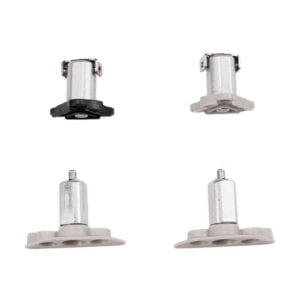
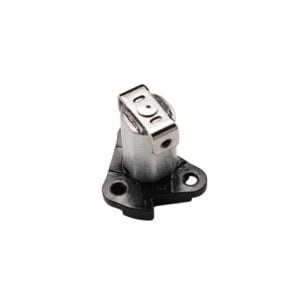
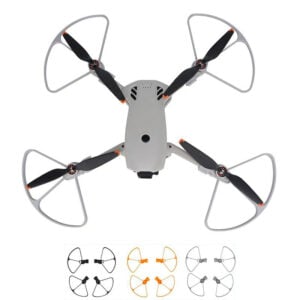
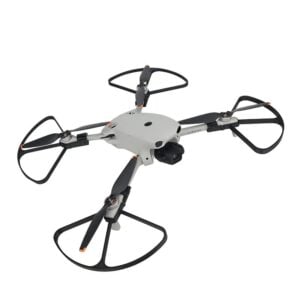
Propeller Protection Guards
Accessories
DJI Lito X1 vs. Mini 3: Flight Performance
| DJI Lito X1 | DJI Mini 3 | |
| Maximum speed | 18 m/s (Sport mode) 12 m/s (Normal / Tracking mode) | 16 m/s (Sport mode) |
| Max. ascent speed | 7 m/s (Sport mode) 5 m/s (Normal mode) 3 m/s (Cine mode) | 5 m/s |
| Max. descent speed | 7 m/s (Sport mode) 5 m/s (Normal mode) 3 m/s (Cine mode) | 3.5 m/s |
| Max. wind resistance | 10.7 m/s (level 5) | 10.7 m/s (level 5) |
In flight, the two drones perform very similarly. Both benefit from the stability characteristic of DJI’s Mini series and can withstand wind speeds of up to level 5 (10.7 m/s), which is sufficient for smooth flight in most conditions.
The DJI Lito X1, however, retains a slight edge in terms of raw performance. In Sport mode, it can reach 18 m/s (about 65 km/h), compared to 16 m/s (about 58 km/h) for the Mini 3. The difference is relatively small in practice, but it allows the Lito X1 to cover long distances more quickly.
The Lito X1 also performs better during ascents and descents. It reaches speeds of up to 7 m/s in both directions in Sport mode, compared to 5 m/s and 3.5 m/s, respectively, for the Mini 3. This is a significant advantage when filming in the mountains, on cliffs, or in any environment with steep elevation changes.
On the other hand, both models perform equally well for standard use. Their excellent flight stability, combined with identical wind resistance, ensures smooth flight and stable footage in most situations.
🏆 DJI Lito X1: Maximum speed, faster ascent and descent.
DJI Lito X1 vs. Mini 3: Features
| DJI Lito X1 | DJI Mini 3 | |
| Photo modes | Single shot, Burst, Auto exposure bracketing (AEB), Interval, Panorama | Single Shot, Auto Exposure Bracketing (AEB), Interval, Panorama |
| Video modes | Slow motion, QuickShots, MasterShots, Hyperlapse, Subject tracking, Waypoint | QuickShots |
| Obstacle detection | Omnidirectional monocular optical system + LiDAR forward + infrared downward sensor | Lower optical system |
This is probably where the difference between the two drones is most pronounced. While the DJI Mini 3 focuses on the essential features for simple filming, the DJI Lito X1 incorporates many technologies previously reserved for DJI’s higher-end models. Beyond image quality, it’s especially in smart modes, subject tracking, and obstacle detection that the newcomer has the edge.
Photo and video modes
Both drones already offer the essentials for photography, including automatic exposure bracketing (AEB), Interval mode, Panoramas, and QuickShots, which let you automatically capture various camera movements in just a few seconds.
The DJI Lito X1, however, goes much further. For photos, it adds a Burst mode, which is missing from the Mini 3. For video, it also includes MasterShots, which automatically string together multiple camera movements to create a complete sequence, as well as Slow Motion,Hyperlapse, and Waypoint—a feature that lets you program a route consisting of multiple waypoints to easily replicate the same camera movement.
The DJI Mini 3, on the other side, is much simpler. Its QuickShots already offer plenty of options for creating dynamic videos with ease, but it lacks most of the more advanced creative features offered by the Lito X1.
Intelligent functions
This is where the DJI Lito X1 really sets itself apart. It features a full-fledged subject-tracking system with several modes—including ActiveTrack, Spotlight, and Point of Interest—capable of automatically tracking a person, vehicle, or bicycle while adjusting the drone’s movements accordingly. According to available user feedback, this tracking is generally smooth and reliable in most situations.
The Lito X1 also features omnidirectional obstacle detection, powered by an optical system that covers the entire environment, supplemented by a front-facing LiDAR sensor. This combination not only improves flight safety but also enhances certain automatic functions, such as Return to Home (RTH), particularly as light levels decrease. As with the latest DJI models, the pilot can choose between automatic stopping in front of an obstacle or automatically flying around it.
In contrast, the DJI Mini 3 does not have a true obstacle-detection system. It relies on a basic optical system, used primarily to stabilize flight near the ground and facilitate landing. The pilot will therefore need to remain more vigilant during flight, especially near trees or other obstacles.
🏆 DJI Lito X1: Subject tracking, omnidirectional obstacle detection, and more smart features.

Discover our accessories for
DJI Mini 3
DJI Lito X1 vs. Mini 3: Image
| DJI Lito X1 | DJI Mini 3 | |
| Aerial work platform | 3-axis mechanical gondola | 3-axis mechanical gondola |
| Sensor | 1/1.3-inch CMOS | 1/1.3-inch CMOS |
| Objective | 24 mm equivalent format Aperture f/1.7 FOV 82.1 | 24 mm equivalent format Aperture f/1.7 FOV 82.1 |
| Photo resolution | 12 MP / 48 MP | 12 MP / 48 MP |
| Max. video resolution (horizontal) | 4K up to 100 fps FHD up to 200 fps | 4K up to 30 fps 2.7K up to 60 fps FHD up to 60 fps |
| Max. video resolution (vertical) | 2.7K at up to 60 fps (cropped) | 4K at up to 30 fps (rotating gimbal) |
| ISO range | 100 à 12800 | 100 à 12800 |
| Max. bit rate | 130 Mb/s | 100 Mb/s |
| Digital zoom | 4K: 1x to 3x FHD: 1x to 4x Photo (12 MP): 1x to 3x | 4K: 2x 2.7K: 3x FHD: 4x |
| Photo format | JPEG / DNG (RAW) | JPEG / DNG (RAW) |
| Video format | MP4 (MPEG-4 AVC/H.264, HEVC/H.265) | MP4 (H.264) |
| Color profile | Normal (8 / 10 bits), D-Log M (10 bits) | Normal (8 bits) |
Gimbal, Sensor, and Resolution
In terms of hardware, the two drones are essentially in the same class. Both feature a 3-axis mechanical gimbal, a 1/1.3-inch CMOS sensor, a 24mm-equivalent lens with an f/1.7 aperture , and a maximum photo resolution of 48 MP. On paper, their specs are very similar.
The differences are most noticeable in video. The DJI Lito X1 can record in 4K at up to 100 frames per second, compared to 30 frames per second on the Mini 3. It also supports Full HD at up to 200 fps, which offers many more possibilities for creating slow-motion footage.
The DJI Mini 3, however, retains a significant advantage thanks to its rotating gimbal, which allows it to shoot in true vertical 4K without cropping. The Lito X1 also offers a portrait mode, but this relies on cropping the image and is limited to 2.7K. For content creators who post regularly on social media, this design remains a real advantage.
Finally, the DJI Lito X1 also has the edge in more technical aspects thanks to a bitrate of 130 Mb/s, support for the H.265 codec, and, most importantly, the 10-bit D-Log M profile, which is not available on the Mini 3, which is limited to the 8-bit Normal profile.
Image quality
In practice, both drones deliver very similar image quality in good lighting conditions. Thanks to their identical sensors and f/1.7 aperture, they produce detailed images with good sharpness and an impressive dynamic range for this class of drones.
The DJI Mini 3 remains an excellent choice for photography and video today, offering natural-looking results and very impressive performance, even in low-light conditions.
The DJI Lito X1, however, goes a step further for users who want to get more out of their videos during post-production. Its 10-bit D-Log M profile offers greater color grading latitude, allowing videographers to recover more detail in highlights and shadows while providing greater flexibility during editing.
🏆 DJI Lito X1: 4K at up to 100 fps and 10-bit D-Log M profile.
🏆 DJI Mini 3: true 4K vertical video thanks to its rotating gimbal.
DJI Lito X1 vs. Mini 3: Bundles and Prices
ℹ️ Note: some links in this section are Amazon affiliate links. As Amazon Associates, we earn from qualifying purchases, at no extra cost to you.
| DJI Lito X1 | DJI Mini 3 | |
| Standard Package (with standard radio control) | 419 € | €339 (RC-N1) |
| Standard Package (with built-in screen) | – | €439 (DJI RC) |
| Fly More Pack (with standard radio control) | 579 € (RC-N3) | – |
| Fly More Pack (with built-in screen) | 679 € (RC 2) | 569 € (DJI RC) |
| Fly More Plus Package | 759 € | – |
The DJI Lito X1 starts at €419 with the DJI RC-N3 remote controller, while the DJI Mini 3 starts at €339 with the DJI RC-N1. Both drones are also available with a remote controller featuring a built-in screen (DJI RC 2 for the Lito X1, DJI RC for the Mini 3), which is more convenient to use since it eliminates the need to connect a smartphone.
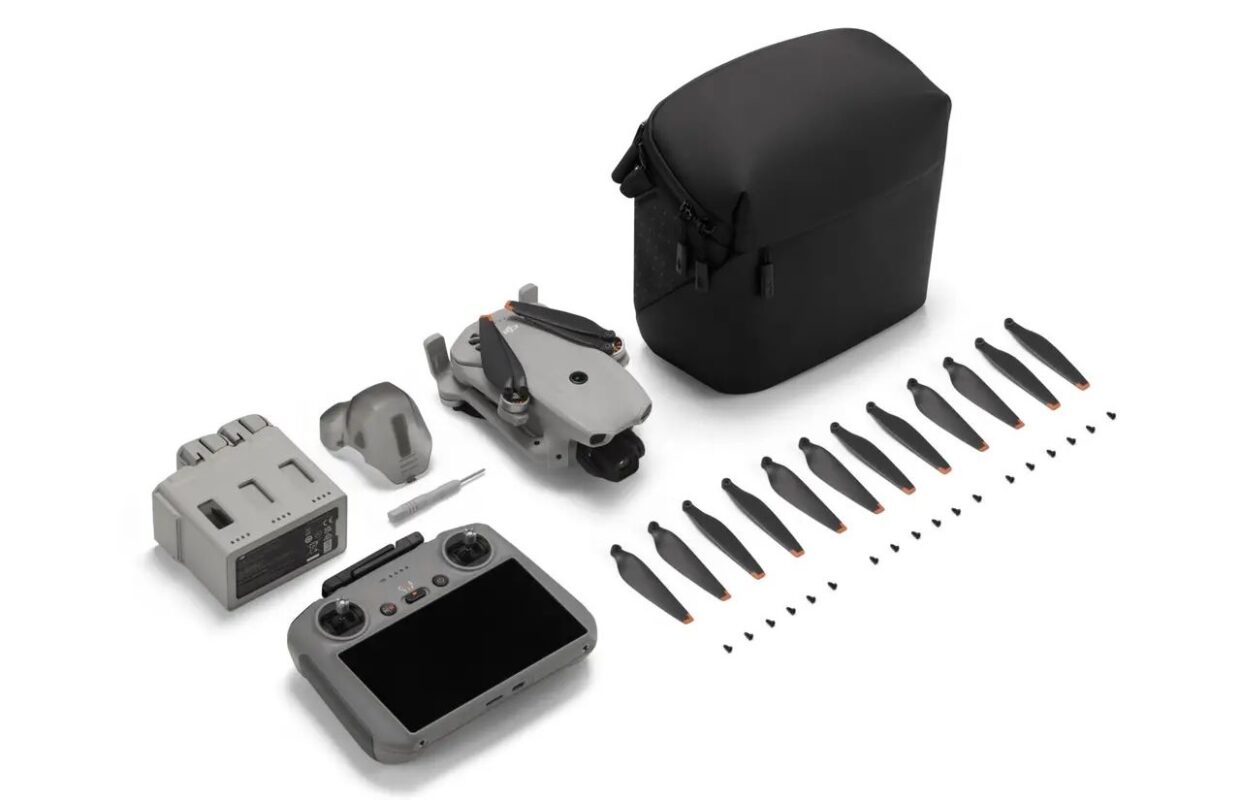
For users who want to fly longer, both models also offer a Fly More Pack, which includes a total of three batteries, a charging station, spare propellers, and a carrying case. The contents are therefore very similar from one drone to the other.
The DJI Lito X1, however, stands out with a Fly More Plus pack, which isn’t included with the Mini 3. This pack replaces the standard batteries with three Plus batteries, offering significantly longer flight time. It’s an attractive option for those who want to prioritize long flight sessions without having to buy these batteries separately.
🏆 DJI Mini 3: More affordable starting price.
🏆 DJI Lito X1: Fly More Plus bundle with high-capacity batteries.


Conclusion: DJI Lito X1 vs. Mini 3—Which One Should You Choose?
Ultimately, the DJI Lito X1 and the DJI Mini 3 are aimed at the same audience, but they no longer quite meet the same expectations. Despite their many similarities in terms of size, image quality, and battery life, the Lito X1 benefits from several years of technological advancement. It features a newer transmission system, omnidirectional obstacle detection, true subject tracking, more smart features, and significantly more advanced video capabilities.
On the side, the DJI Mini 3 still has some strong selling points. It remains highly impressive for both photos and videos, offering excellent image quality,true 4K vertical video thanks to its rotating gimbal, and, above all, a much more affordable price. Despite its age, it remains an excellent choice today for anyone looking to get into aerial photography without breaking the bank.
🏆 Our Pick: DJI Lito X1
If your budget allows, we believe the DJI Lito X1 is currently the best choice. Beyond its excellent image quality, it offers numerous features that truly enhance the day-to-day experience: subject tracking, omnidirectional obstacle detection, DJI O4 transmission, 10-bit D-Log M profile, and 4K video at up to 100 frames per second. These advancements make it more versatile and ensure it will stand the test of time.
Choose the DJI Lito X1 if…
- ✅ You want to take advantage of more smart features (subject tracking, Hyperlapse, MasterShots, Waypoint, etc.).
- ✅ Are you looking for a drone that’s safer thanks to its omnidirectional obstacle detection?
- ✅ You want to shoot in 4K at up to 100 fps and take advantage of the 10-bit D-Log M profile to take your video to the next level.
Choose the DJI Mini 3 if…
- ✅ You’re looking for the most affordable drone.
- ✅ You regularly shoot videos in portrait orientation for social media.
- ✅ You don’t need advanced features like subject tracking or obstacle detection.
💡 To learn more, check out our in-depth reviews of the two drones featured in this DJI Lito X1 vs Mini 3 comparison:
➡️ Our review of the DJI Lito X1
➡️ Our review of the DJI Mini 3
🛠️ For maintenance and repairs, you can find all compatible parts here:
DJI Lito X1 Replacement Parts
DJI Mini 3 Replacement Parts
💡 Also worth reading
➡️ Wondering whether the most affordable model in the Lito lineup could be enough for your needs? Check out our review of the DJI Lito 1 drone.

 Blog
Blog