
 Français
 Deutsch
 Español
 Italiano
 Parts & Accessories by Drone
 Drones
 Action camera
 Microphones
 Camera Stabilizers
 VR Headsets
Best beginner drone 2026: our top 5 to get you started

Aug
ℹ️ Note: some links in this article are Amazon affiliate links. As Amazon Associates, we earn from qualifying purchases, at no extra cost to you.
If you are looking for the best beginner drone in 2026, this article is for you. Whether you want to buy your first drone to learn how to fly, capture your travels, create content for TikTok, Instagram, or YouTube, or simply discover the world of recreational drones, we will help you find the model that best suits your needs and budget. In this guide, you will discover the essential criteria for choosing the right drone, the features that are truly useful for beginners, practical tips for successful first flights, as well as a selection of the best beginner drones available this year. Ready for takeoff? Let’s get started!
Best Beginner Drone 2026: How to Choose?
The Type of Drone
Mini drones are now among the best options for learning to fly without breaking the bank. Despite their compact size, these drones weighing less than 250 g now offer impressive performance, sometimes very close to that of much more expensive models. Image quality, intelligent subject tracking, 4K video, obstacle detection, and automated flight modes: even affordable models have become remarkably capable.
One of the biggest advantages of this category is its simplified regulations. In Europe, C0-class drones (under 250 g) are easier for hobbyists and beginners to use, with fewer administrative requirements than heavier drones. This makes them an excellent gateway into the world of drones, whether you want to learn the basics of flying or start creating aerial content without immediately investing in a premium model.
Whether you are a beginner adult, a supervised teenager, or simply someone looking to buy their first drone for leisure, travel, video production, or social media, mini drones currently offer the best balance between simplicity, safety, image quality, and portability. That is why our 2026 selection focuses primarily on this category of drones.
🔎 Good to know: since January 2024, drones sold in Europe must carry a class identification label (C0, C1, etc.). These classes determine the rules that apply depending on the drone’s weight and intended use. For example, a C0-class drone (under 250 g) benefits from lighter regulations than a heavier model, although certain obligations may still apply depending on the country and how the drone is used. In all cases, the maximum authorized altitude remains limited to 120 meters within the European Union.
Useful Features
Even the most affordable drones now include advanced features that make learning much easier. Functions such as automatic hovering, Return to Home (RTH), and assisted takeoff modes allow beginners to fly with greater confidence from their very first flights.
However, in 2026, some features are becoming particularly valuable for beginners:
- Obstacle detection and anti-collision systems: increasingly common on compact drones, these systems can automatically avoid certain obstacles and make learning to fly much more reassuring.
- Intelligent subject tracking: ideal for vlogging, sports, or travel videos, this feature allows the drone to automatically follow a person or vehicle without requiring complex piloting skills.
- Automatic video modes: QuickShots, MasterShots, selfie drone modes, automated orbits, and more. These features make it easy to create dynamic and impressive videos, even with no prior experience.
- User-friendly app: a clear and intuitive interface remains essential for quickly accessing settings, automated modes, and safety features without getting lost in complicated menus.
Best Beginner Drone 2026: 5 Practical Tips to Get Started
The Basics to Know Before Your First Flight
Choosing the right drone is important, but knowing how to use it properly is just as important. When you’re starting out, it’s normal to feel a little nervous during your first flights, especially with a device capable of quickly gaining altitude. Fortunately, today’s drones are much easier and safer to fly than they were just a few years ago. With a bit of practice and a few good habits, you’ll quickly gain confidence.
Here are 5 practical tips to help you get started with your first drone and make the most of your first flying experiences:
- Practice in an open area: before flying near trees, buildings, or people, train in a wide open space free of obstacles.
- Learn the local rules: make sure you understand the drone regulations in your country before your first takeoff.
- Use propeller guards: particularly useful for beginners, they help reduce the risk of damage during your first flights.
- Master the basics first: learn how to take off, land, and hover before experimenting with automated flight modes.
- Always keep your drone in sight: even with modern safety features, it’s important to maintain visual line of sight with your drone at all times.
Getting Started with Your Drone: Common Mistakes to Avoid
Before taking off, there are several common mistakes that can easily be avoided. Here are the key points to pay special attention to during your first flights:
- 📦 Never force anything during unboxing: folding arms or propellers may seem stiff at first, but some components remain fragile.
- 🔧 Check the propellers and assembly: make sure everything is properly secured before each flight.
- 🔋 Charge the batteries to 100%: avoid your first flights with a partially charged battery.
- 🌬️ Do not fly in strong winds: even modern drones weighing less than 250 g can quickly become unstable in strong gusts.
- 📲 Update the app and firmware: this ensures you benefit from the latest improvements in stability, safety, and compatibility.
Essential Accessories to Get Started
Beyond the drone itself, a few accessories can significantly improve your first flying sessions, both in terms of comfort and safety. Here are the accessories we most recommend for beginners:
- 🔋 Extra batteries: essential for extending your flying sessions without having to wait several hours between charges.
- 💾 Fast microSD card (U3 minimum): necessary for recording 4K videos properly without slowdowns or write errors.
- 🛡️ Propeller guards: particularly useful for learning to fly with greater confidence and reducing the risk of damage during your first flights.
- 🎒 Carrying bag or hard case: helps protect your drone and accessories effectively while traveling.
- 🔌 Multi-battery charging hub: very convenient for charging multiple batteries at the same time and saving time between flying sessions.
Best Beginner Drone 2026: Our Selection
DJI remains the undisputed leader of the consumer drone market, thanks in particular to its compact drones that are exceptionally easy to fly. However, we have also included a few serious alternatives to provide a varied selection and a comparison that is genuinely useful for beginners. This selection therefore brings together several drones weighing less than 250 g among the most interesting models currently available for learning to fly, filming, traveling, or creating content with ease.
Please note: this is not a strict ranking. Each drone presented here has its own strengths, and the best choice will depend primarily on your budget, your experience level, and what you are really looking for: simplicity, image quality, flight safety, battery life, automated features, or content creation capabilities.
Design, flight performance, video quality, intelligent subject tracking, battery life, safety, and ease of use: every drone featured in this guide has been evaluated based on its technical specifications, features, and user feedback. You’ll also find a link below each model to our full review if you’d like to learn more.
DJI Lito 1: Getting Started Without Breaking the Bank
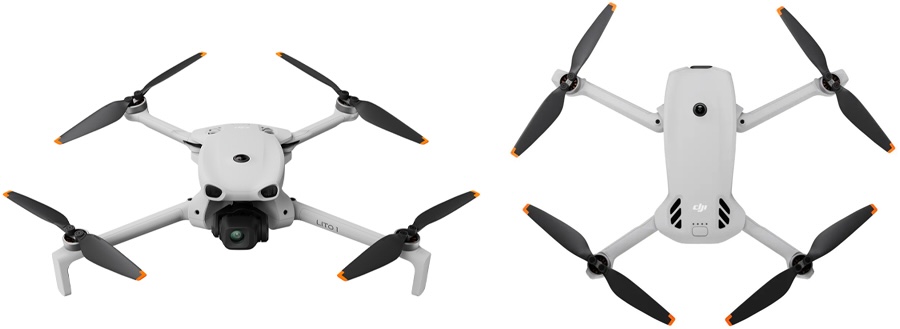
| Weight | 249 g |
| Battery Life | 36 minutes |
| Range | FCC: 15 km / CE: 8 km |
| Camera | 1/2-inch |
| Maximum Photo Resolution | 48 MP |
| Maximum Video Resolution | 4K up to 60 fps |
| Key Features | Subject Tracking (ActiveTrack) Omnidirectional Obstacle Detection QuickShots and MasterShots Video Modes DJI O4 Transmission RAW Photos (DNG) |
| Price | Starting at €339 |
The DJI Lito 1 is probably one of the best drones for learning to fly in 2026. Compact, lightweight, and exceptionally easy to use, it follows in the footsteps of DJI’s accessible Mini drones such as the DJI Mini 4K, the Mini 2 SE, and the Mini SE, while incorporating far more modern features.
In its foldable sub-250 g format, the drone features a 3-axis stabilized camera capable of recording 4K video at up to 60 frames per second. It also offers photos up to 48 MP, RAW (DNG) recording, and slow-motion capture at up to 100 fps, making it ideal for creating more dynamic videos.
However, it is in terms of safety and flight assistance that the Lito 1 becomes particularly attractive for beginners. The drone includes omnidirectional obstacle detection, capable of automatically avoiding or navigating around certain obstacles during flight. Combined with ActiveTrack subject tracking, QuickShots, MasterShots, and excellent overall stability, it allows for a much more relaxed flying experience from the very first flights.
The Lito 1 also benefits from DJI O4 transmission, compatible with the DJI RC-N3 and DJI RC 2 controllers, with a stated range of up to 8 km under CE regulations. Its comfortable battery life and ultra-compact design also make it an excellent drone for travelers, hobbyists, or adult beginners looking for a modern, reassuring, and easy-to-carry model.
➡️ Want to learn more? Check out our DJI Lito 1 review.
➡️ You can also read our DJI Mini 4K review, one of DJI’s most popular beginner drones from previous generations.
🔎 Who is it for?
The DJI Lito 1 is perfect for anyone looking for a modern, compact, and easy-to-fly drone to learn under the best conditions. Thanks to its obstacle detection, numerous automated modes, and excellent balance between price, safety, and image quality, it is currently one of the most sensible choices for getting serious about drone flying without jumping straight to a premium model.
Available Packages
| Standard Package | €339 |
|
| Fly More Package (DJI RC-N3) | €479 |
|
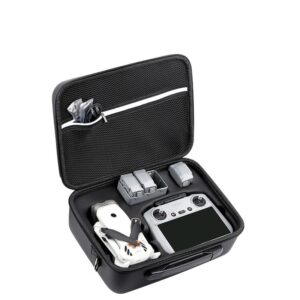
OUR BEST SELLERS - DJI Lito 1
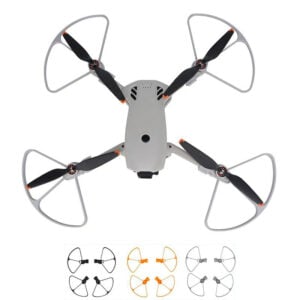
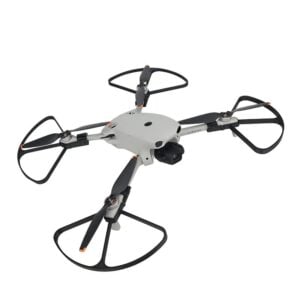
Propeller Protection Guards
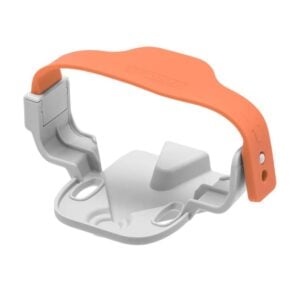
Accessories
DJI Neo 2: the easiest and most fun way to get started
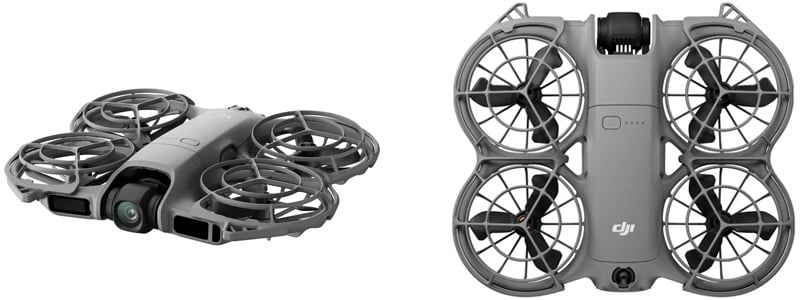
| Weight | 151/160 g |
| Flight Time | 19 minutes |
| Range | FCC: 10 km / CE: 6 km |
| Camera | 1/2-inch |
| Max Photo Resolution | 12 MP |
| Max Video Resolution | 4K up to 100 fps |
| Special Features | QuickShots automatic video modes Subject tracking Omnidirectional obstacle detection |
| Price | Starting at €239 |
The DJI Neo 2 takes the ultra-accessible drone concept introduced by the original Neo even further. Compact, lightweight and highly intuitive, it has been designed to help almost anyone discover drone flying without stress.
Still weighing under 250 g, the Neo 2 focuses above all on simplicity. Quick takeoff, intelligent gesture controls, automatic subject tracking and numerous automated flight modes make it easy to create dynamic videos without having to master complex piloting skills right away.
This second-generation model is especially reassuring for beginners thanks to the addition of omnidirectional obstacle detection, a feature that remains rare on such a compact and affordable drone. DJI has also improved flight stability and wind resistance, making the drone more enjoyable to use outdoors.
Despite its beginner-friendly positioning, the Neo 2 can still record in 4K at up to 100 frames per second, allowing for smooth and dynamic slow-motion footage. It also features 49 GB of internal storage, which is particularly convenient for recording videos without immediately needing to purchase a microSD card.
More versatile than the first generation, the Neo 2 also allows users to explore several sides of drone flying: automatic subject tracking, traditional aerial video, intelligent controls and even a more immersive experience depending on the accessories used. An excellent choice for learning progressively without feeling limited too quickly.
➡️ Want to learn more? Check out our in-depth DJI Neo 2 review.
🔎 Who is it for?
The DJI Neo 2 is ideal for beginners looking for a simple, compact and reassuring drone to learn how to fly with confidence. Thanks to its numerous automated features and obstacle detection system, it is also an excellent option for teenagers, casual users and travelers who want an easy way to capture great footage.
Available Packages
| Standard Package (drone only) | €239 |
|
| Fly More Package | €399 |
|
| Motion Fly More Package | €579 |
|

Discover our accessories for
DJI Neo 2
DJI Lito X1: for beginners who want to take image quality further
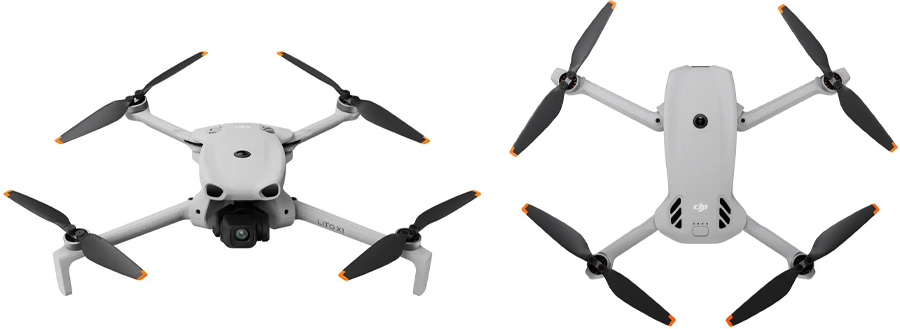
| Weight | 249 g (standard battery) 340 g (Plus battery) |
| Flight Time | 36 min (standard battery) 52 min (Plus battery) |
| Range | FCC: 15 km / CE: 8 km |
| Camera | 1/1.3-inch 48 MP |
| Maximum Photo Resolution | 48 MP |
| Maximum Video Resolution | 4K up to 100 fps FHD up to 200 fps |
| Key Features | D-Log M 10-bit profile ActiveTrack subject tracking Omnidirectional obstacle sensing + front LiDAR QuickShots, MasterShots and Waypoint 42 GB internal storage Compatible with DJI RC 2 |
| Price | Starting at €419 |
The DJI Lito X1 is aimed at beginners who want to go further from their very first flights without jumping straight to a much more expensive high-end drone. It captures the spirit of drones such as the DJI Mini 3, while offering significantly more advanced features. Compact, foldable and still under 250 g with its standard battery, it inherits the DNA of DJI’s Mini series while delivering a much more capable experience.
The drone features a 3-axis stabilized camera equipped with a 1/1.3-inch sensor, capable of recording 4K video at up to 100 frames per second and up to 200 fps in Full HD for slow-motion footage. It also supports 48 MP RAW (DNG) photos as well as the 10-bit D-Log M profile, making it easier to adjust colors and dynamic range during post-production.
However, the Lito X1 really stands out thanks to its excellent balance between simplicity and advanced features. DJI includes ActiveTrack subject tracking, QuickShots, MasterShots, Waypoint mode, as well as omnidirectional obstacle sensing enhanced by a front-facing LiDAR system, particularly useful for improving safety in low-light conditions.
The drone also benefits from DJI O4 transmission, compatible with both the DJI RC-N3 and DJI RC 2 controllers, with a claimed range of up to 8 km under CE standards. Flight time can reach up to 52 minutes with the Plus battery, making it one of the most capable compact drones in its category.
More ambitious than the Lito 1 yet more affordable than the Mini 5 Pro, the Lito X1 is currently an excellent entry point for users who want to learn quickly, improve their video skills and keep a drone capable of growing with them over the long term.
➡️ Want to learn more? Check out our DJI Lito X1 review.
🔎 Who is it for?
The DJI Lito X1 is designed for users who want to take aerial content creation seriously without immediately investing in a premium drone. Thanks to its more capable sensor, D-Log M profile and extensive automated features, it is an excellent choice for YouTube, TikTok, Instagram and vlog creators looking for a compact, modern drone with strong imaging capabilities.
Available Packages
| Standard Package | €419 |
|
| Fly More Package (DJI RC-N3) | €579 |
|
| Fly More Package (DJI RC 2) | €679 |
|
| Fly More Plus Package (DJI RC 2) | €759 |
|
OUR BEST SELLERS - DJI Lito X1

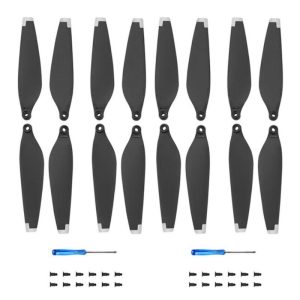
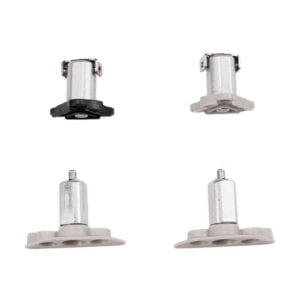
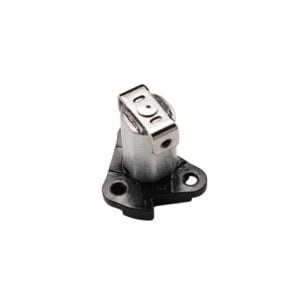
Propeller Protection Guards
Accessories
DJI Mini 5 Pro: the best way to start without compromise

| Weight | 249.9 g |
| Flight time | 36 minutes |
| Range | 20 km FCC / 10 km CE |
| Camera | 1-inch sensor |
| Max photo resolution | 50 MP |
| Max video resolution | 4K up to 120 fps |
| Key features | Rotating camera Omnidirectional obstacle sensing system Automatic subject tracking (ActiveTrack 360°) Waypoint route planning Cruise control |
| Price | Starting at €799 |
The DJI Mini 5 Pro currently represents the most advanced option in the ultra-compact drone category under 250 g. Unlike models designed mainly for discovering drone flying, this one targets demanding beginners who want to invest directly in a drone capable of delivering premium image quality without sacrificing ease of use.
With its 1-inch sensor—a first for the Mini series—the Mini 5 Pro takes image quality to a whole new level. Videos benefit from improved dynamic range, night scenes look significantly cleaner, and details remain excellent even in challenging conditions. It can record in 4K at up to 120 frames per second, while featuring a 3-axis stabilized gimbal and a rotating camera that is perfect for creating vertical content for social media.
DJI has not only upgraded the camera. The drone also features omnidirectional obstacle sensing enhanced by a forward-facing LiDAR system, significantly improving flight safety, especially for less experienced pilots. It also includes all of DJI’s latest intelligent features, including ActiveTrack 360°, Waypoint, QuickShots, MasterShots and Cruise Control.
Despite its impressive capabilities, the Mini 5 Pro remains compact and weighs just 249.9 g, allowing it to stay within the C0 category in Europe. It also benefits from DJI’s O4+ transmission system, offering a stated range of up to 10 km under CE regulations, along with a comfortable flight time of up to approximately 36 minutes.
More advanced and more expensive than the other drones in this selection, the Mini 5 Pro is not necessarily the most affordable choice for a first purchase. However, for users who want to start with a fully featured drone capable of meeting their needs for years to come, it is probably the best mini drone currently available.
➡️ Want to learn more? Check out our complete DJI Mini 5 Pro guide.
🔎 Who is it for?
The DJI Mini 5 Pro is aimed at demanding beginners who want to invest directly in an ultra-compact drone capable of delivering image quality close to professional models. It is an excellent choice for content creators, travelers, regular videographers and enthusiasts looking for the very best of the Mini series from day one.
Available packages
| Standard package | €799 |
|
| Fly More package (DJI RC-N3) | €999 |
|
| Fly More package (DJI RC 2) | €1129 |
|

Discover our accessories for
DJI Mini 5 Pro
Potensic ATOM 2: the affordable alternative to DJI

| Weight | < 249 g |
| Flight time | 32 minutes |
| Range | 10 km (FCC) |
| Camera | 1/2-inch sensor |
| Max photo resolution | 48 MP |
| Max video resolution | 4K up to 30 fps |
| Special features | Subject tracking QuickShots with Dolly Zoom HDR video AI Night mode RAW photos (DNG) SmartTransfer |
| Price | Starting at €329.99 |
The Potensic ATOM 2 builds on the solid foundations of the first model while significantly upgrading its camera system and intelligent features. Still compact, foldable and under 250 g, it is clearly aimed at users looking for a credible alternative to DJI drones without stretching their budget too far.
This new generation now features a larger 1/2-inch sensor, an upgrade over the original ATOM, capable of recording 4K video at up to 30 frames per second with an improved bitrate of 80 Mb/s. Photos can reach 48 MP and be saved in RAW (DNG) format, while the new HDR and AI Night modes significantly improve image quality in challenging scenes and low-light conditions.
The drone also retains good flight stability, decent wind resistance for its category, and a more ergonomic remote controller paired with the new Potensic Eve app, which is simple and pleasant to use. The overall package remains beginner-friendly while offering enough settings and controls for users to continue progressing.
In terms of features, the ATOM 2 also takes a step forward with more advanced subject tracking, including lateral tracking and Spotlight mode, as well as several automated QuickShots, including a Dolly Zoom effect rarely found in this price range.
Of course, it remains less advanced than recent DJI drones in certain areas, particularly because it does not feature obstacle detection. However, for users looking for a modern, compact and versatile drone without entering the DJI ecosystem, the Potensic ATOM 2 is currently one of the most attractive alternatives on the market, alongside models such as the FIMI Mini 3, which is more focused on video and low-light shooting.
➡️ You can also read our complete Potensic ATOM 2 review.
🔎 Who is it for?
The Potensic ATOM 2 is aimed at beginners looking for a serious alternative to DJI drones, offering good image quality, modern features and a reasonable price. It is an excellent compromise for users who want a compact, easy-to-fly drone that is already versatile enough to help them progress quickly.
Available packages
| Standard package | $359.99 / €329.99 |
|
| Fly More package | $485.99 / €449.99 |
|


Autel EVO Nano+: the premium alternative to DJI

| Weight | 249 g |
| Flight Time | 28 minutes |
| Range | 10 km (FCC) / 5 km (CE) |
| Camera | 1/1.28-inch 50 MP |
| Maximum Photo Resolution | 50 MP |
| Maximum Video Resolution | 4K up to 30 fps |
| Special Features | Front/rear/downward obstacle detection Automatic subject tracking (Dynamic Track) Cinematic Shots MovieMaster Panorama Hyperlapse SkyPortrait SoundRecord |
| Price | Starting at $679 |
The Autel EVO Nano+ remains one of the most compelling alternatives to DJI Mini drones for users looking for a compact, safe, and feature-rich drone. Despite its relative age compared to newer models on the market, it still offers several strong advantages, particularly when it comes to image quality and flight safety.
The drone features a 4K camera equipped with a 1/1.28-inch CMOS sensor, capable of capturing photos up to 50 MP and recording 4K video at 30 frames per second. Image quality remains highly impressive for a sub-250 g drone, with excellent light handling and a high level of detail.
One of its main strengths is its three-way obstacle detection system (front, rear, and downward), a feature that was still quite rare in this weight category when it was released. Combined with Dynamic Track, which can automatically follow a moving subject, it becomes a particularly reassuring drone for beginners looking for extra flight safety.
The Nano+ also includes several well-designed intelligent features such as Cinematic Shots, similar to DJI’s QuickShots, as well as Panorama and Hyperlapse modes for creating more dynamic footage. The MovieMaster mode allows users to quickly edit short clips directly within the mobile app.
Autel also adds a few original features such as SkyPortrait, which allows users to create selfies or group photos with a blurred background effect, and SoundRecord, which uses the smartphone’s microphone to record synchronized audio alongside drone footage.
Although DJI largely dominates the drone market today, the Autel EVO Nano+ still has a unique identity and remains an excellent option for users who want to avoid the DJI ecosystem while keeping a compact, capable, and very well-equipped drone.
➡️ You can also read our full review of the Autel EVO Nano+.
🔎 Who is it for?
The Autel EVO Nano+ is ideal for beginners looking for a compact and reassuring drone thanks to its obstacle detection system, as well as users seeking a premium alternative to DJI Mini drones. With its strong image quality, numerous intelligent features, and effective subject tracking, it remains an excellent choice for travel, aerial filming, and content creation without switching to DJI.
Available Packages
| Standard Package | $679 (official website) |
|
| Premium Package | $799 (official website) |
|

All our accessories & parts for
Autel EVO Nano+
Best Beginner Drone 2026: Final Thoughts
Choosing the best beginner drone in 2026 will mainly depend on your budget, but also on what you truly expect from your drone. Some users will be looking for a simple and reassuring model to learn how to fly, while others may want better image quality, intelligent subject tracking, or advanced features to create content more easily.
Today, even compact drones weighing less than 250 g offer impressive performance, including 4K video, highly advanced automated features, and safety systems that were once reserved for much more expensive models. Whether you are a complete beginner, a travel enthusiast, a content creator, or simply curious about the world of drones, there are now excellent options available to get started under the best possible conditions.
The most important thing is to choose a drone that matches both your skill level and the way you intend to fly. Once you master the basics, you’ll quickly discover that flying becomes very intuitive… and often quite addictive. Have a great flight and enjoy yourself! 😁
Glossary of Essential Technical Terms
Here is a brief definition of the technical terms you will frequently encounter in the world of drones:
- CE / FCC: Radio transmission standards. FCC mode (United States) generally provides greater range than CE mode used in Europe.
- CMOS: A type of image sensor widely used in drones, offering a good balance between image quality and power consumption.
- D-Log M: A “flat” video profile that preserves more image information, making color grading and post-production editing easier.
- Dual Native ISO: A technology that improves image quality in low-light conditions by reducing digital noise.
- Gimbal: A motorized stabilization system that compensates for drone movements to produce smooth footage.
- HDR: A technology that improves contrast and detail in bright and dark areas by combining multiple exposures.
- Hyperlapse: A moving time-lapse technique used to create dynamic accelerated videos.
- fps: Frames per second. The higher the number, the smoother the video appears.
- ISO: The sensor’s sensitivity to light. A higher ISO improves visibility in low light but may increase digital noise.
- LiDAR: A laser-based detection system that helps the drone identify obstacles more effectively, especially in low-light conditions.
- MasterShots: An automated mode that combines multiple camera movements and QuickShots into a ready-made edited sequence.
- Panorama: An automated wide-angle capture mode available in formats such as Sphere, 180°, or Wide-Angle.
- QuickShots: Automated cinematic video sequences that can be launched with a single tap.
- Subject Tracking / Visual Tracking / Dynamic Track: Features that allow the drone to automatically follow a person, vehicle, or moving object.
- Native Vertical Video: A video format designed for social media platforms such as TikTok, Instagram Reels, and YouTube Shorts, without requiring cropping.
- Waypoint: A feature that allows users to program a precise flight route that the drone will automatically follow.
Frequently Asked Questions (FAQ)
What is the best type of drone for beginners?
The best type of drone for beginners is often a mini drone, typically weighing less than 250 grams. Their lightweight design simplifies regulations and makes them easier to fly, often without mandatory registration in many countries.
What essential features should you look for in a beginner drone?
For a beginner drone, essential features include automatic hovering, Return to Home (RTH), and obstacle avoidance systems. A user-friendly app and intelligent flight modes are also very helpful for learning to fly with confidence.
Which drone is the easiest for a beginner to fly?
Models such as the DJI Neo 2, DJI Lito 1, and Potensic ATOM 2 are particularly easy to learn. Thanks to automatic hovering, Return to Home (RTH), and modern obstacle detection systems, they make the learning process much less stressful.
Can you record 4K video with a drone under €300?
Yes. Some recent models such as the DJI Neo 2, DJI Lito 1, and Potensic ATOM 2 can record stabilized 4K video with image quality that is already very impressive for beginners.
Do you need to register your drone in France?
If your drone weighs less than 250 g and does not have image-capturing capabilities, registration is not required. However, if it can take photos or videos, registration on AlphaTango is required, even for a small drone.
Can you fly in all weather conditions?
It is best to avoid windy or rainy days. Most beginner drones are sensitive to strong gusts and are not waterproof. Winds above 20 km/h can make them unstable or even cause crashes.
How long does a drone battery last?
Battery life varies from 18 to 38 minutes depending on the model. In real-world conditions, expect around 20 to 25 minutes for top beginner models such as the DJI Lito 1, DJI Lito X1, or DJI Mini 5 Pro.
What is the maximum range of a beginner drone?
It depends on the transmission mode (FCC or CE). In Europe (CE), the range is often limited to around 6 km, or less in urban areas with interference. This is more than enough for recreational use.
Which accessories are really useful for beginners?
An extra battery, a fast microSD card (U3), propeller guards, and a carrying case are the essentials. A multi-battery charging hub can also make life much easier.
Do you absolutely need a smartphone to fly a drone?
Most drones still require a smartphone to display the live video feed and access settings. However, some models compatible with controllers featuring built-in screens allow you to fly without a phone.
What should you check before your first flight?
Make sure the propellers are properly attached, the firmware is up to date, and the battery is fully charged. A short test flight indoors or in a calm garden is ideal for getting started.
Which drone should you choose for a teenager or young beginner?
For teenagers and young beginners, mini drones under 250 g remain the best option. They are easier to fly, easier to transport, and subject to lighter regulations. Models such as the DJI Neo 2 and DJI Lito 1 offer an excellent balance of safety, ease of use, and image quality for a first drone.
💡Also worth reading
➡️ Looking for a more comprehensive comparison? Check out our guide to the best drones of 2026, featuring recommendations for every type of user and every budget.

 Blog
Blog