
 Français
 Deutsch
 Español
 Italiano
 Parts & Accessories by Drone
 Drones
 Action camera
 Microphones
 Camera Stabilizers
 VR Headsets
DJI Lito 1 vs Lito X1: which drone to choose?
May
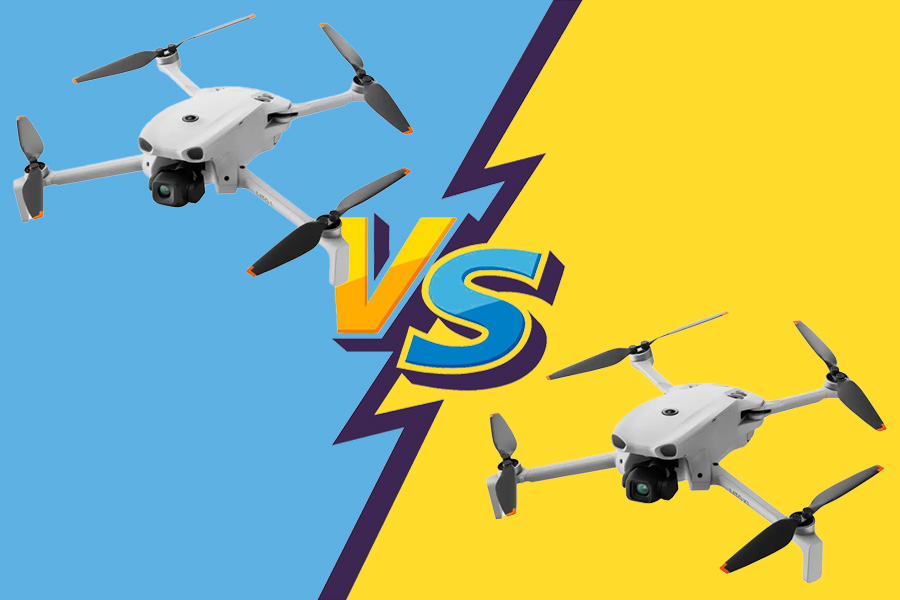
With the DJI Lito 1 and Lito X1, DJI is launching a new generation of entry-level drones designed to gradually replace the previous Mini SE, Mini 2 SE and Mini 4K models. Two very similar models on paper, but not necessarily aimed at the same audience. So what are the real differences between the DJI Lito 1 and the DJI Lito X1? Is the X1 really worth the price difference? And above all, which one should you choose today, depending on your use and budget? All the answers in this DJI Lito 1 vs Lito X1 comparison.
DJI Lito 1 vs Lito X1: What you need to know
No time (or laziness 😅 ) to read it all? Here are the main differences between the DJI Lito 1 and Lito X1 👇
- 🧳 Two compact, foldable drones weighing less than 250 g, with very similar format and flight behaviour
- 📡 Same DJI O4 transmission on both models, with range claimed up to 8 km in CE
- 🕹️ Both compatible with DJI RC-N3 and DJI RC 2
- 🔋 S ame autonomy claimed with standard battery: up to 36 min theoretical and around 23 min in typical use
- 🎯 Same ActiveTrack subject tracking with Point of Interest and Spotlight modes
- 🚧 Same omnidirectional obstacle detection on both UAVs, with sensors LiDAR sensors on the front of the X1
- 🎬 Very similar photo and video modes, with the added Waypoint function on the DJI Lito X1
- 📷 1 /2-inch sensor on Lito 1 vs. 1/1.3-inch on X1
- 🎥 4K video up to 100 fps on both drones, but Full HD slow-motion up to 200 fps on the X1 vs. 100 fps on the Lito 1
- 🎨 1 0-bit D-Log M profile only available on DJI Lito X1
- 💾 microSD port on both models, with an additional 42 GB of internal memory on the X1
- 💸 The DJI Lito 1 starts at €339, compared with €419 for the DJI Lito X1
📌 The Lito 1 remains the most affordable model, while the X1 appears to be the most complete choice for those who want to go a little further on image and advanced functions.
DJI Lito 1 vs Lito X1: Design
| DJI Lito 1 | DJI Lito X1 | |
| Weight | 249 g (standard battery) 340 g (Plus battery) | 249 g (standard battery) 340 g (Plus battery) |
| Dimensions (folded, without helices) (L x W x H) | 149 × 94 × 62 mm | 149 × 94 × 62 mm |
| Dimensions (unfolded, without propellers) (L x W x H) | 183 × 251 × 79 mm | 183 × 251 × 79 mm |
| Storage | microSD card (up to 1TB) | 42 GB internal memory microSD card (up to 1 TB) |
| Class (Europe) | C0 | C0 (standard battery) / C1 (Plus battery) |
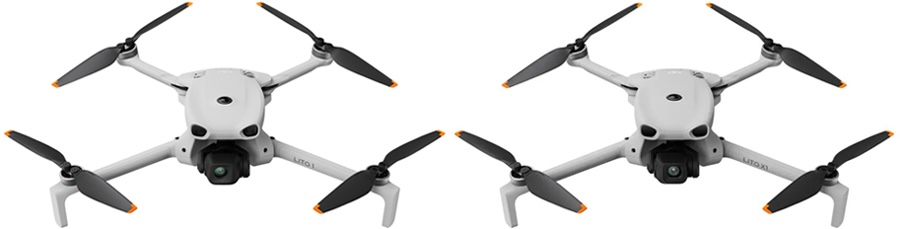
On the design side, the DJI Lito 1 and Lito X1 are very similar. Both drones adopt a compact folding format with exactly the same dimensions: 149 × 94 × 62 mm when folded, and 183 × 251 × 79 mm when unfolded. Weighing just 249 g with the standard battery, both models are easy to transport, while retaining the advantages of the C0 category in Europe.
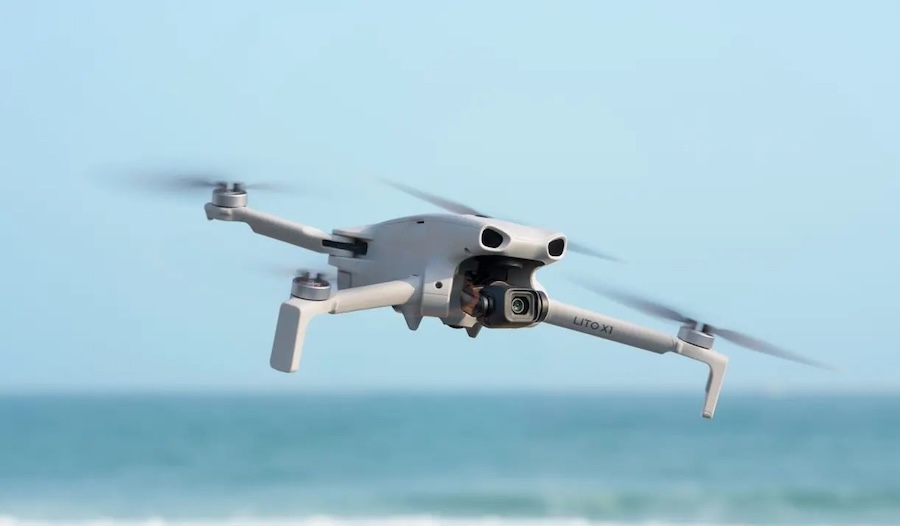
Visually, DJI also uses the same new approach to obstacle detection, with one module placed above and another below the drone to monitor the environment around the device. The differences are most apparent at the front: the DJI Lito X1 adds two LiDAR sensors integrated directly into the drone’s nose, whereas the Lito 1 simply uses two small grids. The X1 also adds small notches around the camera for attaching ND filters, absent on the Lito 1.
Another notable difference is the regulations. The DJI Lito 1 remains limited to C0 class, while the Lito X1 can operate either in C0 with the standard battery, or in C1 with the Plus battery. This special feature removes the 120-meter height limitation applied to C0 drones.
Last but not least, the Lito X1 also boasts a practical advantage: 42 GB of internal memory, plus a microSD port compatible up to 1 TB. The Lito 1, on the other hand, only works with a microSD card.
Discover our accessories for
DJI Lito 1
DJI Lito 1 vs Lito X1: Transmission and radio controls
| DJI Lito 1 | DJI Lito X1 | |
| Compatible radio controls | DJI RC-N3, DJI RC 2 | DJI RC-N3, DJI RC 2 |
| Video transmission system | DJI O4 | DJI O4 |
| Max. transmission distance | 15 km (IC), 8 km (CE / SRRC / MIC) | 15 km (IC), 8 km (CE / SRRC / MIC) |
| Live preview quality | up to 1080p at 60 fps | up to 1080p at 60 fps |
When it comes to transmission and radio controls, there’s no difference between the two drones. Both the DJI Lito 1 and Lito X1 use the DJI O4 transmission system, and are compatible with the same radio controls.
Both models offer exactly the same piloting experience, with a stable, fluid and reliable connection. Even if the O4+ system is reserved for DJI’s top-of-the-range drones, the DJI O4 remains one of the brand’s tried-and-tested technologies, capable of offering excellent transmission quality in the vast majority of situations.
DJI claims a maximum range of up to 15 km in IC standard and 8 km in CE on both drones. These values are mostly theoretical in practice, but give a good idea of the stability and strength of the signal.
The same applies to the video return side, with live previews up to 1080p at 60 frames per second on both models. A comfortable configuration for driving with a fluid, responsive image.
Both drones can be used with :
- the DJI RC-N3, which uses a smartphone as its screen;
- or the DJI RC 2 with integrated display, which is quicker and more practical to use in the field.
DJI Lito 1 vs Lito X1: Autonomy and recharging
| DJI Lito 1 | DJI Lito X1 | |
| Battery | Standard battery: 2590 mAh Plus battery: 4680 mAh | Standard battery: 2788 mAh Plus battery: 4680 mAh |
| Maximum autonomy | 36 minutes (standard battery) 52 minutes (Plus battery) | 36 minutes (standard battery) 52 minutes (Plus battery) |
| Typical autonomy | 23 minutes (standard battery) 37 minutes (Plus battery) | 23 minutes (standard battery) 37 minutes (Plus battery) |
| Charging time (standard battery) | Direct 73 min / Station 45 min (1 battery), 87 min (3 batteries) | Direct 73 min / Station 45 min (1 battery), 87 min (3 batteries) |
| Charging time (Plus battery) | Direct 102 min / Station 56 min (1 battery, 130 min (3 batteries) | Direct 102 min / Station 56 min (1 battery, 130 min (3 batteries) |
On the battery side, the two drones use slightly different standard batteries. The DJI Lito 1 has a 2590 mAh battery, versus 2788 mAh for the DJI Lito X1.
Despite this slight difference in capacity, DJI claims exactly the same autonomy figures for both models: up to 36 minutes of theoretical flight time with the standard battery, or around 23 minutes in more realistic use with movement, video recording and obstacle avoidance activated.
Another important point: although the batteries of the two drones are very similar, the standard batteries of the Lito 1 and Lito X1 are not interchangeable.
A 4680 mAh Plus battery is also available, providing up to 52 minutes of theoretical autonomy and around 37 minutes in typical use. This battery is technically compatible with both drones, but its use is more restricted in Europe. The DJI Lito 1 remains limited to class C0 and therefore cannot officially use this battery, while the Lito X1 can operate with the Plus battery via certain versions configured for class C1.
Finally, recharging times remain identical between the two models. Allow around 73 minutes for direct charging of a standard battery, or around 45 minutes with the charging station for a single battery. With the Plus battery, DJI claims a direct charge time of around 102 minutes and a charging station time of around 56 minutes for a single battery.
OUR BEST SELLERS - DJI Lito 1
Propeller Protection Guards
Accessories
DJI Lito 1 vs Lito X1: In-flight performance
| DJI Lito 1 | DJI Lito X1 | |
| Maximum speed | 18 m/s (Sport mode) 12 m/s (Normal / Tracking mode) | 18 m/s (Sport mode) 12 m/s (Normal / Tracking mode) |
| Max. ascent speed | 7 m/s (Sport mode) 5 m/s (Normal mode) 3 m/s (Cine mode) | 7 m/s (Sport mode) 5 m/s (Normal mode) 3 m/s (Cine mode) |
| Max. descent speed | 7 m/s (Sport mode) 5 m/s (Normal mode) 3 m/s (Cine mode) | 7 m/s (Sport mode) 5 m/s (Normal mode) 3 m/s (Cine mode) |
| Max. wind resistance | 10.7 m/s (level 5) | 10.7 m/s (level 5) |
In terms of flight performance, there’s no noticeable difference between the two drones. The DJI Lito 1 and Lito X1 display exactly the same characteristics, with a maximum speed of 18 m/s in Sport mode (approx. 65 km/h) and 12 m/s in Normal or Track mode (approx. 43 km/h).
The same applies to wind resistance, with both models rated at 10.7 m/s (approx. 38 km/h, level 5). In practice, flight behavior remains very similar between the two drones.
Noise levels are also virtually identical. Both models are quite discreet in flight, with noise levels contained at a distance, especially when compared with the DJI Neo range, which is known to be louder.
DJI Lito 1 vs Lito X1: Features
| DJI Lito 1 | DJI Lito X1 | |
| Photo modes | Single shot, Burst, Auto exposure bracketing (AEB), Interval, Panorama | Single shot, Burst, Auto exposure bracketing (AEB), Interval, Panorama |
| Video modes | Slow motion, QuickShots, MasterShots, Hyperlapse, ActiveTrack subject tracking | Slow motion, QuickShots, MasterShots, Hyperlapse, ActiveTrack subject tracking, Waypoint |
| Obstacle detection | Omnidirectional monocular optical system + downward-looking infrared sensor | Omnidirectional monocular optical system + LiDAR forward + infrared downward sensor |
In terms of functionality, the DJI Lito 1 and Lito X1 are already particularly comprehensive for entry-level drones. Both models feature functions that until recently were only found on DJI’s more advanced drones, such as ActiveTrack subject tracking and omnidirectional obstacle detection. The DJI Lito X1, however, takes certain functions a step further, with the addition of Waypoint mode and LiDAR sensors on the front of the drone.
Photo and video modes: Waypoint added on the X1
In terms of photo and video modes, the two drones remain very similar. The DJI Lito 1 and Lito X1 are based on exactly the same principles, with classic photo modes such as burst, panorama, interval mode and automatic exposure bracketing (AEB).
The same is true of the video side, with the same creative functions on both models: QuickShots, MasterShots, Hyperlapse, slow-motion mode and ActiveTrack subject tracking.
The main difference is the Waypoint mode, only available on the DJI Lito X1. This function lets you create routes with different waypoints, and associate certain actions with them, such as triggering a photo or video. A practical way of repeating precisely the same flight paths and shots from one flight to the next.
Subject follow-up: an identical experience
On the subject of tracking, the DJI Lito 1 and Lito X1 offer exactly the same experience. Both drones feature the ActiveTrack system, with the same modes and performance.
These include :
- ActiveTrack, for automatic tracking of a person, bike or vehicle;
- Point of interest, to automatically turn around a subject or building;
- and Spotlight, which keeps the subject in focus while the pilot maintains manual control of the drone.
Both models can reach speeds of up to 12 m/s in tracking mode (around 43 km/h), which is still more than sufficient for most conventional applications. Overall, initial feedback shows that both drones deliver smooth, reliable tracking.
Obstacle detection: the X1 goes further with LiDAR
Both the DJI Lito 1 and Lito X1 use the same basic system for obstacle detection, with one module placed above the drone and another below to monitor the environment around the device. Both models benefit from omnidirectional obstacle detection, a feature that is still quite impressive on entry-level drones.
As with the latest DJI models, both drones also allow you to choose the drone’s behavior when an obstacle is detected: automatic shutdown or bypassing the obstacle to continue on the planned trajectory.
The main difference comes from the LiDAR sensors added to the front of the DJI Lito X1. These sensors improve obstacle detection, particularly in dark or low-light environments. They also help certain automatic functions such as return-to-home (RTH), even when the GPS signal becomes more limited.
Discover our accessories for
DJI Lito X1
DJI Lito 1 vs Lito X1 : Image
| DJI Lito 1 | DJI Lito X1 | |
| Aerial work platform | 3-axis mechanical gondola | 3-axis mechanical gondola |
| Sensor | 1/2-inch CMOS | 1/1.3-inch CMOS |
| Objective | Equivalent format 26.2 mm Aperture f/1.8 FOV 79° (in mm) | 24 mm equivalent format Aperture f/1.7 FOV 82.1 |
| Photo resolution | 12 MP / 48 MP | 12 MP / 48 MP |
| Max. video resolution (horizontal) | 4K up to 100 fps FHD up to 100 fps | 4K up to 100 fps FHD up to 200 fps |
| Max. video resolution (vertical) | 2.7K up to 60 fps | 2.7K up to 60 fps |
| ISO range | 100 à 12800 | 100 à 12800 |
| Max. bit rate | 130 Mb/s | 130 Mb/s |
| Digital zoom | Video: 1 to 3x (4K, 2.7K vertical), 1 to 4x (FHD) Photo: 1 to 3x (12/48 MP) | Video: 1 to 3x (4K, 2.7K vertical), 1 to 4x (FHD) Photo: 1 to 3x (12/48 MP) |
| Photo format | JPEG / DNG (RAW) | JPEG / DNG (RAW) |
| Video format | MP4 (MPEG-4 AVC/H.264, HEVC/H.265) | MP4 (MPEG-4 AVC/H.264, HEVC/H.265) |
| Color profile | Normal (8 / 10 bits) | Normal (8 / 10 bits), D-Log M (10 bits) |
The differences between the two drones are probably most apparent in the image department. Although the DJI Lito 1 and Lito X1 share a fairly similar base in certain respects, the X1 benefits from a more ambitious sensor, more advanced video capabilities and additional functions for users who want to go a little further in terms of photography and video.
Sensor and video: the X1 moves upmarket
Both drones use a 3-axis mechanical gondola, but the DJI Lito X1 switches to a 1/1.3-inch CMOS sensor, versus a 1/2-inch sensor on the Lito 1. The X1 also benefits from a slightly brighter aperture at f/1.7, versus f/1.8 on the Lito 1.
On the photo front, both models capture 12 or 48 megapixel images, with support for RAW (DNG) format.
On the video side, the differences become a little more apparent. Both drones can film in 4K at up to 100 frames per second, but this time the Lito X1 goes up to 200 fps in Full HD, compared with 100 fps on the Lito 1 for slow motion.
Both models also offer a 2.7K vertical video mode at up to 60 fps. As with other drones in this range, however, the camera does not physically swivel vertically: the portrait format relies here on cropping within the image, and not on a dedicated rotating gondola.
Finally, both drones feature exactly the same digital zoom capabilities, with up to 3x in 4K and 2.7K vertical, and up to 4x in Full HD.
Image quality: better rendering and D-Log M on the X1
Overall, both drones already offer very convincing image quality for entry-level models. According to the various independent tests and feedback available, the DJI Lito 1 delivers a clean, detailed and pleasing image in most situations, with overall natural colors and little excessive processing.
However, the DJI Lito X1 goes one step further in the image department, thanks to its larger sensor. Overall, rendering is cleaner and better defined, with better handling of difficult scenes and low light. Digital noise remains more contained in lower light conditions, while the image retains greater sharpness.
The main difference, however, is the D-Log M profile, available only on the X1. In addition to the 8- or 10-bit Normal profile already present on both drones, the X1 adds a true color profile designed for post-production, offering greater scope for retouching colors and recovering more information in the dark and bright areas of the image. A real plus for users who like to have more control over the final rendering of their videos.
DJI Lito 1 vs Lito X1: Packs and prices
ℹ️ Note: some links in this section are Amazon affiliate links. As Amazon Associates, we earn from qualifying purchases, at no extra cost to you.
| DJI Lito 1 | DJI Lito X1 | |
| Standard package | 339 € | 419 € |
| Fly More Pack (DJI RC-N3) | 479 € | 579 € |
| Fly More Pack (DJI RC 2) | – | 679 € |
| Fly More Plus Pack (DJI RC 2) | – | 759 € |
The DJI Lito 1 starts at €339, compared with €419 for the DJI Lito X1. In both cases, DJI offers a fairly simple logic, with a standard pack for beginners, followed by more complete Fly More bundles for those who want more autonomy and accessories.
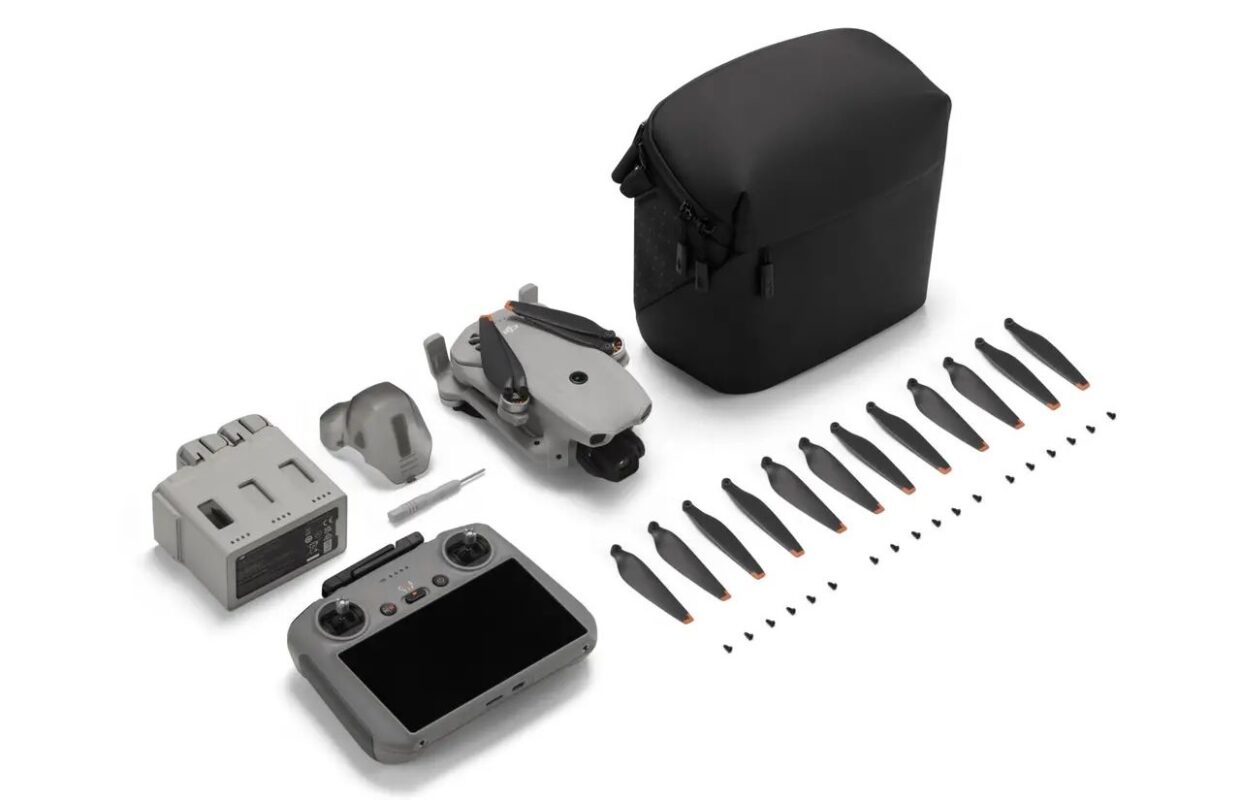
The standard packages for the two drones remain very similar. Both include the drone, the DJI RC-N3 remote control, a standard battery, a nacelle protector, a pair of spare propellers and the usual cables.
The same applies to the Fly More bundles with DJI RC-N3, which add :
- two additional batteries ;
- two additional pairs of propellers;
- a charging station ;
- and a carry bag.
The main difference lies in the more upmarket positioning of the DJI Lito X1. Unlike the Lito 1, the X1 also benefits from bundles with the DJI RC 2 with integrated screen, as well as a Fly More Plus bundle that directly includes Plus batteries offering superior autonomy.
The DJI Lito 1 remains technically compatible with the DJI RC 2. DJI simply doesn’t currently offer an official pack incorporating it.
OUR BEST SELLERS - DJI Lito X1

Propeller Protection Guards
Accessories
Conclusion DJI Lito 1 vs Lito X1: which to choose?
With the DJI Lito 1 and Lito X1, DJI is clearly renewing its entry-level drone range, with models that are much more modern and complete than the previous Mini SE, Mini 2 SE or Mini 4K. The two drones share many common features: the same compact size, weighing in at under 250 g, the same DJI O4 transmission, the same flight behaviour, the same subject tracking and the same omnidirectional obstacle detection.
However, the DJI Lito X1 takes the experience a step further in several respects. Its 1/1.3-inch sensor, D-Log M, more advanced slow motion, front LiDAR sensors and Waypoint function offer a more complete experience for users who place greater importance on image quality and advanced functions.
However, this does not mean that the DJI Lito 1 is becoming uninteresting – far from it. The drone retains an excellent level of equipment for its price, already featuring true subject tracking, omnidirectional obstacle detection and very solid overall performance for such an affordable model.
In the end, the choice between the two depends mainly on your budget, but also on the importance you attach to the image and additional functions offered by the DJI Lito X1. But given the fairly reasonable price differential between the two drones, the X1 is probably the more attractive model for most users.
Choose the DJI Lito 1 if…
- you’re looking for the most affordable model in the range;
- you want to take advantage of DJI’s main new features without increasing your budget too much;
- you don ‘t really need the X1’s D-Log M, Waypoint or LiDAR sensors.
Choose the DJI Lito X1 if…
- you place more importance on image quality;
- you’d like to take advantage of D-Log M to further enhance your videos;
- you want additional functions such as Waypoint or LiDAR sensors.
💡 To go further, discover our full reviews of the two models in this DJI Lito 1 vs Lito X1 comparison:
➡️ Discover our full review of the DJI Lito 1
➡️ Discover our full review of the DJI Lito X1
💡 Also read
➡️ Discover why the DJI Lito 1 and Lito X1 are among the best DJI drones of 2026.
➡️ Wondering how the Lito X1 compares against the most advanced model in the Mini lineup? Discover the differences between the Lito X1 and Mini 5 Pro.
➡️ Not sure whether to choose the DJI Lito X1 or the previous flagship Mini model? Check out our comparison DJI Mini 4 Pro or DJI Lito X1.
🛠️ For maintenance and repairs, you can find all compatible parts here:
DJI Lito 1 Parts
DJI Lito X1 Parts

 Blog
Blog