
 Français
 Deutsch
 Español
 Italiano
 Parts & Accessories by Drone
 Drones
 Action camera
 Microphones
 Camera stabilizers
 VR Headsets
Best drone 2026: comparison of the 9 best models

Aug
ℹ️ Note: some links in this article are Amazon affiliate links. As Amazon Associates, we earn from qualifying purchases, at no extra cost to you.
Welcome to our guide to the best drone 2026. The market is evolving rapidly, with ever more compact, intelligent and affordable models. Today, even drones weighing less than 250 grams are equipped with technologies once reserved for the high-end: long-range transmission, high-performance automatic tracking, advanced obstacle detection, LiDAR sensors or even professional video profiles like the D-Log M. Between immersive FPV drones, autonomous models designed for vlogging, 360° drones, ultra-compact drones for travel or more ambitious references for video creation, it can sometimes be difficult to know which drone to choose. To help you make the right choice, we’ve selected the 9 best drones of the moment according to different uses: image quality, budget, ease of use, autonomy, travel, content creation or FPV immersion, so that everyone can find the model best suited to their way of flying.
What’s the best drone in 2026?
The best drone of 2026 is unquestionably the DJI Mavic 4 Pro. A true technological showcase from DJI, it combines exceptional image quality, impressive autonomy of up to 51 minutes, omnidirectional obstacle detection reinforced by LiDAR and a triple camera capable of filming up to 6K. Today, it’s one of the most complete, high-performance drones on the market for demanding videographers, photographers and content creators.
But the best drone also depends on your budget, your skill level and, above all, your intended use. For light travel, a compact model weighing less than 250 g, such as the DJI Mini 5 Pro or DJI Lito X1, may be more appropriate. On the other hand, beginners looking for a simple, affordable drone may prefer the DJI Lito 1, while vlogging and autonomous tracking enthusiasts will prefer models like the DJI Neo 2. To help you make the right choice, here’s our comparison of the best 2026 drones for each purpose.
Comparison of the best 2026 drones
Here’s a clear comparison of the best 2026 drones, selected according to category, image quality, autonomy and price positioning. This table allows you to quickly compare the best-performing models on the market, before consulting our detailed analysis below.
| Drone | Category | Weight | Camera | Autonomy | Price guide | Ideal for |
|---|---|---|---|---|---|---|
| DJI Mavic 4 Pro | Top of the range | 1063 g | Triple camera up to 6K | 51 min | From €2099 | Demanding professionals & designers |
| DJI Mini 5 Pro | Best mini drone | 249,9 g | 1-inch 4K 120 fps sensor | 36 min | From €799 | Travel & vertical video |
| DJI Air 3S | Versatile drone | 724 g | Dual 4K 120 fps cameras | 45 min. | From €1099 | Premium multi-purpose drone |
| DJI Avata 2 | Best FPV drone | 377 g | 4K 100 fps | 23 min | From €999 | Immersive flight & sensations |
| DJI Neo 2 | Autonomous selfie | 160 g | 4K 100 fps | 19 min | From €239 | Vlog, sport & auto-tracking |
| DJI Lito 1 | Small budget | <249 g | 4K 60 fps | 36 min | From €339 | Getting started made easy |
| DJI Lito X1 | Beginning designers | <249 g | 4K 100 fps + D-Log M | 36 min | From €419 | Video creation & progression |
| DJI Avata 360 | Drone 360 | 455 g | 8K 60 fps 360 | 23 min | From €459 | Immersive video & reframing |
| Autel EVO Lite+ | Alternative to DJI | 835 g | 5.4K 1-inch sensor | 40 min | Starting at $1149 | Premium alternative to DJI |
Why invest in a drone in 2026?
Drones have never been as accessible, efficient or easy to use as they are today. In 2026, even compact models weighing less than 250 grams now embody technologies once reserved for the top end of the market: omnidirectional obstacle detection, intelligent automatic tracking, long-range transmission, LiDAR sensors, 4K / 6K video, professional profiles like the D-Log M or even autonomous modes capable of filming without real piloting.
Uses have also evolved enormously. Some drones are now designed for travel and social networking, others for immersive FPV, professional video, sports tracking, autonomous vlogging or even 360° video capture with post-production cropping. There’s now a drone to suit almost every user profile.
Another important development is ease of use. Thanks to advanced stabilization systems, flight assistants and intelligent modes, flying a modern drone has become much more accessible than a few years ago, even for complete beginners.
Investing in a drone in 2026 means taking advantage of tools that are more reliable, more creative and more versatile than ever, capable of producing spectacular images while remaining simple to use on a day-to-day basis.
Best drone 2026: how to choose?
Before buying a drone, the most important thing is to define your use. Not all models meet the same needs: some are designed for travel and simplicity, others for professional video, immersive FPV, autonomous vlogging or aerial photography.
Here are the main criteria to consider before making your choice:
– Type of use: travel, social networking, sport, FPV, video creation, photography or professional use… the best drone is above all the one that really matches your way of flying.
– Image quality: if video is important to you, look at resolution (4K, 6K, 8K), sensor size, low-light performance, slow motion or even professional profiles like D-Log M for post-production.
– Weight and regulations: drones weighing less than 250 g are particularly popular with travelers and beginners, thanks to more flexible regulations. However, heavier models often offer greater autonomy, stability and performance.
– Autonomy: depending on the model, actual autonomy generally varies from 15 to over 40 minutes. For certain uses, such as FPV or travel, additional batteries can quickly become important.
– Range and transmission: recent systems such as the DJI O4 or O4+ offer a more stable connection, better range and smoother video return, especially in complex environments.
– Intelligent functions such as automatic tracking, omnidirectional obstacle detection, autonomous modes, Waypoint, QuickShots or 360° video capture can greatly simplify everyday use, especially for beginners or content creators.
New from DJI 2026: ever more complete drones
The year 2026 marks a real evolution in the DJI range, with the arrival of several new drones such as the DJI Lito 1, DJI Lito X1 and DJI Avata 360. The brand also continues to develop recent models such as the DJI Neo 2, now positioned as one of the most complete autonomous drones in its category.
But beyond the new models, it’s above all the on-board technologies that are evolving. Functions once reserved for top-of-the-range drones are now much more accessible: advanced automatic tracking, omnidirectional obstacle detection, intelligent autonomous modes and even integrated LiDAR sensors, now present even on some compact, affordable drones.
As a result, even entry-level drones today are much more complete, secure and high-performance than they were just a few years ago.
Our selection of the best 2026 drones
There is no single “best drone”, but rather a range of models for very different uses. Some focus on image quality, others on simplicity, travel, immersive FPV, autonomous vlogging or advanced content creation. A drone designed for professional video will not necessarily meet the same needs as a compact model intended for beginners or social networking.
Rather than a simple ranking, we’ve selected the 9 best 2026 drones according to different profiles and uses, to help you find the model best suited to your budget and your way of flying.
The market remains largely dominated by DJI, which continues to offer the most comprehensive and innovative models in most categories. But to offer a broader view of the market, we’ve also included some interesting alternatives to DJI in this comparison.
The best camera: DJI Mavic 4 Pro

| Weight | 1063 g |
| Autonomy | 51 minutes |
| Range | 30 km FCC / 15 km CE |
| Camera | Sensor 1: 4/3 (28mm) Sensor 2: 1/1.3 inch (70mm) Sensor 3: 1/1.5 inch (168mm) |
| Max. photo resolution | Sensor 1: 100 MP Sensor 2: 48 MP Sensor 3: 50 MP |
| Max. video resolution | Sensor 1: 6K up to 60 fps Sensor 2: 4K up to 120 fps Sensor 3: 4K up to 100 fps |
| Special features | Omnidirectional detection system + LiDAR Automatic subject tracking (FocusTrack) Route planning (Waypoint) Cruise control |
| Price | From €2099 |
The DJI Mavic 4 Pro is the new flagship of the Mavic range. It retains the three-camera concept of its predecessor, the Mavic 3 Pro, with fixed focal lengths (28 mm, 70 mm, 168 mm), but significantly improves image quality thanks to optimized sensors and a new 360° motorized gondola. The 100 MP 4/3 main camera delivers razor-sharp images, even in difficult conditions, while the two telephoto lenses allow you to vary shots with precision, without compromising on quality.
One of the great assets of the Mavic 4 Pro is its Infinity nacelle, capable of pivoting entirely on itself. This innovation opens up new creative possibilities, notably for capturing videos in native vertical format with no loss of quality, or for effortlessly fluid panoramic shots. At the same time, the drone retains all the intelligent modes of the range, with improvements in subject tracking and automated shooting such as MasterShots, QuickShots, Waypoint or Hyperlapse.
Safety has also been enhanced, thanks to omnidirectional obstacle detection combining fisheye sensors and LiDAR technology. As a result, the drone can better anticipate obstacles, even in complex or low-light environments. Video transmission has been upgraded to the O4+ standard, with a range of up to 30 km (FCC) and a smoother, more stable connection, even over long distances.
On the autonomy side, the Mavic 4 Pro gains in endurance, with up to 51 minutes of flight time, so you can fly several sequences without having to change the battery. All this is accompanied by a completely revised RC Pro 2 remote control, featuring a new, brighter screen, a faster processor and a more responsive interface.
In short, the DJI Mavic 4 Pro is a major evolution, combining exceptional image quality, unprecedented framing options, even more secure navigation, and significantly improved overall performance. It’s a tool designed for both professional content creators and passionate amateurs looking for the very best in drone technology in 2026.
To find out more, read our full review:
➡️ DJI Mavic 4 Pro, full review: the new king of the skies
🔎 For whom?
For demanding creators who want it all: image quality, flight safety, varied shots and smart features. The Mavic 4 Pro is a dream drone for pushing the boundaries of aerial creativity.
The different packs available
| Standard pack (DJI RC 2 remote control) | 2099€ |
|
| Fly More pack (DJI RC 2 remote control) | 2699€ |
|
| 512 GB Creator Bundle Pack (DJI RC Pro 2 remote control) | 3539€ |
|
OUR BEST SELLERS - DJI MAVIC 4 PRO


Bags Cases Straps
Sunnylife Individual Pouches for DJI Mavic 4 Pro, RC 2 or RC Pro 2


Bags Cases Straps
StartRC Transport Bag for DJI Mavic 4 Pro – RC 2 or RC Pro 2 compatible
The best mini drone (under 250g): DJI Mini 5 Pro

| Weight | 249,9 g |
| Autonomy | 36 minutes |
| Range | 20 km FCC / 10 km CE |
| Camera | 1 inch |
| Max. photo resolution | 50 MP |
| Max. video resolution | 4K up to 120 fps |
| Special features | Rotating camera Omnidirectional detection system Automatic subject tracking (ActiveTrack 360°) Route planning (Waypoint) Cruise control |
| Price | From €799 |
The DJI Mini 5 Pro is the new benchmark for drones weighing less than 250 grams. DJI has not contented itself with a simple evolution: this generation marks a real move upmarket, with the arrival of a 1-inch sensor – a first in the Mini series – and the integration of a forward-facing LiDAR system to enhance in-flight safety.
Still C0-rated in Europe, and weighing 249.9 g, it retains the regulatory advantages specific to this category, while approaching the performance of larger models. Its rotating gondola, now capable of extended movements on the roll axis, opens up even more creative possibilities, especially for native vertical video or dynamic shots.
In flight, the Mini 5 Pro gains in speed, stability and precision, while maintaining an autonomy consistent with its size. O4+ transmission further enhances signal reliability, and a host of intelligent functions (ActiveTrack, Waypoint, QuickShots, MasterShots) make it as accessible as it is powerful.
On the image side, the 1-inch sensor is a clear game-changer, especially in low light: better dynamic range, less noise and more detail in dark areas. For demanding creators who want maximum quality in an ultra-compact format, this is quite simply the most complete drone in the Mini range.
Find out more in our full review :
➡️ Test and review DJI Mini 5 Pro
🔎 For whom?
For demanding creators who want maximum image quality and safety without breaking the 250-gram barrier. Travelers, regular videographers or professionals working in urban areas: the Mini 5 Pro is today’s benchmark for ultra-compact drones.
The different packs available
| Standard package | 799 € |
|
| Fly More Pack (DJI RC-N3) | 999 € |
|
| Fly More Pack (DJI RC 2) | 1129 € |
|

Discover our accessories for
DJI Mini 5 Pro
The most versatile drone : DJI Air 3S

| Weight | 724g |
| Autonomy | 45 minutes |
| Range | 20 km FCC / 10 km CE |
| Camera | Wide-angle camera: 1 inch 50 MP (24mm) Medium telecamera: 1/1.3 inch 48 MP (70mm) |
| Max. photo resolution | 50 MP |
| Max. video resolution | 4K up to 120 fps |
| Special features | Omnidirectional detection system + LiDAR Automatic subject tracking (FocusTrack) Route planning (Waypoint) Cruise control |
| Price | From €1099 |
The DJI Air 3S is a full-featured mid-range drone, designed for those who want to go beyond the Mini range without going as far as the top-of-the-range Mavic. It boasts a versatile dual-camera setup: a 1-inch, 50 MP main sensor, capable of filming in 4K at up to 120 fps, and a 48 MP (1/1.3-inch) telecamera, ideal for tight shots or perspective compression. An ideal configuration for varying viewing angles without changing position.
The obstacle detection system is particularly advanced: omnidirectional, it covers all directions, but is enhanced by a forward-facing LiDAR sensor– a first for a DJI consumer drone. This technology offers improved perception of the environment, even at night or in low-light conditions, making flight safer than ever.
On the functionality side, the Air 3S ticks all the boxes: intelligent subject tracking (ActiveTrack 360°), automated flights with Waypoint, advanced photo modes (panoramas, HDR, burst, etc.), and of course DJI’s famous QuickShots and MasterShots. It also offers advanced color profiles such as D-Log M and HLG, for more professional post-production rendering.
The drone weighs 724 g and offers a theoretical autonomy of 45 minutes (approx. 35-40 minutes in real-life conditions), with a battery compatible with that of the DJI Air 3. It benefits from the DJI O4 transmission system, ensuring a maximum range of 10 to 20 km depending on regulations. It is compatible with DJI RC-N3 and DJI RC 2 remote controls, the latter featuring a bright, fluid screen.
In short, the DJI Air 3S is an excellent compromise between performance and price. It will appeal to both demanding amateurs and professionals looking for a reliable, versatile drone capable of capturing magnificent images, even in low light.
To find out more, read our full review:
➡️ DJI Air 3S, full review: 1-inch sensor and LiDAR technology!
🔎 Who’s it for?
For demanding creators who want image quality superior to that of Mini models, without investing in a Mavic. Ideal for capturing dynamic and varied images, while keeping a transportable format and a reasonable price.
The different packs available
| Standard pack with DJI RC-N3 remote control | 1099€ |
|
| Fly More pack with DJI RC-N3 remote control | 1399€ |
|
| Fly More pack with DJI RC 2 remote control | 1599€ |
|
OUR BEST SELLERS - DJI AIR 3S


The best FPV drone: DJI Avata 2

| Weight | 377g |
| Autonomy | 23 minutes |
| Range | 13 km(FCC) / 10 km (CE) |
| Camera | 1/1.3 inch 12 MP |
| Max. photo resolution | 12 MP |
| Max. video resolution | 4K up to 100 fps |
| Special features | Rear/lower obstacle detection |
| Price | From €999 |
The DJI Avata 2 is an FPV drone designed to make first-person flight accessible to everyone, including beginners. More than just a virtual flight, it offers real immersion that brings the user closer to the sensations of flying in real conditions. Weighing in at just 410 grams, it features a robust construction with integrated propeller guards for added durability. Its compact design (180 x 180 x 80 mm) makes it easy to handle and transport.
The drone is equipped with a camera capable of filming in 4K at 100 frames per second, delivering crisp, immersive images. The camera is stabilized by a RockSteady digital stabilization system, ensuring smooth videos even in fast motion. The Avata 2 also boasts a 155-degree wide field of view, enhancing visual immersion.
For the FPV experience, the DJI Avata 2 is accompanied by DJI Goggles 3, offering 1080p resolution at 100 Hz, enabling clear, smooth images directly in the headset. The drone uses the DJI O3+ transmission system, which ensures a video transmission range of up to 10 km, guaranteeing a stable, high-quality connection.
Flight autonomy is 23 minutes, which is respectable for an FPV drone, allowing extended flight sessions. The Avata 2 incorporates a rearward and downward obstacle detection system , adding a layer of safety. This system detects obstacles in the drone’s path, reducing the risk of collision and making flight safer, especially for novice users.
The DJI Avata 2 is therefore an ideal choice for those wishing to learn FPV without the usual risks associated with building custom FPV drones, offering an immersive and safe flying experience. An intuitive joystick makes it easy to handle, even for those with no previous experience.
To find out more, read our full review:
➡️ DJI Avata 2, full review: FPV for everyone!
🔎 For whom?
For those who want the thrill of FPV flight with a safety belt. Perfect for beginners, the Avata2 offers immersive flight, with a quick learning curve and advanced safety features.
The different packs available
| Drone alone | 489€ |
|
| Fly More bundle (1 battery) | 999€ |
|
| Fly More bundle (3 batteries) | 1199€ |
|

All our parts & accessories for
DJI Avata 2
The best autonomous selfie drone: DJI Neo 2
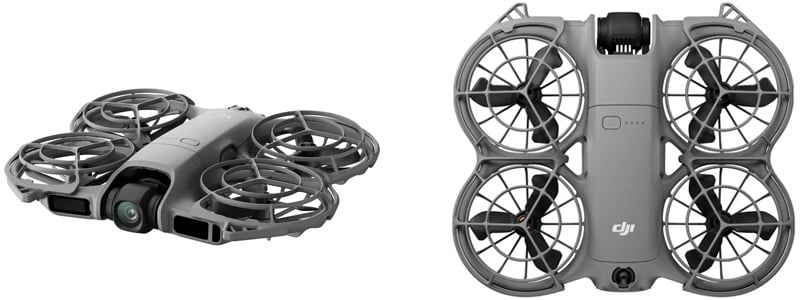
| Weight | 151 g (without transceiver) 160 g (with transceiver) |
| Autonomy | 19 minutes |
| Range | FCC: 10 km / CE: 6 km |
| Camera | 1/2 inch |
| Max. photo resolution | 12 MP |
| Max. video resolution | 4K up to 100 fps |
| Special features | Omnidirectional obstacle detection + LiDAR Intelligent subject tracking (ActiveTrack) Gesture controls Video modes QuickShots, MasterShots and Dolly Zoom FPV compatible Internal storage 49 Go |
| Price | From €239 |
The DJI Neo 2 represents the most advanced evolution of the autonomous selfie drone concept. More compact than a conventional drone, but far more intelligent than the first generations of selfie drones, it combines advanced automation, enhanced safety and true versatility. Thanks to its omnidirectional obstacle detection and new intelligent tracking system, it is capable of filming dynamic scenes with impressive fluidity, even for novice users.
Despite its ultra-compact size of just 160 grams, the Neo 2 packs a stabilized camera capable of filming in 4K at up to 100 frames per second. DJI has also improved image processing compared to the first Neo, with more detail, better light management and cleaner overall rendering. The drone also benefits from 49 GB of internal storage, eliminating the need for a microSD card.
The Neo 2 places great emphasis onautomation and ease of use. It can take off directly from the hand, be controlled by gestures, via smartphone, with a conventional radio control system or even in FPV immersion. New video modes such as MasterShots, Dolly Zoom and SelfieShot let you capture dynamic sequences without any special technical knowledge. Its much-improved subject tracking is now one of the most efficient on the market for a drone of this size.
The big news, however, is the integration of a true omnidirectional obstacle detection system combined with front-end LiDAR. This totally changes the flying experience: the drone anticipates obstacles much better and adapts its trajectories more logically and fluidly. For a consumer selfie drone, the level of safety is particularly impressive.
Last but not least, weighing in at less than 250 g and with a C0 rating, the DJI Neo 2 is extremely easy to use on a daily basis. Lightweight, compact, quick to launch and highly automated, it is one of the best drones for travel, filming on the move or creating content without complicating your life.
For more information:
➡️ Discover thedetailed review of the DJI Neo 2.
➡️ Compare it to its predecessor in our Neo 2 vs Neo analysis.
🔎 Who’s it for?
The DJI Neo 2 is for those who want an ultra-simple-to-use, compact and highly automated drone, capable of effortless filming both when traveling and during sporting activities. Thanks to its intelligent tracking, omnidirectional obstacle detection and gesture controls, it’s just as suitable for beginners as for content creators or users looking for a real “flying cameraman” without needing to learn how to pilot a complex drone.
🔄 Former category favorite: DJI Flip
Before the arrival of the Neo 2, the DJI Flip was probably the most versatile autonomous drone in the DJI range. More geared towards content creation and vlogging, it still retains several important advantages over the Neo 2: a 3-axis stabilized camera, excellent image quality, support for DNG RAW and 10-bit D-Log M profile, and superior battery life of up to 31 minutes. Its foldable format, intelligent automatic modes and compatibility with DJI RC-N3 and RC 2 radio controllers still make it an excellent option for those who prioritize image quality, video stability and greater flexibility in post-production above all else.
👉 Discover our full review of the DJI Flip.
The different packs available
| Standard package (drone only) | 239 € |
|
| Fly More Pack | 399 € |
|
| Motion Fly More Pack | 579 € |
|

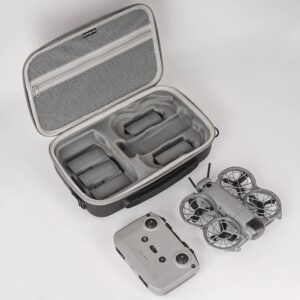

The best budget drone: DJI Lito 1
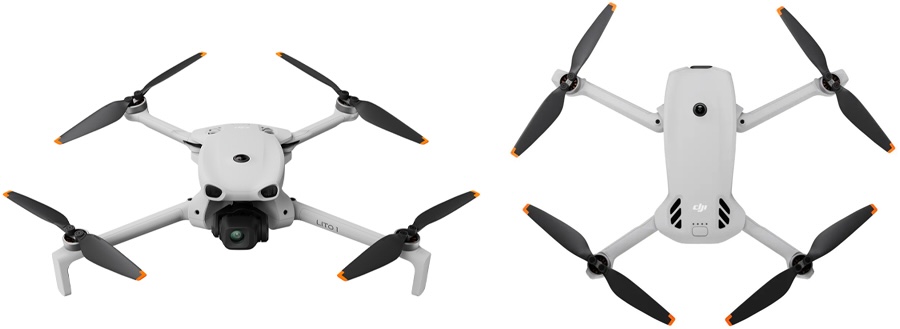
| Weight | 249 g |
| Autonomy | 36 minutes |
| Range | FCC: 15km / CE: 8 km |
| Camera | 1/2 inch |
| Max. photo resolution | 48 MP |
| Max. video resolution | 4K up to 60 fps |
| Special features | Subject tracking (ActiveTrack) Omnidirectional obstacle detection QuickShots and MasterShots video modes DJI O4 transmission RAW photos (DNG) |
| Price | From €339 |
The DJI Lito 1 represents a new generation of entry-level drones from DJI. Designed to gradually replace the previous Mini SE, Mini 2 SE and Mini 4K, it retains what made the Mini series so successful – a compact, foldable and accessible format – while at last integrating much more modern functionalities.
Despite its affordable price positioning, the Lito 1 boasts a particularly solid technical specification for this range. It features a 3-axis stabilized camera, a 1/2-inch sensor, 4K at up to 60 fps, a slow-motion mode at up to 100 fps, and photos at up to 48 MP RAW (DNG). DJI has also added 10-bit video, for greater editing flexibility, although the drone does not offer a D-Log M profile like the Lito X1.
In terms of functionality, the DJI Lito 1 marks a real turning point for the brand’s entry-level model. It now features ActiveTrack subject tracking, QuickShots, MasterShots,Hyperlapse and, above all, omnidirectional obstacle detection with automatic stop or avoidance. This is a first for such an affordable DJI drone, making the experience much more reassuring for beginners.
The drone also benefits from DJI O4 transmission, compatible with DJI RC-N3 and DJI RC 2 radio controls, with a range of up to 8 km in CE mode. Autonomy climbs to 36 minutes in theory, with around 23 minutes in actual use, which is still very comfortable for a drone in this category.
Last but not least, the Lito 1 retains all the features that made its predecessors so successful: immediate handling, ultra-compact size, low in-flight noise and simplified regulation thanks to its weight of less than 250g. But unlike previous entry-level models, it now gives access to functions previously reserved for much more advanced drones.
➡️ See also our full review of the DJI Lito 1.
🔎 Who’s it for?
The DJI Lito 1 is for those looking for a modern, compact, easy-to-use drone to get started without breaking the bank. Thanks to its subject tracking, omnidirectional obstacle detection and numerous automatic modes, it will also suit travelers and occasional content creators who want a simple but already very complete drone.
🔄 Former category favorite: DJI Mini 4K
Before the arrival of the DJI Lito 1, the DJI Mini 4K was clearly one of the best references for starting out on a budget. Compact, lightweight and easy to use, this drone weighing less than 249 g already offered 4K video, a battery life of around 31 minutes and the excellent flight stability typical of DJI drones. Even if it is more limited than the Lito 1 in terms of modern functionalities – notably the absence of subject tracking or omnidirectional obstacle detection – it still offers excellent value for money for users looking for a reliable, affordable and efficient drone to discover the world of drones.
➡️ See also our DJI Mini 4K test.
The different packs available
| Standard package | 339 € |
|
| Fly More Pack (DJI RC-N3) | 479 € |
|
OUR BEST SELLERS - DJI Lito 1
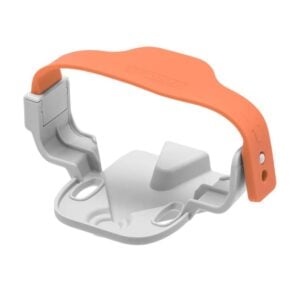
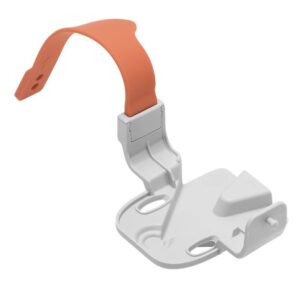
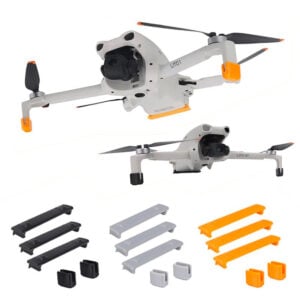
Accessories
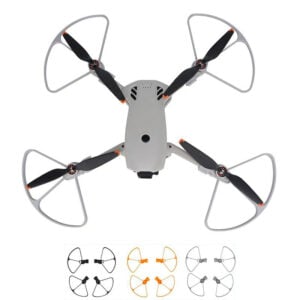
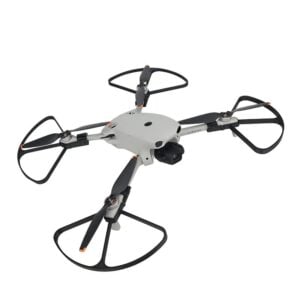
Propeller Protection Guards
The best drone for beginners : DJI Lito X1
| Weight | 249 g (standard battery) 340 g (Plus battery) |
| Autonomy | 36 min (standard battery) 52 min (Plus battery) |
| Range | FCC: 15 km / CE: 8 km |
| Camera | 1/1.3 inch 48 MP |
| Max. photo resolution | 48 MP |
| Max. video resolution | 4K up to 100 fps FHD up to 200 fps |
| Special features | 10-bit D-Log M profile ActiveTrack subject tracking Omnidirectional obstacle detection + Front LiDAR QuickShots, MasterShots and Waypoint 42 GB internal memory DJI RC 2 compatible |
| Price | From €419 |
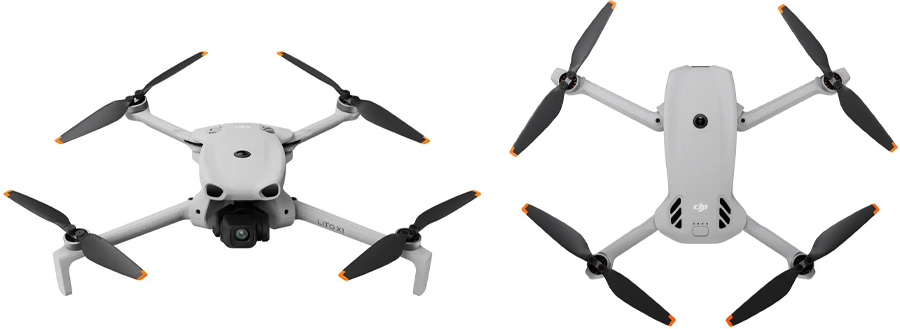
The DJI Lito X1 represents a new generation of compact drones designed for those who want to go further in terms of image without going straight to a high-end model. The spiritual successor to DJI’s earlier entry-level Mini drones, it retains an ultra-compact folding format weighing in at less than 250 g, while incorporating far more advanced functionalities than before.
The Lito X1 is clearly focused on content creation. It features a 3-axis stabilized camera with a 1/1.3-inch sensor, capable of filming in 4K at up to 100 fps and up to 200 fps in Full HD for slow-motion shots. It also supports 48 MP RAW (DNG ) photos and the 10-bit D-Log M profile, offering greater post-production flexibility for those who wish to retouch or calibrate their videos.
On the functional side, the DJI Lito X1 is particularly impressive for this price range. These include ActiveTrack subject tracking, QuickShots, MasterShots, Waypoint mode, and omnidirectional obstacle detection supported by LiDAR sensors on the front of the drone, including for improved safety in low-light conditions.
The drone also benefits from DJI O4 transmission, compatible with DJI RC-N3 and DJI RC 2 radio controls, with a range of up to 8 km in CE mode. Its autonomy can reach up to 36 minutes with the standard battery, and even 52 minutes with the Plus battery offered in certain packs.
Finally, the Lito X1 strikes an excellent balance between simplicity, compactness, safety and image quality. More ambitious than a Lito 1, but more affordable than a Mini 5 Pro, it is today one of the most interesting choices for novice creators who want a modern, versatile drone that can already go quite far on video.
➡️ See also our complete guide to the DJI Lito X1.
🔎 Who’s it for?
The DJI Lito X1 is aimed at those who want to make a serious start in aerial content creation without investing directly in a high-end drone. Thanks to its more ambitious sensor, D-Log M profile and numerous automatic functions, it’s perfect for YouTube, TikTok, Instagram or vlog creators looking for a compact, modern drone that’s already very complete on the image side.
🔄 Former category favorite: DJI Mini 3
Before the arrival of the DJI Lito X1, the DJI Mini 3 represented one of the best choices for novice creators thanks to its excellent ratio between compactness, autonomy and image quality. With its 3-axis stabilized camera, 1/1.3-inch sensor and 4K HDR filming capability, it remains an excellent drone for light travel with excellent video quality. However, the Lito X1 goes one step further in terms of modern functionality, with subject tracking, omnidirectional obstacle detection, LiDAR and 10-bit D-Log M.
➡️ To find out more, check out our DJI Mini 3 drone review.
The different packs available
| Standard package | 419 € |
|
| Fly More Pack (DJI RC-N3) | 579 € |
|
| Fly More Pack (DJI RC 2) | 679 € |
|
| Fly More Plus Pack (DJI RC 2) | 759 € |
|
OUR BEST SELLERS - DJI Lito X1
Accessories
Propeller Protection Guards
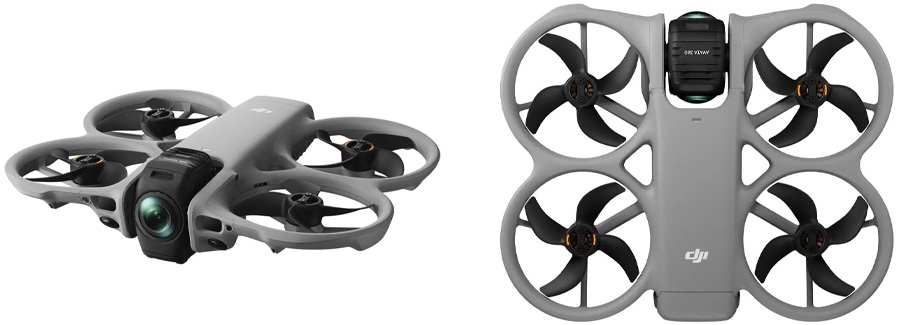
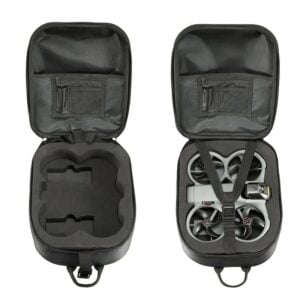
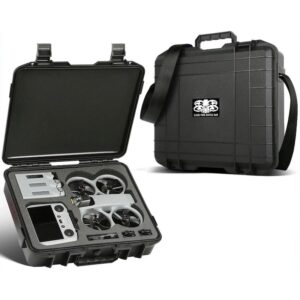
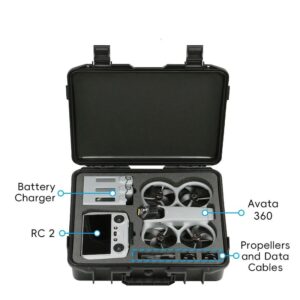
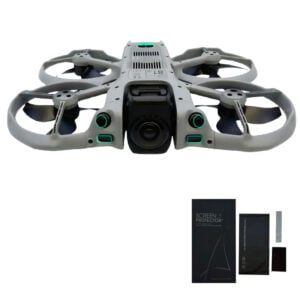
The best 360 drone: DJI Avata 360
| Weight | 455 g |
| Autonomy | 23 minutes |
| Range | 20 km (FCC) / 10 km (CE) |
| Camera | Dual 1/1.1-inch CMOS sensors |
| Max. photo resolution | 120 MP |
| Max. video resolution | 8K up to 60 fps |
| Special features | Dual mode: single lens / 360° FPV compatible D-Log M 10-bit and RAW ActiveTrack 360° Omnidirectional obstacle detection + LiDAR |
| Price | From €459 |
The DJI Avata 360 takes a completely different approach to the classic drone. Here, the idea is no longer simply to film what’s in front of you, but to capture the entire environment around you, thanks to a 360° camera with two 1/1.1″ sensors. The result: once the flight is over, you can freely choose your angles of view in post-production, as if several cameras had filmed the scene at the same time.
Unlike many competing 360 FPV drones, the Avata 360 can be flown in two ways: either with a conventional remote control like the DJI RC 2, or in full immersion with the DJI Goggles and an FPV controller. This dual approach makes it much more accessible and versatile, depending on the application. It’s just as easy to perform a simple stabilized flight as a more dynamic immersive sequence.
On the image side, the drone can film at up to 8K 60 fps in 360° mode, with support for 10-bit D-Log M and RAW (DNG) photos. Overall, image quality is very convincing for this type of product, with detailed rendering and real creative freedom for editing. The Avata 360 can also be used for subject tracking with ActiveTrack 360°, with the option of fully modifying the framing after the flight.
The drone also features omnidirectional obstacle detection, reinforced by a LiDAR sensor on the front, particularly useful in low-light conditions. In practice, this makes for more reassuring piloting than a conventional FPV drone, even if certain functions remain linked to the capture mode used.
Finally, with its rugged design, integrated propeller guards and easily replaceable lenses, the DJI Avata 360 has clearly been designed for content creators who want to shoot differently, with a freer, more immersive approach than that of a traditional drone.
To find out more:
➡️ Read our review of the DJI Avata 360
➡️ See also our DJI Avata 360 vs Avata 2 review
🔎 Who’s it for?
The DJI Avata 360 is aimed above all at content creators, videographers and enthusiasts who want total freedom when editing. Thanks to 360° capture, it lets you recover multiple angles from a single flight, without having to constantly manage framing while shooting. It’s also an excellent option for those who want to discover a more immersive and creative approach to drone photography.
The different packs available
| Drone alone | 459 € | |
| Standard pack (DJI RC 2) | 719 € |
|
| Fly More Pack (DJI RC 2) | 939 € |
|
| Motion Fly More Pack | 939 € |
|
The best alternative to DJI: Autel EVO Lite+.

| Weight | 835g |
| Autonomy | 40 minutes |
| Range | 12 km (FCC) / 6 km (CE) |
| Camera | 1 inch 20 MP |
| Max. photo resolution | 20 MP |
| Max. video resolution | 5.4K up to 30 fps |
| Special features | Obstacle detection front/back/low Automatic subject tracking (Dynamic Track) 5.4K video Excellent battery life |
| Price | Starting at $689 |
Even though DJI largely dominates the consumer drone market, a number of competitors continue to offer interesting alternatives. And among them, theAutel EVO Lite+ probably remains the most credible model for those who want to break away from the DJI ecosystem without sacrificing performance.
The Autel EVO Lite+ is equipped with a 1-inch sensor, capable of filming in 5.4K, with image rendering often appreciated for its slightly different treatment from that of DJI. The drone is particularly convincing in low light, thanks to good noise management and a solid dynamic range.
The Lite+ also boasts a very good battery life, up to 40 minutes, as well as an obstacle detection system at the front, rear and underneath the drone. Other intelligent functions include Dynamic Track subject tracking, and long-range video transmission via SkyLink technology.
Of course, DJI’s software ecosystem, update tracking and certain functionalities remain more mature overall. But for those who want a high-performance drone with a slightly different approach to image rendering and user experience, the Autel EVO Lite+ remains one of the most serious alternatives on the market today.
For those looking for a more compact model weighing less than 250 g, theAutel EVO Nano+ also remains an interesting option in the face of the drones in the Mini range.
To find out more:
➡️ Read our review of the Autel EVO Lite+
➡️ See also our review of the Autel EVO Nano+ .
🔎 For whom?
For those looking for a real alternative to DJI, with an excellent sensor, good autonomy and image rendering that’s a little different from that of DJI drones. The Autel EVO Lite+ is particularly suited to users who want to break away from the market leader’s ecosystem while retaining a high-performance, easy-to-use drone.
The different packs available
| Standard Pack | 1149 (official store) |
|
| Premium Pack | 1199 (official store) |
|

All our accessories & parts for
Autel EVO Lite+
Best value drone
The best value drone isn’t necessarily the cheapest, but the one that offers the best balance between performance, functionality, image quality and ease of use.
In our selection, the model that best embodies this compromise is the DJI Mini 5 Pro. Weighing in at just under 250 grams, it boasts technologies previously reserved for much higher-end drones: omnidirectional obstacle detection, LiDAR sensor, advanced subject tracking, long-range transmission and excellent stabilized video quality.
Its main advantage is its overall balance. It combines compactness, safety, autonomy, image quality and versatility in a format that’s easy to transport and relatively affordable, compared with the much more expensive professional models.
For tighter budgets or simpler uses, models like the DJI Lito 1, DJI Lito X1 or DJI Neo 2 can also represent excellent value for money, depending on requirements. But for users looking for the best overall compromise without switching to a heavier, more expensive professional drone, the Mini 5 Pro remains one of the most solid references on the market today.
Best drone under 300 euros
In 2026, it’s still possible to find an excellent drone for under 300 euros, even if this price range is necessarily more limited than the higher categories. At this price, the main compromises concern sensor size, low-light performance or the most advanced image-related functions.
In this category, the DJI Neo 2 clearly stands out from the crowd. Priced at around €239, it boasts technologies found until recently on much more expensive drones: high-performance automatic tracking, omnidirectional obstacle detection, advanced autonomous modes and stabilized 4K video capture.
Of course, higher-end models such as the DJI Lito X1, Mini 5 Pro or Mavic 4 Pro still have an edge when it comes to image quality, dynamics and post-production capabilities. But for travel, social networking, vlogging or simply getting started with a modern, easy-to-use drone, the Neo 2 offers a particularly impressive equipment/price ratio.
For those looking for a more “classic” drone with radio control and a more traditional aerial video orientation, the DJI Lito 1 also remains an interesting alternative, even if it costs slightly more than 300 euros.
Best drone brand
When asked which is the best brand of drone, one name always comes up: DJI. In 2026, the Chinese manufacturer continues to dominate the market by a wide margin, both in the entry-level segment and in the more advanced drones aimed at content creators and professionals.
DJI’s strength lies not only in its image quality. Above all, the brand has made its mark thanks to a particularly complete ecosystem: reliable transmissions, advanced obstacle detection, well-optimized mobile applications, numerous automatic functions and excellent software stability. This consistency explains why DJI remains the benchmark for beginners and more demanding videographers alike.
From ultra-compact models like the DJI Neo 2 or DJI Lito 1 to more advanced drones like the Mini 5 Pro,Air 3S or Mavic 4 Pro, DJI now covers virtually all uses: travel, vlogging, FPV, professional video, content for social networks or advanced aerial photography.
Of course, other manufacturers such as Autel Robotics also offer interesting alternatives. But in terms of overall reliability, innovation and functional richness, DJI remains the most essential brand on the drone market today.
➡️ Find all our spare parts and accessories for DJI drones.
Best long-range drone
The question of the best long-range drone often arises among users who want to film wide open spaces or enjoy a particularly stable connection in flight. In practice, the ranges advertised today far exceed the real needs of the majority of pilots, all the more so as regulations require the drone to be kept in sight.
These values of 10, 15 or even 20 kilometers should be seen above all as an indicator of transmission quality. The higher the theoretical range, the more the system is generally capable of maintaining a stable, fluid and reliable connection, even in slightly more complex environments.
The most advanced models, such as the DJI Mini 5 Pro and DJI Mavic 4 Pro, use the DJI O4+ system, DJI’s latest transmission technology. This improves interference management and video return stability in urban and semi-urban environments.
Other models, such as the DJI Lito 1, Lito X1, Neo 2,Air 3S andAvata 2, use the DJI O4 system, which is already extremely reliable in everyday use. For the majority of users, the difference between the O4+ and the DJI Lito is often quite small.
In the end, a good long-range drone isn’t just about the maximum distance displayed on a datasheet. What’s more important is the actual stability of the signal, the smoothness of the video return and the drone’s ability to maintain a reliable connection in real-life conditions.
Which drone is right for you?
For travel
Drones weighing less than 250 g, such as the DJI Lito 1, Lito X1, Mini 5 Pro or Neo 2, remain the most practical for travel. They take up very little space, benefit from more flexible regulations and offer performance levels very close to those of much larger drones.
For vlogs and social networks
The DJI Neo 2 and DJI Flip take a much more automated approach than conventional drones, with hand-launch, autonomous tracking and rapid capture. The Flip, however, retains an edge in image quality thanks to its 3-axis stabilized camera and 10-bit D-Log M profile.
Getting started
The DJI Lito 1 is probably the best entry point for serious beginners, with DJI O4 transmission, subject tracking and omnidirectional obstacle detection. However, if you’re looking for a little more image quality, look no further than the Lito X1, which adds a more advanced sensor and D-Log M profile.
For image quality
The DJI Mavic 4 Pro remains the benchmark for demanding videographers, thanks to its triple camera, different focal lengths and advanced video capabilities up to 6K.
For immersive FPV
Today, the DJI Avata 2 remains the most interesting model for discovering FPV, with accessible immersive piloting and sensations much closer to a real FPV drone than conventional compact models.
Best drone 2026: the final word
Choosing the best 2026 drone depends above all on your use, your expectations and your budget. Between ultra-compact drones for travel, models geared towards content creation, immersive FPV drones and top-of-the-range references capable of filming up to 6K or 360°, the current offering has never been so complete.
The aim is not necessarily to choose the most expensive drone, but the one that really suits your way of flying: image quality, ease of use, flight safety, automatic tracking, long-range transmission or even compactness for transport.
Today, even the most affordable models benefit from technologies once reserved for the high-end, such as obstacle detection, advanced autonomous modes or particularly reliable video transmissions. Whether you’re a beginner, a content creator, a traveler or an aerial photography enthusiast, there’s now a drone to suit your needs.
Take the time to compare the features that are important for your use, and above all choose a model that will make you want to fly regularly and create.
Enjoy your flight ✈️
FAQ: everything you need to know before buying a drone in 2026
What’s the best drone in 2026?
The best drone in 2026 is the DJI Mavic 4 Pro. With its triple camera capable of filming up to 6K, DJI O4+ transmission, omnidirectional obstacle detection with LiDAR and impressive autonomy, it represents today’s high-end reference for content creators and demanding videographers.
How to choose the right drone?
The choice depends above all on your purpose: travel, vlogging, aerial photography, immersive FPV or simple hobby. Before buying a drone, it’s important to compare several criteria, such as image quality, weight, autonomy, intelligent functions, obstacle detection and ease of transport.
What are the essential criteria before buying a drone?
Before choosing a drone, it’s important to compare several elements:
- image quality and sensor size,
- real in-flight autonomy,
- transmission range and stability,
- obstacle detection,
- weights and regulations,
- ease of transport,
- intelligent modes and automatic tracking,
- ease of use.
The best drone isn’t necessarily the most expensive one, but the one that really suits your use and your skill level.
Which drone is right for you?
The easiest drones to get to grips with are compact, automated models like the DJI Neo 2, DJI Lito 1 or DJI Mini 4K. They offer assisted piloting, efficient automatic modes and excellent flight stability.
Which drone is right for travel?
For travel, drones weighing less than 250 g are still the most interesting. Models like the DJI Mini 5 Pro, DJI Lito X1 or DJI Neo 2 offer an excellent compromise between compactness, image quality and ease of use.
How important is obstacle detection?
Obstacle detection greatly improves flight safety, especially for beginners. Newer models can automatically slow down, stop or fly around certain obstacles to avoid collisions.
What’s the difference between DJI O4 and DJI O4+?
Both the DJI O4 and O4+ systems offer particularly stable and reliable transmission. The O4+ especially improves interference management and signal stability in complex or semi-urban environments, but in conventional use, the DJI O4 is still extremely capable.
Can you fly a drone in the city?
Class C0 drones weighing less than 250 g benefit from more flexible regulations in Europe. Certain models, such as the DJI Mini 5 Pro, DJI Neo 2 or DJI Lito 1, can fly in certain residential or urban areas, provided they comply with local regulations and avoid crowds.
Do I need training to fly a drone?
This depends on the weight of the drone and local regulations. Drones weighing less than 250 g are generally the easiest to operate, although certain requirements may vary from country to country.
Do I need insurance to fly a hobby drone?
In France, liability insurance is still strongly recommended, even for light leisure drones. For certain uses or heavier models, it may become compulsory. We therefore advise you to check the rules in force in your country before flying.
What’s the difference between an FPV drone and a conventional drone?
An FPV drone, like the DJI Avata 2, is generally flown with an immersive headset to offer a first-person view and much more dynamic sensations. A conventional drone is more concerned with stability and simplicity for aerial photography and video.
Are modern drones suitable for social networking?
Yes, many recent models now offer vertical formats, auto-tracking, stand-alone modes and tools designed for fast content creation on TikTok, Instagram or YouTube.
💡Also read
➡️ Just getting into drones? Also check out our selection of the best 2026 beginner drones, specially designed for a quick and easy introduction.

 Blog
Blog