
 Français
 Deutsch
 Español
 Italiano
 Parts & Accessories by Drone
 Drones
 Action camera
 Microphones
 Camera Stabilizers
 VR Headsets
DJI Avata 360 vs. Neo 2: Which Drone Should You Choose?
Jul
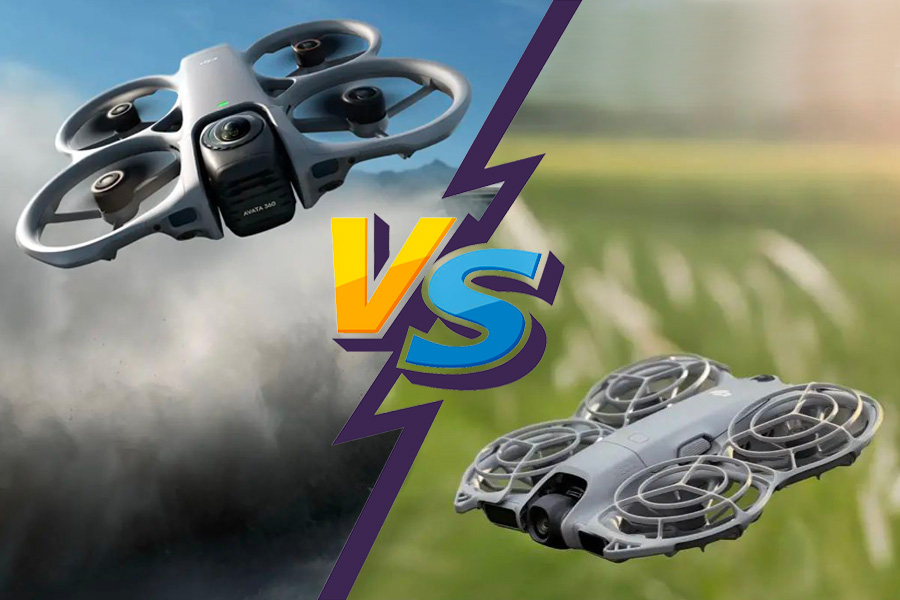
At first glance, the DJI Neo 2 and the DJI Avata 360 bear a slight resemblance to one another. They share the same CineWhoop-inspired design and the same propeller guards… Yet these two drones were clearly not designed for the same purpose. On one side, there’s a drone designed for automatic shooting, subject tracking, and ease of use. On the other side, there’s a true FPV drone capable of 360° filming, which prioritizes immersion and creative possibilities above all else. But what are the actual differences and similarities between these two models? Which one offers the most interesting features? Which one delivers the best image quality? And most importantly, which one best suits your needs? Find all the answers in this comprehensive DJI Avata 360 vs. Neo 2 comparison.
DJI Avata 360 vs. Neo 2: Key Takeaways
Don’t have time (or just can’t be bothered 😅) to read it all? Here are the key differences to keep in mind between the DJI Avata 360 and the Neo 2 👇
- 🛩️ The Neo 2 is nearly three times lighter (151 g vs. 455 g) and is classified as European category C0, which is more flexible than the Avata 360’s C1 classification.
- 💾The Avata 360 supports microSD cards up to 1 TB, unlike the Neo 2, which is limited to its 49 GB of internal storage.
- 🎮 The Neo 2 can be used without a remote controller, in autonomous flight mode, or via the DJI Fly app, while the Avata 360 is designed more for traditional piloting or FPV flight.
- 📡The Avata 360 comes with the DJI O4+ transmission system built-in, while the Neo 2 uses Wi-Fi by default and can be equipped with an optional DJI O4 module.
- 🔋The Avata 360 offers slightly longer battery life (23 minutes compared to the advertised 19 minutes).
- 🚀 Faster and more responsive,the Avata 360 is better suited for those who enjoy dynamic flights and immersive piloting.
- 🎥 The Neo 2 focuses on automatic modes (SelfieShot, MasterShots, Dolly Zoom, etc.) and excellent subject tracking, while the Avata 360 focuses primarily on its 360° video recording.
- 📷 Thanks to its two 1/1.1-inch sensors, the Avata 360 delivers better image quality—especially in low-light conditions—as well as more post-production options thanks to D-Log M and RAW.
- 💸 With a starting price of €239, the Neo 2 is almost half the price of the Avata 360 (€459).
📌 If you’re looking for a simple, compact, and affordable drone, the Neo 2 is probably the best choice. If your main goal is to create original 360° videos and enjoy greater freedom during editing, the Avata 360 is the top choice.
DJI Avata 360 vs. Neo 2: Design
| DJI Avata 360 | DJI Neo 2 | |
| Weight | 455 g | 151 g (without transceiver) 160 g (with transceiver) |
| Dimensions (L x W x H) | 246 × 199 × 55.5 mm | 147×171×41 mm (without transceiver) 167×171×54 mm (with transceiver) |
| Storage | 42 GB internal memory Memory card up to 1 TB | 49 GB of internal memory |
| Class (UE) | C1 | C0 |
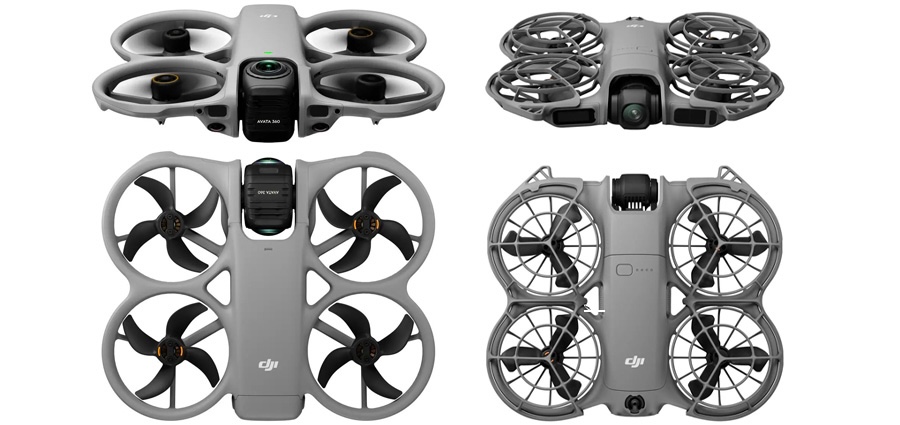
In terms of design, the DJI Avata 360 and the Neo 2 have a fairly similar silhouette, with a design inspired by CineWhoops and fully enclosed propellers. This design choice improves flight safety and reduces the risk of damage during minor collisions. Despite their similarities, however, the two drones serve very different purposes. The Neo 2 prioritizes compactness and simplicity above all else, while the Avata 360 emphasizes a more robust design, built with capture in mind 360° video.
The difference is immediately apparent. Weighing just 151 g (160 g with the transceiver), the Neo 2 is nearly three times lighter than the Avata 360 and remains classified as C0, the most flexible category under European regulations. This is a real advantage for those looking for a drone that’s easy to transport and subject to fewer regulatory restrictions. The Avata 360, which is bulkier at 455 g, falls into the C1 category. On the other hand, its frame inspires more confidence and seems better suited for intensive use or more aggressive flying.
The biggest difference, however, is the camera. The Neo 2 features a standard forward-facing camera module, while the Avata 360 uses a much more sophisticated system with two lenses capable of filming in 360°. To protect these particularly vulnerable lenses, DJI has developed a mechanism that automatically rotates the camera when the drone is on the ground, then returns it to the shooting position as soon as it takes off. The lenses are also user-replaceable in case of scratches—a real plus for a drone designed to fly very close to obstacles.
Finally, the two models take different approaches to storage. The Neo 2 has 49 GB of internal storage, compared to 42 GB for the Avata 360. However, only the Avata 360 supports microSD cards up to 1 TB. This detail quickly becomes significant given that videos can be recorded in up to 8K resolution, which requires much more storage space than those recorded by the Neo 2.
🏆 Neo 2: lighter, more compact, and more compliant with regulations on the side.
🏆 Avata 360: expandable storage thanks to support for microSD cards.
Discover our accessories for
DJI Avata 360
DJI Avata 360 vs. Neo 2: Transmission and Control
| DJI Avata 360 | DJI Neo 2 | |
| Control Methods | Radio-controlled aircraft (conventional flight) FPV flight | Autonomous flight DJI Fly application Radio control (conventional flight) FPV flight |
| Compatible radio controls | DJI RC-N2 / DJI RC-N3 DJI RC 2 DJI FPV Remote Controller 3 DJI RC Motion 3 | DJI RC-N2 / DJI RC-N3 DJI RC 2 DJI FPV Remote Controller 3 DJI RC Motion 3 |
| Compatible FPV goggles | DJI Goggles 3 DJI Goggles N3 | DJI Goggles 3 DJI Goggles N3 |
| Video transmission system | DJI O4+ | Wi-Fi as standard s DJI O4 via an optional transceiver |
| Max. transmission distance | FCC: 20 km CE: 10 km | FCC: 10 km CE: 6 km |
| Live preview quality | Single lens: 1080p up to 100 fps 360°: 1080p up to 60 fps | up to 1080p at 60 fps |
The DJI Avata 360 and the Neo 2 share a large part of the DJI ecosystem. Both are compatible with the same remote controllers (DJI RC 2, RC-N2, RC-N3, DJI FPV Remote Controller 3) as well as the DJI Goggles 3 and DJI Goggles N3. However, their flight philosophies are very different.
The Neo 2 is clearly the more accessible of the two. It can be operated without a remote controller—using its built-in buttons—in autonomous flight mode or directly through the DJI Fly app. You can even control it using gestures or voice commands, allowing you to take off quickly to film a selfie or a short clip without having to set up all your gear. For those who want to take it further, adding theO4 transceiver (included in some bundles) opens the door to traditional remote-control piloting or FPV flight. It’s a gradual approach, ideal for getting started before gaining more experience.
The DJI Avata 360 takes a different approach. From the outset, it was designed to be used with both a traditional radio controller and immersive FPV. This dual approach is particularly useful for 360° capture. For a simple shoot, for example, you can simply take off using a standard remote controller, fly your desired path, and then choose your framing in post-production. Conversely, those looking for a more immersive experience can switch to the Goggles and fully enjoy first-person flight.
The difference is also evident on the video transmission side. The Avata 360 comes equipped with the DJI O4+ system, with a claimed range of up to 10 km under CE standards (20 km under FCC standards) and 1080p video return at up to 100 fps in standard mode. The Neo 2, on the other hand, operates via Wi-Fi when used on its own—a solution perfectly suited for autonomous flight but with a more limited range. However, adding theDJI O4 transceiver allows it to benefit from long-range transmission, which is more than sufficient for the vast majority of users. On paper, the Avata 360’s O4+ system goes a step further, particularly in terms of maximum range and interference resistance, but these differences are difficult to notice in most everyday use cases.
Ultimately, both drones can be flown in many different ways, but they aren’t aimed at the same audience. The Neo 2 prioritizes simplicity above all else and gradually guides its user toward more advanced flight modes. The Avata 360, on the other hand, is geared more toward pilots who want to switch between conventional flight and FPV, while enjoying higher-performance transmission right out of the box.
🏆 Neo 2: easier to get the hang of and more versatile on the handling side.
DJI Avata 360 vs. Neo 2: Battery Life and Charging
| DJI Avata 360 | DJI Neo 2 | |
| Battery | 2700 mAh | 1606 mAh |
| Autonomy | 23 minutes | 19 minutes (17 minutes with propeller protection) |
| Charging time | Direct charging: 73 min (1 battery) Charging station: 47 min (1 battery) / 100 min (3 batteries) | Direct charging: 70 min (1 battery) Charging station: 68 min (3 batteries) |
Flight time isn’t the strong suit of these two drones, but that’s consistent with their design and intended uses. On paper, the DJI Avata 360 has a slight edge with a claimed flight time of 23 minutes, compared to 19 minutes for the Neo 2 (or 17 minutes with propeller guards installed).
As is often the case, these figures should be taken with a grain of salt. User feedback suggests flight times of 15 to 18 minutes for the Avata 360 and 10 to 15 minutes for the Neo 2, depending on the flight mode, wind conditions, and temperature. The difference is therefore very real, even though it depends heavily on flight conditions.
This difference can also be explained by their design philosophy. The Neo 2 is primarily designed to quickly take a few autonomous shots or track a subject for a few minutes. In this context, its flight time is generally sufficient. However, as soon as you switch to conventional piloting or FPV, a few extra batteries quickly become essential. The Avata 360, on the other side, offers a few extra minutes of flight time—a significant advantage for immersive flights or longer shoots.
On the side of charging, the two models are practically neck and neck. It takes about 70 to 73 minutes to charge a battery directly via the drone. Using their respective charging stations, it takes about 47 minutes to charge one battery (100 minutes for three) on the Avata 360, compared to 68 minutes to charge all three batteries on the Neo 2.
🏆 Avata 360: Best flight time.
OUR BEST SELLERS - DJI Avata 360
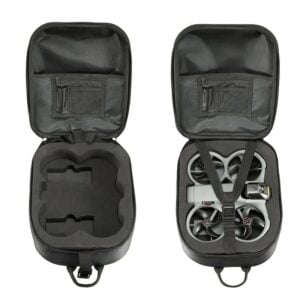
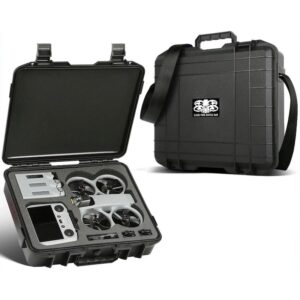
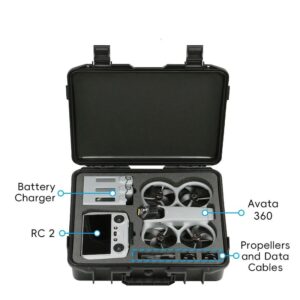
Avata 360
DJI Avata 360 vs. Neo 2: Flight Performance
| DJI Avata 360 | DJI Neo 2 | |
| Maximum speed | 6 m/s (Cine mode) 16 m/s (Normal mode) 18 m/s (Sport mode) | 8 m/s (Normal mode) 12 m/s (Sport mode) 12 m/s (subject tracking) |
| Max. ascent speed | 2 m/s (Cine mode) 6 m/s (Normal mode) 10 m/s (Sport mode) | 0.5 m/s (Cine mode) 3 m/s (Normal mode) 5 m/s (Sport mode) |
| Max. descent speed | 1.5 m/s (Cine mode) 6 m/s (Normal mode) 10 m/s (Sport mode) | 0.5 m/s (Cine mode) 3 m/s (Normal mode) 3 m/s (Sport mode) |
| Max. wind resistance | 10.7 m/s (level 5) | 10.7 m/s (level 5) |
The DJI Avata 360 and the Neo 2 are both fun to fly, but they don’t offer the same flying experience. The Neo 2 prioritizes simplicity and stability above all else, while the Avata 360 offers a more dynamic flight experience, better suited to its FPV orientation.
This is particularly noticeable in terms of performance. In Sport mode, the Avata 360 can reach 18 m/s (nearly 65 km/h), compared to 12 m/s (about 43 km/h) for the Neo 2. It also accelerates faster, climbs more quickly, and descends with greater responsiveness. These differences don’t make much of a difference for everyday use, but they offer more freedom for executing fast trajectories or more dynamic shots.
That doesn’t mean the Neo 2 is lagging behind, though. Its new Sport mode represents a significant improvement over the previous generation, and its subject tracking can now also reach 12 m/s—a speed more than sufficient to track a cyclist, a jogger, or even a vehicle traveling at a moderate speed. For the type of shots it’s designed for, the Neo 2 therefore performs its role perfectly.
Both drones are also rated for wind resistance of 10.7 m/s (level 5). On paper, they therefore offer identical performance in this regard. In practice, however, the Avata 360 might prove to be a bit more stable when the wind picks up, thanks to its significantly larger size and weight. This difference is nevertheless difficult to quantify in the absence of comparative tests conducted under the same conditions.
Finally, noise is one of the issues users frequently mention. With their protected propellers, these two drones produce a higher-pitched sound than drones with conventional propellers. Feedback on the Avata 360 mentions a fairly noticeable noise level, while the Neo 2 is also quite audible, even though DJI seems to have slightly improved this aspect compared to the first generation.
🏆 Avata 360: Faster and more comfortable for dynamic flights.
DJI Avata 360 vs. Neo 2: Features
| DJI Avata 360 | DJI Neo 2 | |
| Capture type | Single lens + 360 | A single goal |
| Photo modes | Single shot | Single shot, Interval shots, SelfieShot |
| Video modes | Standard video, QuickShots (via classic RC) | Standard Video, QuickShots, MasterShots, Dolly Zoom, ActiveTrack Subject Tracking |
| Subject follow-up | ActiveTrack 360° subject tracking | ActiveTrack Subject Tracking |
| Obstacle detection | Omnidirectional + Front LiDAR + Bottom Infrared Sensor | Omnidirectional (monocular vision) + front LiDAR + bottom infrared sensor |
While the DJI Avata 360 and the Neo 2 share part of the DJI ecosystem, they clearly don’t serve the same purpose. The Neo 2 is primarily designed to make filming simple and accessible, thanks to its many automated features. The Avata 360, on the other hand, capitalizes on the freedom offered by 360° capture, which completely changes the way you film… and, above all, edit your videos.
Two Approaches to Video Production
The most significant difference between these two drones is how they capture images. The Neo 2 operates like a traditional drone, with a forward-facing lens. Once the frame is set during flight, it’s difficult to adjust it afterward.
The Avata 360 takes a completely different approach. While it can certainly film with a single lens, its real appeal lies in its 360° mode. By recording the entire scene, it lets you choose the framing after the flight, switch from a front shot to a rear shot, change the angle of view, or even create several different sequences from a single take.
This approach requires a little more time in post-production, but it offers unparalleled creative freedom. Whereas the Neo 2 requires you to think about framing before taking off, the Avata 360 lets you focus almost entirely on the flight path, with the choice of shots coming later during editing.
Smart Modes and Subject Tracking
The Neo 2, on the other hand, takes the lead when it comes to automatic features. In addition to QuickShots, which are available on both models, it includes MasterShots, Dolly Zoom, SelfieShot, and a particularly advanced ActiveTrack. This feature can track a subject at speeds of up to 12 m/s, while allowing users to choose the tracking angle, distance, or even profiles tailored for cycling and skiing. According to numerous available tests, it is currently one of the most high-performance tracking systems in this category of drones.
The Avata 360 isn’t to be outdone. Its ActiveTrack 360° takes full advantage of panoramic capture to keep a subject in the frame throughout the flight, while allowing for great flexibility in cropping during post-production. It’s a different approach: less focused on immediate automation and more on the flexibility it offers during editing.
Obstacle detection
Both drones feature omnidirectional obstacle detection, supplemented by a forward-facing LiDAR and an infrared sensor mounted beneath the drone. On paper, their technical specifications are therefore very similar.
The main difference lies in how they work. On the Neo 2, this protection is always available, regardless of the mode being used. On the Avata 360, the detection system uses the cameras dedicated to 360° capture and therefore performs at its best in that mode. In single-lens mode, some assistance features become more limited. In both cases, these systems provide a real safety benefit, but the Neo 2 retains a slight advantage thanks to its more consistent performance, regardless of how you’re filming.
🏆 Neo 2: More automatic modes.
🏆 Avata 360: The creative freedom offered by 360° capture.

Discover our accessories for
DJI Neo 2
DJI Avata 360 vs. Neo 2: Image
| DJI Avata 360 | DJI Neo 2 | |
| Aerial work platform | Single-axis mechanical gondola (tilt) | 2-axis mechanical gondola (tilt, roll) |
| Sensors | 1/1.1 inch | 1/2 inch |
| Objective | Equivalent format 7.8 mm Aperture f/1.9 FOV 200° (in mm) | 16.5 mm equivalent format Aperture: f/2.2 FOV 119.8 |
| Photo resolution | 30 MP / 120 MP | 12 MP |
| Max. video resolution | 360°: 8K up to 60 fps 6K up to 60 fps Single-lens: 4K up to 60 fps 2.7K up to 120 fps | Horizontal: 4K at up to 100 fps Vertical: 2.7K at up to 60 fps |
| ISO range | 100 à 12800 | 100 à 12800 |
| Max. bit rate | 180 Mb/s | 80 Mb/s |
| Photo format | JPEG DNG (RAW) | JPEG |
| Video format | OSV/MP4 (H.265) | MP4 |
| Color profile | Normal D-Log M | Normal |
Gimbal, Sensors, and Resolutions
From a technical standpoint, the DJI Avata 360 and the Neo 2 take two very different approaches, in line with their respective philosophies.
The Neo 2 features a 2-axis mechanical gimbal (tilt and roll), designed to effectively stabilize a forward-facing camera. The Avata 360, on the other hand, uses only a single-axis mechanical gimbal. On paper, this might seem less capable, but this difference stems from how it works: thanks to its 360° capture, framing and some of the stabilization are handled in post-production. The gimbal therefore does not serve the same purpose as on a conventional drone.
The difference is even more pronounced when it comes to the sensor. The Avata 360 features two 1/1.1-inch CMOS sensors, each paired with an ultra-wide-angle lens with an f/1.9 aperture and a 200° field of view. On the other side, the Neo 2 features a 1/2-inch sensor paired with a 16.5mm-equivalent lens with an f/2.2 aperture and a 119.8° field of view. On paper, the Avata 360 therefore has significantly more advanced hardware, particularly thanks to its larger sensors and its panoramic capture system.
The differences are also evident in the proposed resolutions. For photos, the Avata 360 can capture 30 MP or 120 MP images, supporting both JPEG and DNG (RAW) formats. The Neo 2 is limited to 12 MP JPEG photos, a choice consistent with its more mainstream positioning.
When it comes to video, the Avata 360 also holds the edge on paper. In 360° mode, it can shoot up to 8K at 60 frames per second, while its single-lens mode goes up to 4K at 60 fps or 2.7K at 120 fps. On the other side, the Neo 2 reaches 4K at 100 fps in landscape mode and 2.7K at 60 fps in portrait mode. The Avata 360 also features a maximum bitrate of 180 Mb/s, compared to 80 Mb/s for the Neo 2, as well as the D-Log M color profile, designed to offer greater latitude in post-production.
Image quality
In practice, the differences in image quality are less pronounced than the spec sheet might suggest. In broad daylight, both drones deliver very high-quality images, although the Avata 360 takes advantage of its more advanced hardware.
In good lighting conditions, the Neo 2 impresses with its image quality. Image processing has clearly improved compared to the previous generation, offering a good level of detail, consistent sharpness, and convincing colors. For videos intended for social media or family use, the results are more than satisfactory.The Avata 360, however, retains a slight edge thanks to its larger sensors, which offer a more natural look, better dynamic range, and greater latitude—especially when cropping footage shot in 360°.
The difference is most noticeable when the light levels drop. Thanks to its 1/1.1-inch sensors and f/1.9 aperture, the Avata 360 generally preserves more detail in dark areas, produces slightly less digital noise, and handles high-contrast scenes better. The Neo 2 remains perfectly usable under good conditions, but its 1/2-inch sensor reaches its limits more quickly as light levels drop.
Finally, the two drones aren’t aimed at the same type of post-production user. The Neo 2 prioritizes images that are ready to share right away, without a flat profile or RAW format. The Avata 360 goes a step further with its D-Log M profile and support for DNG (RAW) in photo mode, offering greater flexibility for adjusting exposure, colors, or dynamic range. This is a real plus for content creators who want to retain maximum creative freedom during editing.
🏆 Avata 360: better image quality, especially in low light, and more post-production options.
DJI Avata 360 vs. Neo 2: Bundles and Prices
ℹ️ Note: some links in this section are Amazon affiliate links. As Amazon Associates, we earn from qualifying purchases, at no extra cost to you.
| DJI Avata 360 | DJI Neo 2 | |
| Drone alone | 459 € | 239 € |
| Standard package | 719 € | – |
| Fly More Pack | 939 € | 399 € |
| FPV Pack | 939 € | 579 € |
Both drones are available in several configurations, but the Neo 2 is clearly the most affordable, with a starting price of €239, compared to €459 for the Avata 360.
In both cases, you can purchase the drone on its own. For the Avata 360, this version is primarily intended for users who already have a compatible remote controller or FPV system. The Neo 2, on the other hand, can be used right out of the box for autonomous flight or controlled via the DJI Fly app, without requiring any additional equipment.
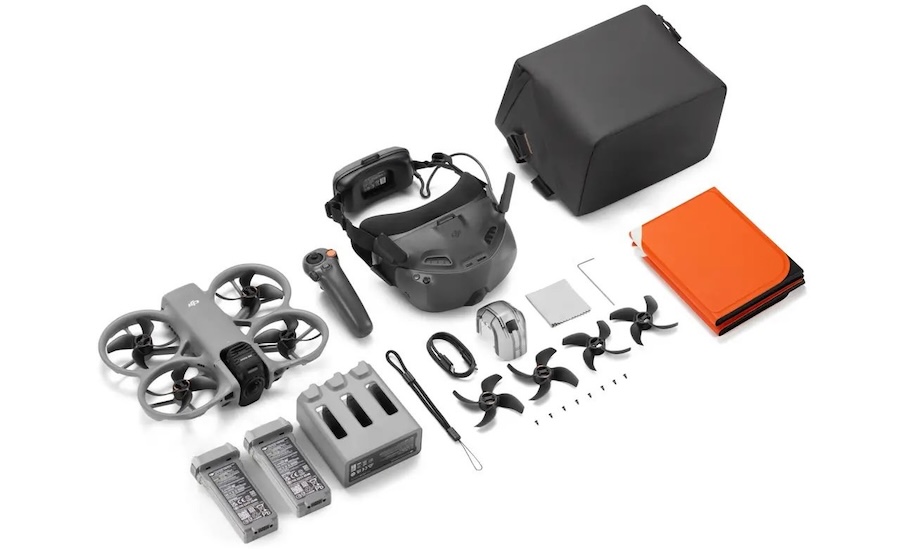
The Avata 360 also offers an intermediate configuration with the DJI RC 2 remote controller, designed for those who want to enjoy a traditional flying experience without upgrading directly to the Fly More Bundle. The Neo 2 does not offer an intermediate option: it goes directly from the drone alone to the Fly More Bundle, which includes a DJI RC-N3 remote controller, two additional batteries (three in total), a charging station, and the main accessories.
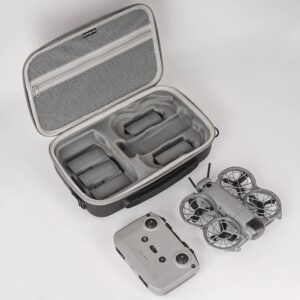
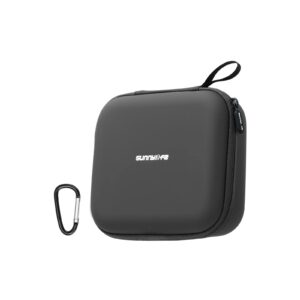
The Avata 360, however, goes a step further with a Fly More Bundle that includes the DJI RC 2, which also adds two additional batteries (three in total), a charging station, and a carrying case. This is an attractive option for those who prefer traditional piloting and want to fly more often without using FPV.
Both models are also available in an FPV bundle that includes the DJI Goggles N3, the RC Motion 3, three batteries, and the charging station. The approach is therefore quite similar, even though the prices differ significantly: €579 for the Neo 2 versus €939 for the Avata 360.
Ultimately, the price difference fairly accurately reflects the positioning of the two drones. The Neo 2 focuses primarily on offering excellent value for the price, while the Avata 360 requires a more substantial investment in exchange for its 360° camera, larger sensors, and higher-end features.
🏆 Neo 2: a much more affordable price and an excellent balance of features and value.



Conclusion: DJI Avata 360 vs. Neo 2—Which One Should You Choose?
At the end of this comparison, one thing is clear: the DJI Avata 360 and the Neo 2 are designed to meet entirely different needs. The Neo 2 prioritizes simplicity above all else, with user-friendly controls, excellent subject tracking, and numerous automatic modes. The Avata 360, on the other side, takes a much more creative approach, thanks to its 360° capture and extensive post-production cropping options.
If your priority is to quickly capture footage of your activities, travels, or outings without spending hours editing, the Neo 2 is probably the best choice. Lighter, more affordable, and easier to use, it’s ideal for both beginners and users looking for a drone that can film almost entirely on its own.
On the other hand, if you enjoy creating your own videos, experimenting with different angles, and harnessing the full potential of 360° footage, the Avata 360 is clearly in a league of its own. Although it’s more demanding to use and more expensive, it offers better image quality—especially in low-light conditions—as well as greater creative freedom during editing.
Ultimately, the Neo 2 is undoubtedly the best choice for most users thanks to its excellent value for the features it offers. The Avata 360 is geared more toward enthusiasts and content creators who want to push the boundaries of aerial photography.
Choose the DJI Avata 360 if:
- You want to shoot in 360° and choose your framing after the flight;
- you enjoy video editing and are looking for more creative freedom;
- You’re looking for the best image quality, especially in low light.
Choose the DJI Neo 2 if:
- Are you looking for a drone that’s easy to use, even without a remote control?;
- you want to take advantage of a variety of automatic modes and excellent subject tracking;
- you prefer a lightweight, compact, and easy-to-carry drone;
- You’re looking for the best value for the features you get.
💡 To learn more, check out our in-depth reviews of the two drones in this DJI Avata 360 vs. Neo 2 comparison:
➡️ Our review of the DJI Avata 360
➡️ Our review of the DJI Neo 2
🛠️ For maintenance and repairs, you can find all compatible parts here:
DJI Avata 360 Parts
DJI Neo 2 Parts

 Blog
Blog