
 Français
 Deutsch
 Español
 Italiano

 Parts & Accessories by Drone
 Drones
 Action camera
 Microphones
 Camera Stabilizers
 VR Headsets
Insta360 X6, Full Review: The New Benchmark for 360° Cameras?
Aug
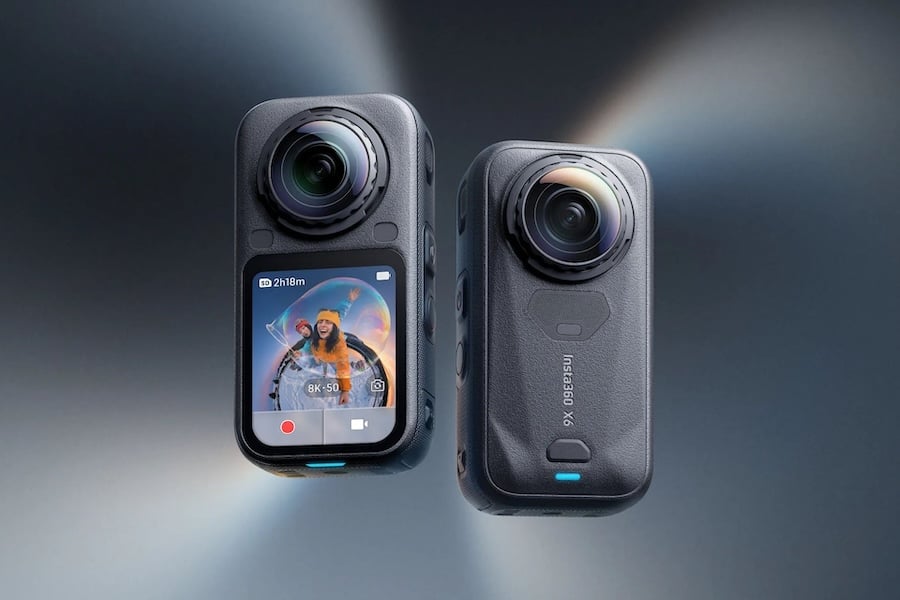
With the Insta360 X6, the 360° video specialist finds itself in a very different position this time around: after having largely dominated this market in recent years, Insta360 must now contend with GoPro’s comeback and its MAX 2, but above all with the high-profile arrival of DJI and its Osmo 360. To maintain its position as the industry leader, the successor to the X5 must therefore offer more than just a simple update. What new features does this new generation bring? Has image quality improved? And most importantly, is the Insta360 X6 the 360° camera you need? Design, image quality, battery life, features, price: we’re reviewing all the new features of the Insta360 X6 to see what it’s really worth.
Insta360 X6: Key Takeaways
Don’t have time (or just can’t be bothered 😅) to read the whole thing? Here are the key takeaways on the Insta360 X6 👇
- 📐 New, shorter and wider design—a true first for the X series—with a form factor considered more comfortable to hold and a modest weight of 196 g
- 💧 Water-resistant up to 20 meters without a case; lenses claimed to be five times more scratch-resistant and now even easier to replace
- 💾 64 GB of internal storage, including 47 GB of usable space, in addition to the microSD card slot
- 🔋 Up to 140 minutes of battery life in 8K at 30 fps in Endurance mode, with fast charging that reaches 80% in 24 minutes and 100% in 35 minutes
- 🤖 A wide variety of photo and video modes, plus the new AI Director, which can automatically create a fully edited, share-ready video from your footage
- 🎬 InstaFrame has been updated to version 2.0 and now lets you directly create a flat video that automatically tracks the subject—ready to use and now available in up to 4K
- 📷 New 1/1.1-inch square sensors, with 360° video in 8K at up to 50 fps, 6K at up to 60 fps, and 360° photos at up to 120 MP
- 🎨 Improved image quality, with a more natural look, better dynamic range, 10-bit support in all modes, and the new I-Log profile for greater latitude in post-production
- 🌙 Excellent performance in low light, where the new sensors, combined with PureVideo mode, help reduce noise and preserve details and colors
- 💸 Starting at €699, with an Essential Bundle for €799 and a variety of themed bundles tailored to different uses
📌 With its new design, larger sensors, improved battery life, and excellent low-light performance, the Insta360 X6 builds on the previous model in almost every way and reaffirms Insta360’s ambitions in the high-end 360° camera market.
Insta360 X6: Design
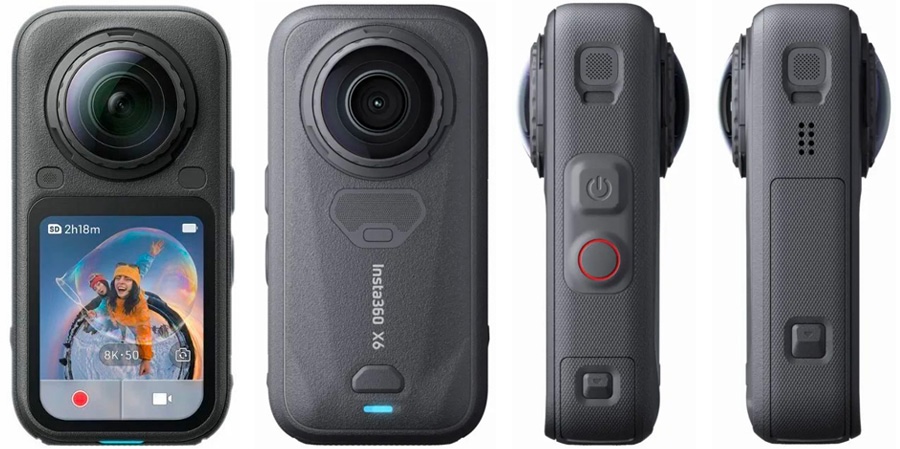
| Dimensions (W x H x D) | 50.0 × 100.0 × 40.0 mm |
| Weight | 196 g |
| Touch screen | 2.32-inch OLED |
| Storage | 64 GB internal memory (47 GB available) microSD card |
| Operating temperature | -20 ℃ à 40 ℃ |
| Waterproofing | 20 meters |
The Insta360 X6 marks a major departure in the design of the X series. Since the first generations, Insta360’s 360° cameras had retained a relatively tall and elongated silhouette. For this sixth generation, the manufacturer has significantly revamped the design with a shorter, wider, and more square body, specifically to accommodate its new 1/1.1-inch sensors. With dimensions of 50 × 100 × 40 mm and a weight of 196 g, it nevertheless remains compact. This new design seems to have been well-received in initial tests, with users finding the camera more comfortable to hold and more convenient to carry.
This extra width also allows Insta360 to incorporate a screen with more square proportions. The X6 features a 2.32-inch OLED touchscreen, which is slightly smaller than the X5’s screen but wider, and now includes an Always-On mode that keeps certain information displayed at all times. The interface has also evolved with the addition of pressure-sensitive haptic controls and two virtual buttons below the screen, which replace the physical buttons found in that location on the previous generation. The idea is primarily to prevent accidental inputs by requiring a more deliberate press. Initial feedback on this design choice, however, is mixed: some users appreciate this feature and find it perfectly natural, while others feel it takes a little time to get used to knowing how much pressure to apply. Insta360 has also added a physical record button on the side, in addition to the touchscreen control integrated into the display—a location that may prove more convenient depending on how the camera is held.
The X6, on the other hand, uses the same mounting system as the X5. Its base combines a standard 1/4-inch thread with Insta360’s proprietary magnetic mounting system, allowing users to attach both standard accessories and those designed specifically for the brand’s ecosystem.
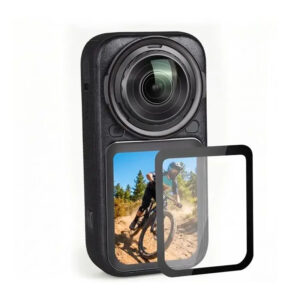
Insta360 has also addressed one of the weak points of 360° cameras: their two particularly vulnerable lenses. The manufacturer claims that the lenses are five times more scratch-resistant than those on the X5, while also reducing the cost of replacement. Most importantly, replacing them has become even easier and can now be done without any special tools; the kit provided for this purpose includes everything needed to remove the damaged lens, clean the area, and install the new one.
Water resistance has also improved significantly. With an IP68 rating, the Insta360 X6 can be submerged up to 20 meters without a housing, and up to 60 meters with the dedicated dive housing. This is a real selling point for a 360° camera, especially compared to the DJI Osmo 360 and the GoPro MAX 2, which are limited to 10 and 5 meters, respectively, without a housing.
Finally, the X6 features 64 GB of internal storage— 47 GB of which is actually available—in addition to its microSD card slot. This storage can come in handy when no card is available and allows for approximately 50 minutes of 8K recording at 30 fps. Since 8K videos are particularly large, this storage should nevertheless be considered primarily as a backup solution: a high-capacity microSD card will remain virtually indispensable for long recording sessions.
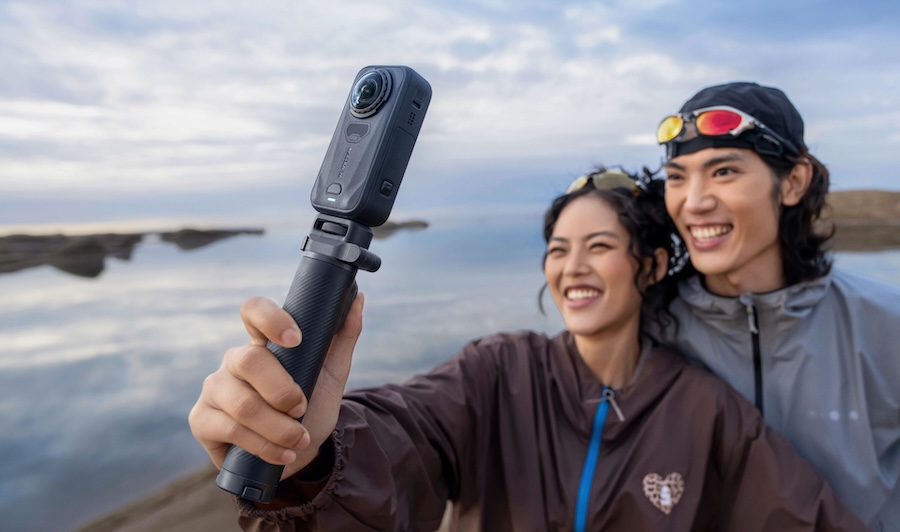
Check out our accessories for
Insta360 X6
Insta360 X6: Battery Life
| Battery | 2,600 mAh |
| Autonomy | Up to 140 minutes (Endurance mode, 8K at 30 fps) |
| Charging time | 24 min to 80% 35 min to 100% |
The Insta360 X6 features a new 2,600 mAh battery, which, unfortunately, is not backward compatible with the X5’s battery. Users who wish to upgrade to this new generation will therefore not be able to reuse the batteries from their old camera.
Above all, this increased capacity allows Insta360 to claim up to 140 minutes of continuous recording in 8K at 30 frames per second in Endurance mode—a claimed 51% improvement over the X5. This is a particularly noteworthy improvement given the resolution used, although actual battery life will naturally depend on the recording mode and usage conditions.
Initial tests are also reassuring regarding overheating. Several testers were able to record continuously in 8K at 30 fps until the battery ran out without encountering any overheating issues, even when shooting outdoors in particularly high temperatures. However, the situation becomes more challenging at 8K and 50 fps, a significantly more demanding mode in which rising temperatures can eventually cause the recording to stop. This is, nonetheless, quite understandable for such a compact camera recording at such high resolution and frame rates.
Finally, charging is particularly fast: with a compatible 30 W PPS charger, it takes just 24 minutes to reach 80% and 35 minutes for a full charge. This impressive speed allows you to quickly restore a significant portion of the battery life between filming sessions.
Insta360 X6: Features
| Photo modes | Photo, Interval, Starlapse |
| Video modes | 360 Mode: Video, PureVideo, Time-Lapse, TimeShift, Bullet Time, Loop, Route Mode Flat Mode: Video, InstaFrame 2.0, PureVideo, FreeFrame Video, Loop |
| Audio modes | Automatic Noise Reduction, Intelligent Voice Enhancement, Stereo, 360° Audio, Engine Sound Enhancement |
Photo and video modes
The Insta360 X6 offers a particularly comprehensive range of shooting modes, including the classic 360° modes such as Timelapse, TimeShift, Bullet Time, Loop, and Route Mode. In flat mode, notable features include FreeFrame and InstaFrame 2.0. PureVideo mode is available in both 360° and flat modes, and we’ll discuss its performance in more detail in the section on image quality.
It’s actually InstaFrame 2.0 that represents one of the most interesting developments. The feature is particularly well-suited for those who appreciate the capabilities of a 360° camera without necessarily wanting to spend time cropping their footage during editing. The X6 can thus directly generate a standard video by automatically tracking the selected subject, while simultaneously preserving the full 360° footage if you wish. This means you immediately have a standard video ready to use, while still being able to go back to the 360° recording later to choose a different shot. Most importantly, InstaFrame now lets you capture this flat video in up to 4K, compared to the previous generation’s limitation to Full HD.
Insta360 is also expanding the ways you can start recording without directly using the standard controls. These include voice and gesture controls, as well as “Twist to Shoot,” which lets you start recording by rotating the gimbal. The X6 now adds the option to tap the screen to start recording. This feature is particularly useful when the camera is mounted on a helmet or positioned in a way that blocks the view of its screen: haptic feedback then confirms that the command has been registered, without having to look at the camera.
AI Director
Insta360 is also taking video editing automation a step further with a new feature called AI Director. The concept is particularly interesting: after filming various clips throughout the day, simply plug in the X6 to recharge it, and the camera will analyze the recorded videos to automatically create a montage. The next day, you’ll find a video in the Insta360 app that’s already edited and ready to watch—while still having the option to modify the result suggested by the AI.
With AI Director, as well as InstaFrame 2.0, Insta360 is clearly seeking to make 360° video more accessible to those who might be put off by the editing process. Shooting in 360° offers a great deal of freedom since you can choose your framing after recording, but this traditionally involves more post-production work and some editing knowledge. These new features automate much of that work, allowing users to take advantage of the possibilities of 360° video without necessarily spending hours editing their footage.
Audio
The audio capabilities have also seen several improvements. Insta360 has introduced a new 360° microphone system designed to better withstand wind, combined with various audio processing features such as automatic noise reduction and intelligent voice enhancement. Initial tests show a noticeable reduction in wind noise, although it does not disappear entirely under the most challenging conditions.
Insta360 has also specifically catered to users of motorcycles and other vehicles with a microphone designed to capture engine sound. The goal is to significantly reduce wind noise while preserving the mechanical sound that the user specifically wants to record. The initial test results available are particularly impressive in this regard, with wind noise significantly reduced and the vehicle’s sound remaining clearly audible.
Finally, for those looking for superior quality, the X6 can be paired with the brand’s wireless microphones, the Insta360 Mic Air and Mic Pro. Initial tests show that wind noise is significantly reduced compared to the built-in microphones, making this a particularly attractive solution for content creators who regularly film outdoors.
OUR BEST SELLERS - INSTA360 X6
Insta360
Insta360 X6: Image
| Sensors | 1/1.1-inch square sensors |
| Objective | 7.78 mm f/2.0 |
| Photo resolution | Standard photo: up to 42 MP 360° photo: up to 120 MP |
| Video resolution (360°) | 8K up to 50 fps 6K up to 60 fps 4K up to 100 fps |
| Video resolution (single-lens) | 5K up to 60 fps 4K up to 120 fps 2.7K up to 120 fps |
| Photo format | INSP, DNG |
| Video format | INSV (360°), MP4 (flat mode) |
| Color profiles | Standard (Rec. 709), Dolby Vision, I-Log |
| Maximum video bit rate | 240 Mbps |
| ISO range | 100 à 6400 |
Sensors and resolutions
One of the Insta360 X6’s major hardware upgrades is its two new 1/1.1-inch square sensors, which replace the 1/1.28-inch sensors used in the previous generation. This increases their surface area by about 33%, while their square format allows for greater utilization of the sensor regardless of the image’s orientation. Combined with an f/2.0 aperture lens, these new sensors are key to the X6’s improvements in image quality and low-light performance.
The X6 maintains a maximum resolution of 8K for 360° video, but significantly increases the frame rate available at this resolution. It is now possible to record in 8K at up to 50 frames per second, compared to 30 fps previously. This frame rate not only results in smoother motion but also allows for slow-motion footage at nearly 2× while maintaining 8K resolution. The camera can also record in 6K at up to 60 fps and in 4K at up to 100 fps.
In flat mode, the X6 can record up to 5K at 60 fps, while 4K and 2.7K can reach 120 fps. Photography capabilities have also improved, with a maximum resolution of 120 MP for 360° images and 42 MP for flat photos. These are particularly high specifications, although—as is always the case with a 360° camera—the advertised resolution refers to the entire captured sphere: the actual resolution visible after cropping will necessarily depend on the chosen field of view.
Image quality
The X6’s new sensors don’t completely revolutionize image quality in good lighting conditions, but the improvements are clearly visible. In initial tests, the camera has proven capable of delivering a particularly natural and detailed image, with complex textures—such as foliage, building facades, or distant objects—retaining their natural appearance more effectively when processing and settings are properly controlled.
Dynamic range has also improved , with better preservation of detail in both very bright areas and shadows. In scenes with extreme differences in brightness, the X6 is thus able to preserve more detail rather than letting certain areas become completely white or black. This is particularly noticeable in scenes that combine shadows and direct sunlight, where the different parts of the image remain better balanced.
Color management also benefits from the new capabilities offered by the camera. The X6 now supports 10-bit color across all its shooting modes and offers the I-Log profile for those who wish to further refine their images in post-production. This profile preserves more information and produces a more neutral look before color grading. With proper processing, colors can appear more natural and accurate—especially whites and skin tones—while avoiding the sometimes highly contrasted and saturated look traditionally associated with images processed directly by a consumer-grade camera.
However, it’s important to note one key distinction: the result will depend on the profile used and the calibration applied. A properly processed I-Log profile is not intended to produce the same look as a ready-to-use Standard profile. The X6 therefore primarily offers more creative freedom to those who want to have full control over their footage, without imposing this more neutral look on users who prefer to get a video that’s immediately ready to share.
However, it’s in low-light conditions that the X6’s improvements are most impressive. PureVideo mode was already one of the standout features of previous Insta360 cameras, but it now benefits from 1/1.1-inch sensors and 10-bit support. In dark environments, the camera is thus better able to control digital noise, retain more detail, and preserve colors, all while producing an image that’s sufficiently bright.
This performance places the X6 among the very best of today’s 360° cameras when it comes to nighttime filming. PureVideo remains one of Insta360’s greatest strengths, and initial tests show that the X6 performs particularly well compared to other high-end models in challenging scenes. The improvements made in daylight are therefore more of an evolution than a revolution, but they’re accompanied by a much more noticeable leap in performance as light levels drop.
Insta360 X6: Bundles and Prices
ℹ️ Note: some links in this section are Amazon affiliate links. As Amazon Associates, we earn from qualifying purchases, at no extra cost to you.
| Standard package | €699 |
|
| Essentials Pack | 799 € |
|
| Other bundles | From €748 to €942 |
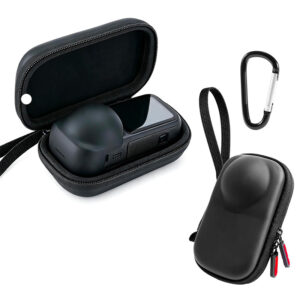
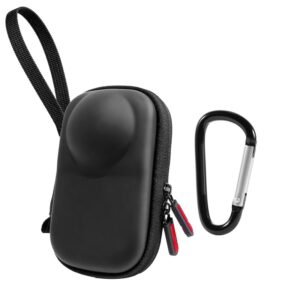
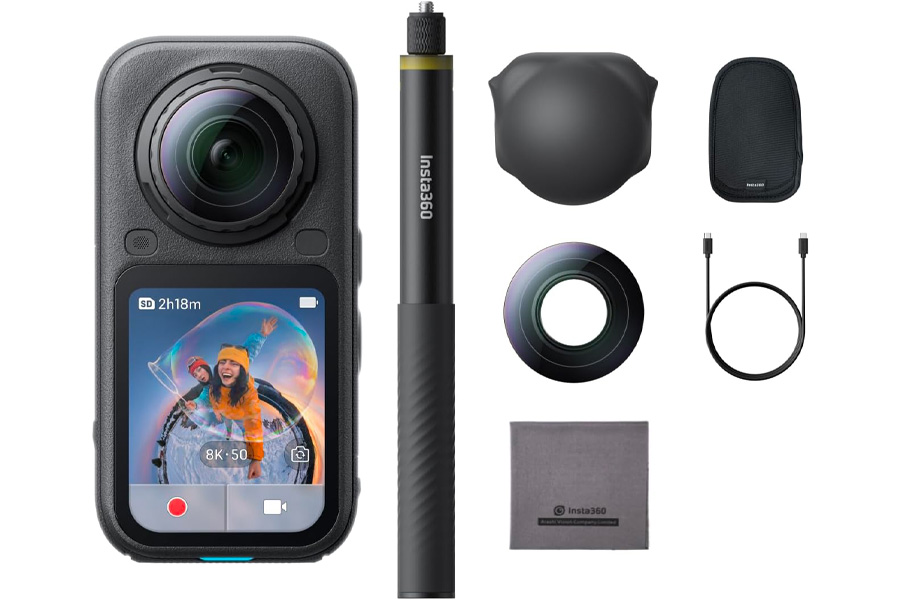
Available in two colors, Midnight Black and Arctic White, the Insta360 X6 starts at €699 for the Standard Bundle, which includes the camera, a battery, a USB-C cable, and a protective pouch. Its launch price is significantly higher than that of the X5, which retailed for €589 upon release— a difference of €110.
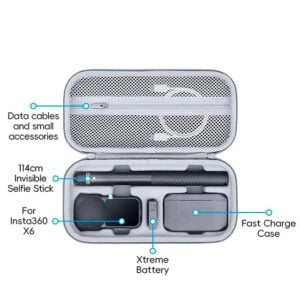
Insta360 also highlights the Essential Pack, priced at €799, which is a significantly more comprehensive package. It includes, among other things, a second battery, a fast-charging case, a 114-cm invisible selfie stick, and a lens cap. For an additional €100 compared to the Standard Pack, it includes several particularly useful accessories that let you get the most out of the camera.
As is often the case with Insta360, a wide range of themed kits allows you to tailor the X6 to different uses. These include kits designed for travel, motorcycling, cycling, content creation, and even scuba diving, with prices currently ranging from €748 to €942 depending on the included accessories. This variety makes it easy to choose a package tailored to your specific needs right away, without having to buy the various accessories separately.
Check out our accessories for
Insta360 X6
Insta360 X6 Review: Is It Worth Buying?
With the X6, Insta360 isn’t just improving a few features of its high-end 360° camera. This new generation has been upgraded in nearly every way, starting with its completely redesigned, more compact, and ergonomic body; its new 1/1.1-inch sensors; its longer battery life; and its water resistance up to 20 meters. The ability to swap lenses even more easily and the addition of 47 GB of usable internal storage also improve several important practical aspects of everyday use.
Image quality has also improved, with more natural rendering, a wider dynamic range, and—above all—particularly impressive low-light performance thanks to the new sensors and PureVideo mode. The addition of 10-bit support across all modes and the I-Log profile will also appeal to videographers looking to retain more latitude in post-production. On the side of features, InstaFrame 2.0 and AI Director also demonstrate Insta360’s commitment to simplifying cropping and editing—two steps that can still be daunting for some 360° camera users.
Of course, not everything is perfect. The new battery isn’t backward compatible with the X5’s, the haptic interface may take a little getting used to, and, most importantly, the X6 is hitting the market at a price significantly higher than that of its predecessor. This price increase could be a deciding factor, particularly for users who already own a recent 360° camera.
Despite these few reservations, The Insta360 X6 represents a particularly comprehensive evolution of the X series. Insta360 has improved the user experience, battery life, and image quality, while further enhancing one of its key strengths with excellent low-light performance. This ensures it remains a particularly strong benchmark in a 360° camera market that is now much more competitive.
Who is the Insta360 X6 designed for?
The Insta360 X6 is primarily aimed at those looking for a high-end 360° camera capable of adapting to a wide variety of situations. Its image quality, low-light performance, waterproof design, battery life, and wide range of modes make it ideal for travel, sports, motorcycling, and content creation alike.
It may also reassure those who have been put off by the cropping process specific to 360° cameras. InstaFrame 2.0 lets you instantly create a standard 4K video, while AI Director can automate part of the editing process. Of course, these features won’t replace actual post-production work for videographers who want precise control over their final result, but they offer interesting solutions for getting usable footage more quickly.
Should I upgrade from the Insta360 X5 to the X6?
For X5 owners, the answer is more nuanced. The X6 is undeniably better, with its larger sensors, 8K at 50 fps, 10-bit support in all modes, longer battery life, new design, and particularly noticeable improvements in low-light performance. So this isn’t just a cosmetic upgrade.
That said, the X5 remains an extremely high-performance 360° camera, and the differences will be less noticeable in good lighting conditions. If you mainly use your camera during the day and the X5’s limitations don’t bother you, upgrading to the X6 right away isn’t essential. On the other hand, those who regularly shoot in low light, are looking for longer battery life, want to take advantage of 8K at 50 fps, or place particular importance on 10-bit color and the I-Log profile will find many more reasons to make the upgrade.
💡 See also
➡️ Want to learn more about the previous generation? Check out our in-depth review of the Insta360 X5, as well as all the differences between the Insta360 X6 and X5 in our comparison.
➡️ Hesitating between the X6 and its main competitor? Discover our DJI Osmo 360 II review to see what DJI’s new 360 camera has to offer.
➡️ Prefer a pocket camera with mechanical stabilization? Discover our Insta360 Luna Ultra camera review.
➡️ Torn between the Insta360 X6 and its main DJI rival? Check out our DJI Osmo 360 II vs Insta360 X6 comparison to discover their differences and choose the 360° camera that best suits your needs.

 Blog